
 English
 中文简体
中文简体 русский
 Español
Explore Our Product Range
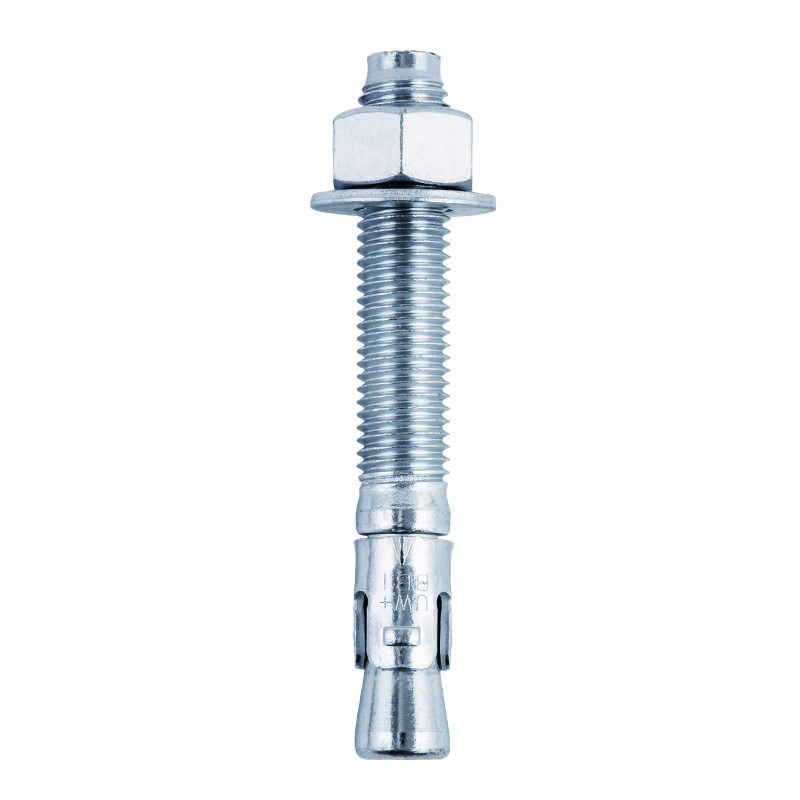
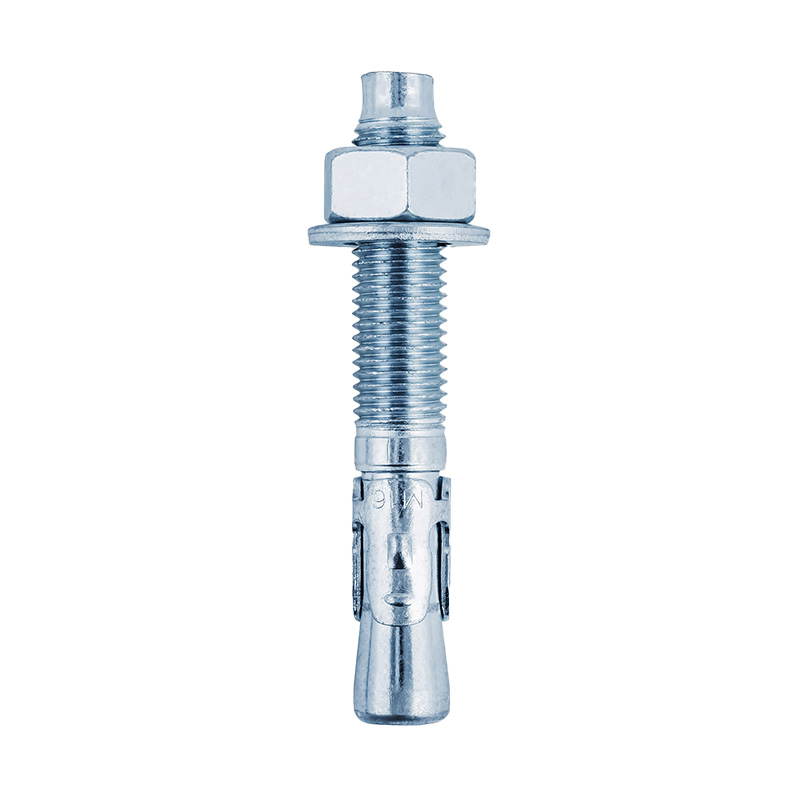
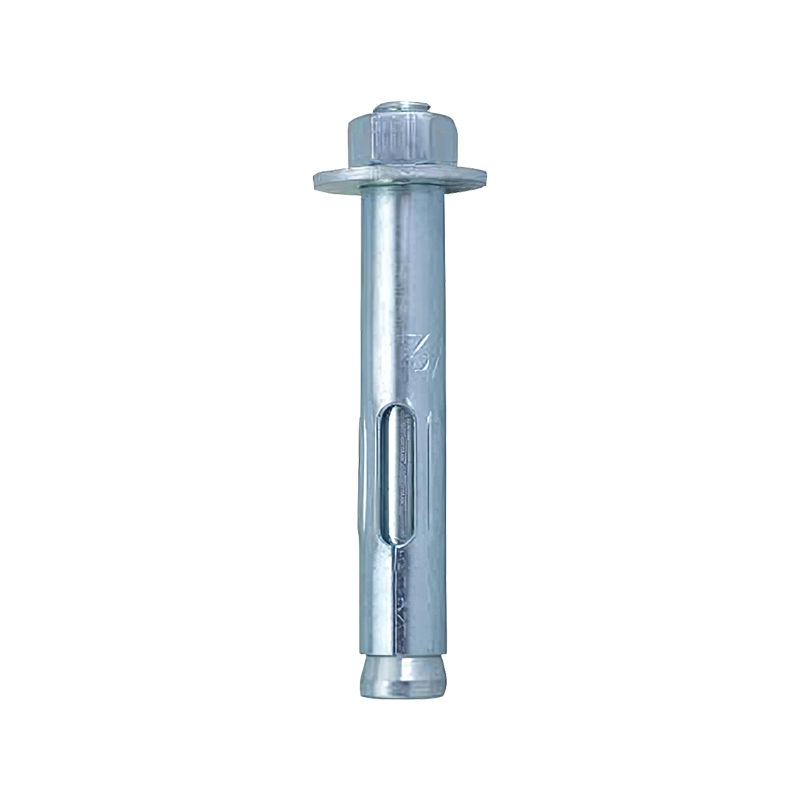
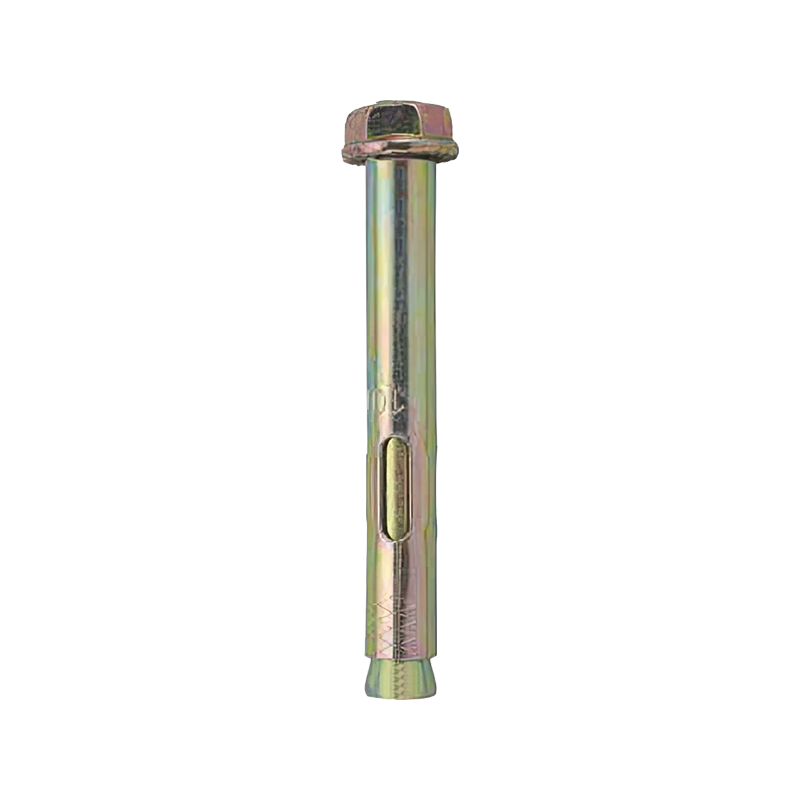
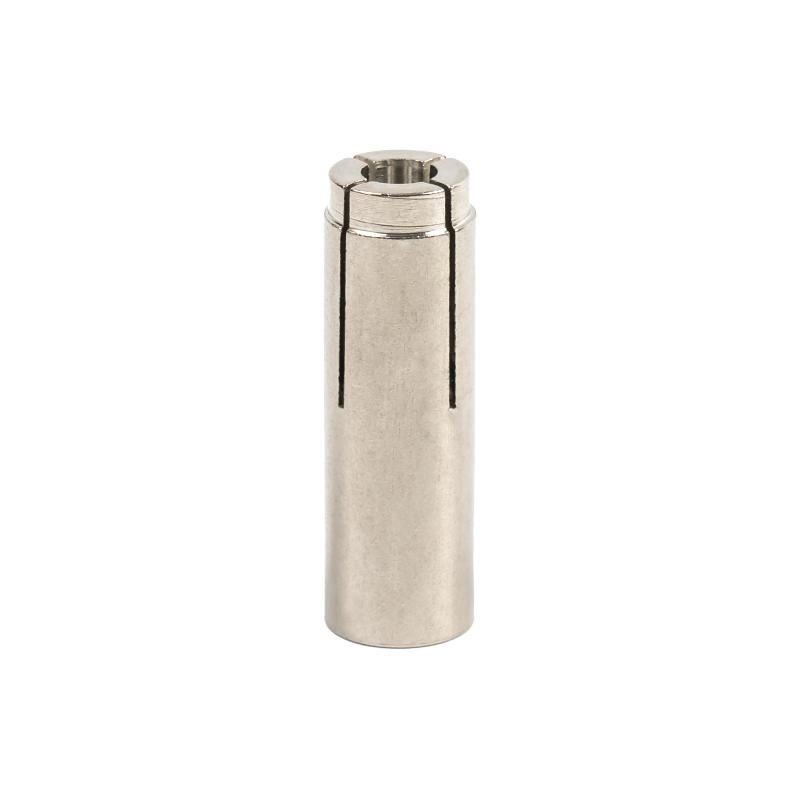
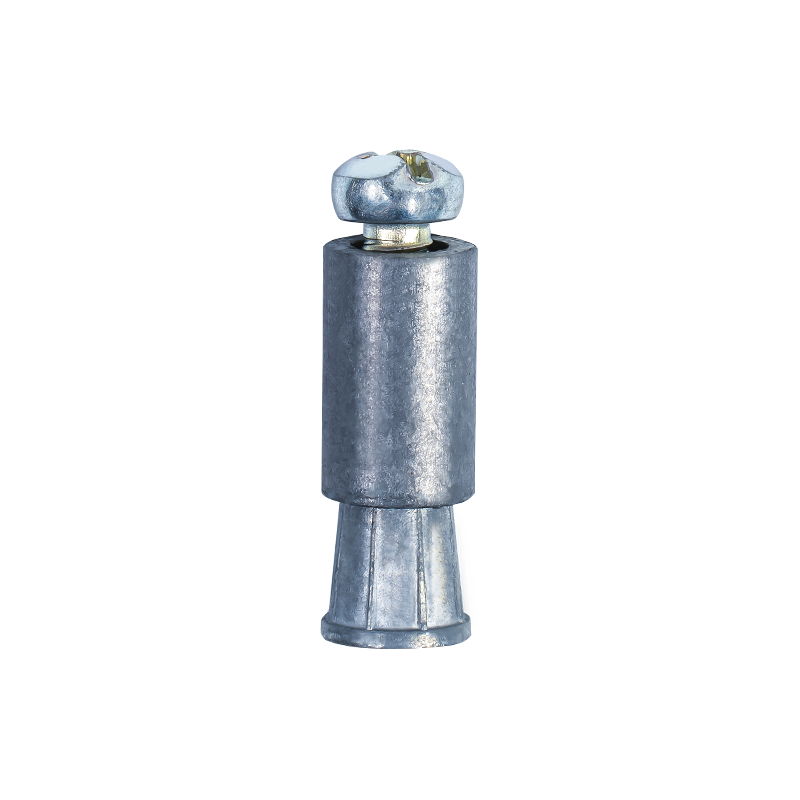
High Strength Structural
Wedge Anchor
Premium grade mechanical expansion anchor engineered for the most demanding structural applications. Available in Grade 8.8 and Grade 10.9 carbon steel, providing exceptional tensile and shear capacity for steel construction, heavy machinery, and infrastructure projects.
Ultra-High Strength Mechanical Anchoring for Critical Structural Connections
The High Strength Structural Wedge Anchor represents the pinnacle of mechanical expansion anchor technology, engineered specifically for applications where standard Grade 5.8 anchors provide insufficient capacity. Structural engineers specify these premium anchors for steel moment frame connections, heavy industrial equipment foundations, bridge structural attachments, and any application where anchor failure would have catastrophic consequences. By utilizing higher strength carbon steel alloys and optimized heat treatment processes, the high strength structural wedge anchor delivers tensile and shear capacities significantly exceeding conventional anchors.
Grade 8.8 structural wedge anchors offer a minimum tensile strength of 800 megapascals and yield strength of 640 megapascals. This represents a 60 percent increase in strength over Grade 5.8 anchors while maintaining the ductility required for structural applications. For the most demanding projects, Grade 10.9 anchors provide minimum tensile strength of 1040 megapascals and yield strength of 940 megapascals. Grade 10.9 is typically specified for seismic force-resisting systems, crane runway beams, heavy industrial presses, and other applications where concentrated loads approach the practical limits of mechanical anchoring.
The material composition of high strength structural wedge anchors differs significantly from lower grades. Grade 8.8 anchors are manufactured from medium carbon steel typically SAE 1035 or 1040 with controlled manganese content. After cold heading and thread rolling, the anchors undergo quench and temper heat treatment to develop the required mechanical properties. Grade 10.9 anchors use alloy steel compositions with additional chromium or boron to achieve higher hardenability. The heat treatment process must be precisely controlled to achieve the desired strength without introducing brittleness or hydrogen embrittlement risk.
The expansion mechanism of high strength structural wedge anchors is similarly enhanced to match the increased bolt strength. The expansion clip is manufactured from higher hardness spring steel and features an optimized geometry that provides greater radial expansion force. The internal cone angle is reduced to convert more of the applied torque into radial expansion rather than upward movement. These design modifications ensure that the concrete fails in breakout before the anchor steel yields, providing ductile warning before ultimate failure. For the highest strength Grade 10.9 anchors, some manufacturers recommend deeper embedment depths to develop the full tensile capacity of the steel.
Installation of high strength structural wedge anchors requires greater attention to torque values. The recommended installation torque for Grade 8.8 and Grade 10.9 anchors is significantly higher than for Grade 5.8 anchors of the same diameter. For example, a Grade 8.8 M20 anchor requires 450 newton-meters compared to 310 newton-meters for Grade 5.8. This higher torque requirement demands more powerful torque wrenches and may require torque multipliers for diameters M24 and above. The higher torque also generates greater expansion force, making hole cleaning even more critical. Any dust remaining in the hole will be compressed but will significantly reduce the effective expansion grip.
Quality control for high strength structural wedge anchors includes additional verification steps beyond standard anchors. In addition to dimensional inspection and salt spray testing, every production batch undergoes hardness testing on the Rockwell C scale, tensile testing to verify minimum strength, and often yield strength verification. Heat treatment records must be maintained for traceability. For Grade 10.9 anchors, additional testing for hydrogen embrittlement susceptibility may be performed. When specified, third-party witnessing of destructive testing can be arranged. Each anchor is marked with the property class and batch code for full traceability through the construction quality assurance program.
Grade 8.8 Structural Grade
Minimum tensile strength 800 MPa. Minimum yield strength 640 MPa. Suitable for most structural applications including steel columns, bridge components, and heavy equipment.
Grade 10.9 Ultra-High Strength
Minimum tensile strength 1040 MPa. Minimum yield strength 940 MPa. Specified for seismic force-resisting systems, crane rails, and extreme load applications where Grade 8.8 capacity is insufficient.
Enhanced Expansion Mechanism
Optimized cone angle and high-hardness expansion clip provide greater radial force. Matched to high strength bolt capacity for efficient load transfer to concrete.
High Strength Structural Wedge Anchor Specifications
| Parameter | Grade 8.8 | Grade 10.9 |
|---|---|---|
| Diameter Range | M8 through M30 | M10 through M24 |
| Material Composition | Medium carbon steel SAE 1035 or 1040 | Alloy steel chromium or boron |
| Tensile Strength Minimum | 800 megapascals | 1040 megapascals |
| Yield Strength Minimum | 640 megapascals | 940 megapascals |
| Elongation Minimum | 12 percent | 9 percent |
| Hardness Range HRC | 23 to 34 | 33 to 39 |
| Surface Treatment | Electro-zinc plating 5 to 12 microns | Electro-zinc plating with hydrogen embrittlement relief baking |
| Expansion Clip | High hardness spring steel enhanced geometry | High hardness spring steel enhanced geometry |
Structural Anchor Ordering Information
Structural Engineering Support
Need strength verification, custom lengths, or Grade 10.9 technical data? Our structural engineering team responds within 24 hours.
Request Structural DataHigh Strength Structural Wedge Anchor Applications
Steel Construction
Column base plates, moment connections, brace frames, and heavy steel member attachments in high-rise buildings, stadiums, and industrial facilities.
Heavy Industrial
Crane rails, stamping presses, forging hammers, rolling mills, and other high-impact or high-vibration equipment foundations.
Bridge Engineering
Bridge bearings, truss connections, expansion dam anchors, and seismic retrofit attachments requiring high-strength anchoring.
Power and Energy
Turbine foundations, generator mounts, transmission tower anchors, and wind turbine tower connections.
Core Advantages of High Strength Structural Wedge Anchors
60 Percent Higher Strength
Grade 8.8 provides 60 percent greater tensile and yield strength than Grade 5.8. Grade 10.9 provides 30 percent more than Grade 8.8.
Precision Heat Treatment
Quench and temper process ensures uniform mechanical properties throughout the anchor cross section. No soft spots or brittle zones.
Ductile Steel Failure
Engineered to yield before concrete breakout, providing visual warning of overload and ductile failure mode preferred by structural codes.
Full Traceability
Heat number and property class marking on each anchor. EN 10204 Type 3.1 certification with every shipment.
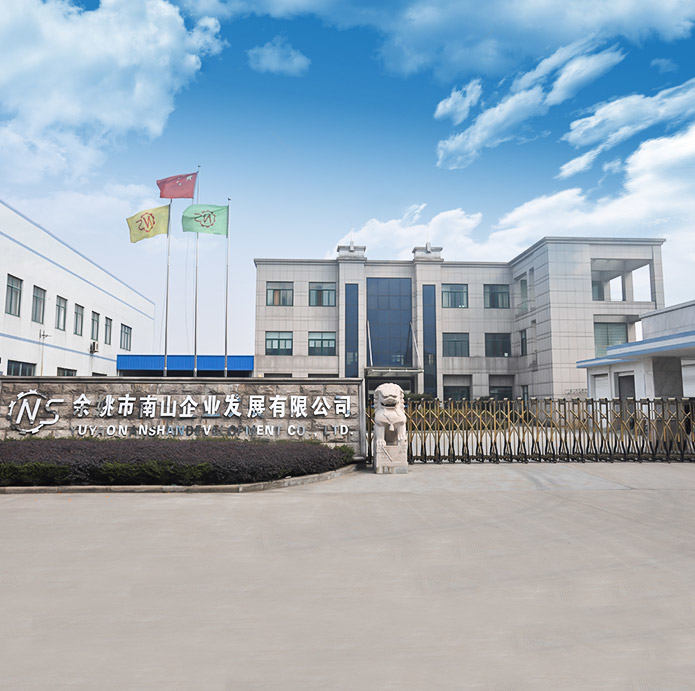
Yuyao Nanshan Development Co., Ltd.
Yuyao Nanshan Development Co., Ltd. was established in 1999 and is located in Ningbo with elegant and charming environments and enjoys convenient transportation.
Yuyao Nanshan Development Co., Ltd. is China High Strength Structural Wedge Anchor Manufacturers and Wholesale High Strength Structural Wedge Anchor Factory, specializes in producing Wedge Anchor with professional production equipment. Nanshan has strong technologies with advanced facilities and imported automatic production machines and inspection equipment. Nanshan also is using the ERP to control the production process line and has set up a research & development center for continued innovation and to meet the requirements of more and more customers from all over the world.
Our products extensively are used in steel high constructions, tunnel projects, bridges, railways, airport stations, high way, sea ports, nuclear power plants, and so on.
Yuyao Nanshan Development Co., Ltd. adheres to the principle of "quality the eternal base, credit forever pursuit", we will spare no effort to provide our customers with more stable quality and more wonderful service.

Professional Installation for High Strength Structural Anchors
Concrete Verification
Confirm concrete compressive strength meets design requirements. For high strength anchors, minimum C25/30 required. For Grade 10.9 anchors operating near capacity, C30/37 or higher is recommended.
Precision Drilling
Drill hole with carbide-tipped bit exactly matching anchor diameter. Hole depth equals required embedment plus 15mm for dust accumulation. Maintain perpendicularity within 1 degree for structural accuracy.
Meticulous Hole Cleaning
Clean hole using three complete blow and brush cycles. For high strength anchors operating at high percentages of capacity, four cleaning cycles or vacuum extraction is recommended.
High Torque Application
Using calibrated torque wrench, apply torque in three increments. For M20 and larger, torque multiplier required. Record torque value and anchor batch number for quality records.
High Strength Installation Requirements
- Minimum concrete strength C25/30 for Grade 8.8 and C30/37 for Grade 10.9 near capacity.
- Minimum edge distance 7 times diameter for high strength anchors to develop full capacity.
- Minimum spacing 12 times diameter center to center for groups.
- Torque multiplier required for diameters M20, M24, and M30.
- Four cleaning cycles recommended for anchors operating above 80 percent of capacity.
- Verification torque required on 10 percent of anchors for structural applications.
High Torque Tool Requirements
High Strength Structural vs. Standard Grade Anchors
High Strength Structural Quality Control Program
Tensile Verification
Destructive tensile testing per ISO 898-1 on each production batch. Grade 8.8 minimum 800 MPa. Grade 10.9 minimum 1040 MPa.
Yield Verification
Yield testing ensures proper heat treatment. Grade 8.8 minimum 640 MPa yield with 12 percent elongation minimum.
Hardness Profile
Rockwell C hardness tested across anchor cross section. Uniform hardness within 5 HRC points from surface to center.
Hydrogen Embrittlement
Grade 10.9 anchors receive hydrogen embrittlement relief baking within 4 hours of plating per ASTM standard.
High Strength Structural Anchor Design Parameters
Steel Strength Governs
For high strength anchors with deep embedment and high concrete strength, steel failure governs over concrete breakout. Use bolt tensile and shear values from ISO 898-1 rather than concrete breakout calculations when embedment exceeds 8 times diameter.
Edge Distance for High Strength
To develop full steel strength, edge distance must be sufficient to prevent concrete breakout. Minimum 7 times diameter for Grade 8.8 and 8 times diameter for Grade 10.9. Reduced edge distance requires concrete breakout calculation.
Concrete Strength Requirements
High strength anchors require higher concrete strength to develop capacity. Minimum C25/30 for Grade 8.8. Minimum C30/37 for Grade 10.9 designs using full steel strength.
Combined Loading
For combined tension and shear, interaction equations per ACI 318 Appendix D apply. Grade 10.9 anchors may govern under combined loading due to reduced ductility compared to Grade 8.8.
Sustainable Manufacturing for High Strength Anchors
Environmental compliance and responsible manufacturing practices for high strength structural fasteners.
RoHS and REACH Compliance
Zinc plating Cr6+ free. Full compliance with EU environmental regulations.
100 Percent Recyclable
High strength steel fully recyclable at end of structure life. Recycled content available upon request.
Energy Efficient Heat Treatment
Continuous furnace heat treatment with heat recovery reduces energy consumption by 30 percent compared to batch processing.
Precision Manufacturing for High Strength Structural Anchors
Cold Heading
High-speed cold forming of medium carbon steel. Aligns grain flow for superior fatigue resistance required in structural applications.
Quench and Temper Heat Treatment
Continuous furnace with computerized control. Uniform temperature profile ensures consistent mechanical properties across all anchors.
Thread Rolling After Heat Treatment
Threads rolled after heat treatment for precise dimensional control and work-hardened roots without risk of hydrogen embrittlement.
High Strength Anchor Production Process
Ultimate Load Capacity by Anchor Diameter Grade 8.8 and Grade 10.9
Values shown for high strength structural wedge anchors in solid non-cracked concrete C30/37. Minimum embedment equals 7 times anchor diameter to develop steel strength. Safety factor of 4 to 1 applies for working loads. For Grade 8.8, reduction factors apply for concrete strength below C30/37.
| Grade | Diameter mm | Min Embedment mm | Ultimate Tensile kN | Ultimate Shear kN | Recommended Torque Nm | Concrete Strength Required |
|---|---|---|---|---|---|---|
| 8.8 | M8 | 56 | 13.5 | 10.5 | 28 | C25/30 |
| 8.8 | M10 | 70 | 21.5 | 16.8 | 52 | C25/30 |
| 8.8 | M12 | 84 | 31.0 | 24.0 | 90 | C25/30 |
| 8.8 | M16 | 112 | 54.0 | 44.0 | 220 | C30/37 |
| 8.8 | M20 | 140 | 84.0 | 65.0 | 450 | C30/37 |
| 8.8 | M24 | 168 | 122.0 | 93.0 | 720 | C30/37 |
| 8.8 | M30 | 210 | 178.0 | 136.0 | 1150 | C35/45 |
| 10.9 | M10 | 70 | 28.0 | 21.8 | 68 | C30/37 |
| 10.9 | M12 | 84 | 40.3 | 31.2 | 117 | C30/37 |
| 10.9 | M16 | 112 | 70.2 | 57.2 | 290 | C30/37 |
| 10.9 | M20 | 140 | 109.2 | 84.5 | 600 | C35/45 |
| 10.9 | M24 | 168 | 158.6 | 120.9 | 950 | C35/45 |
Professional Installation Checklist for High Strength Structural Anchors
Pre-Installation Verification for High Strength Anchors
- Confirm concrete compressive strength meets minimum per design. For Grade 8.8 M20 and above, C30/37 minimum.
- Verify edge distance at least 7 times anchor diameter for Grade 8.8, 8 times diameter for Grade 10.9.
- Verify anchor spacing at least 12 times diameter center to center for groups.
- Check fixture hole diameter: anchor diameter plus 0.5mm for structural applications. Do not exceed plus 1.0mm.
- Ensure hammer drill bit is carbide-tipped, exact diameter, and not worn. Oversized holes not permitted for structural anchors.
- Confirm anchor grade is correct per structural drawings. Grade 10.9 markings include 10.9 on head.
- Calibrate torque wrench within 6 months. For high torque values M20 and above, use torque multiplier verified for accuracy.
High Strength Anchor Installation Execution
- Position structural steel or fixture exactly at final location. Clamp securely.
- Drill through fixture hole into concrete. Maintain perpendicularity within 1 degree for structural accuracy.
- Drill hole depth equals required embedment plus 15mm for dust accumulation.
- Clean hole using three complete blow and brush cycles minimum. For Grade 10.9, four cycles recommended.
- Assemble washer and nut flush with anchor top. Use only washer provided with anchor.
- Drive anchor into hole using hammer until washer contacts fixture surface. Do not over-drive.
- Apply torque in three increments. For M20 and above, torque multiplier required.
- Record torque value, anchor batch number, date, and installer name for quality records.
Hole Cleaning Protocol for Structural Anchors
- Cycle 1: Blow compressed air from bottom of hole for 5 seconds minimum. Use oil-free air.
- Cycle 1: Brush with wire brush 5 full strokes back and forth. Brush diameter slightly larger than hole.
- Cycle 1: Blow compressed air for another 5 seconds.
- Cycle 2: Repeat blow and brush sequence a second time.
- Cycle 3: Repeat blow and brush sequence a third time for structural anchors.
- For Grade 10.9 and seismic applications, perform a fourth cleaning cycle.
Structural Warning: Incomplete hole cleaning is not permitted for structural anchors. Design capacities assume thoroughly cleaned holes. Dust reduces expansion grip and may cause anchor pullout under design loads.
Standards and Approvals for High Strength Structural Anchors
International Standards
ISO 898-1 for mechanical properties of carbon steel fasteners. ISO 3506 for stainless steel equivalents. EN 1992-4 for anchor design in concrete.
ASTM Standards
ASTM F606 for mechanical testing methods. ASTM A563 for nut specifications. ASTM F1940 for hydrogen embrittlement testing. ASTM B117 for salt spray testing.
AISC Compliance
Compliant with AISC 360 Specification for Structural Steel Buildings. Suitable for moment connections and braced frame anchor applications.
ACI 318 Compliance
Appendix D anchoring to concrete provisions satisfied. Design values available for concrete breakout, pullout, and steel strength failure modes.
Recommended Tightening Torque for High Strength Structural Anchors
| Diameter mm | Grade 8.8 Dry Nm | Grade 8.8 Lubricated Nm | Grade 10.9 Dry Nm | Grade 10.9 Lubricated Nm | Torque Multiplier Required |
|---|---|---|---|---|---|
| M8 | 28 | 22 | 36 | 29 | No |
| M10 | 52 | 42 | 68 | 54 | No |
| M12 | 90 | 72 | 117 | 94 | No |
| M16 | 220 | 176 | 290 | 232 | No for M16, yes for larger |
| M20 | 450 | 360 | 600 | 480 | Yes |
| M24 | 720 | 580 | 950 | 760 | Yes |
| M30 | 1150 | 920 | Not standard | Not standard | Yes |
Safety Factors for High Strength Structural Anchors
| Failure Mode | Non-Structural | General Structural | Safety Critical | Seismic |
|---|---|---|---|---|
| Steel Failure | 3.0 | 4.0 | 5.0 | 4.0 times static plus seismic reduction |
| Concrete Breakout | 3.5 | 4.5 | 6.0 | 5.0 times static plus seismic reduction |
| Pullout Failure | 3.0 | 4.0 | 5.0 | 4.0 times static plus seismic reduction |
| Combined Loading | Interactive per ACI 318 | Interactive per ACI 318 | Interactive with higher factors | Interactive with seismic reduction |
Payment and Shipping for High Strength Structural Anchors
Payment Methods
Shipping Ports
Packaging
High Strength Structural Wedge Anchor Frequently Asked Questions
Corrosion Protection for High Strength Structural Anchors
High strength structural anchors require corrosion protection that does not compromise mechanical properties. Select coating based on exposure environment and strength grade.
| Environment | Grade 8.8 Recommended | Grade 10.9 Recommended | Service Life Years | Special Considerations |
|---|---|---|---|---|
| Dry indoor heated | Electro-zinc 5 micron | Electro-zinc 5 micron with bake | 50 plus | No hydrogen embrittlement risk for Grade 8.8. Grade 10.9 requires baking. |
| Indoor with condensation | Electro-zinc 8 micron yellow | Electro-zinc 8 micron with bake | 30 to 40 | Yellow passivation provides higher corrosion resistance. |
| Sheltered outdoor | Electro-zinc 12 micron with sealer | Zinc flake coating Geomet or Magni | 15 to 20 | Zinc flake preferred for Grade 10.9 due to lower hydrogen risk. |
| Outdoor rural direct rain | Hot-dip galvanized | Not recommended use A4 stainless | 20 to 30 | Hot-dip galvanizing may affect Grade 10.9 properties. |
| Outdoor urban deicing salts | Hot-dip galvanized or A4 | A4 stainless steel | 25 plus | A4 stainless recommended for Grade 10.9 in corrosive environments. |
| Coastal within 500m | A4 stainless steel | A4 stainless steel | 30 plus | Coastal environments require stainless steel for both grades. |
Chemical Resistance of High Strength Structural Wedge Anchors
| Chemical | Concentration | Zinc Plated Carbon Steel | Hot-Dip Galvanized | A4 Stainless Steel | Notes for Structural Applications |
|---|---|---|---|---|---|
| Fresh water tap river lake | Any | Good | Excellent | Excellent | Zinc acceptable for indoor structural use. Fresh water immersion reduces life. |
| Seawater or brine | 3.5 percent | Poor | Fair | Excellent | Grade 8.8 and Grade 10.9 not recommended for marine use. Specify A4 stainless. |
| Sodium hydroxide caustic | Up to 10 percent | Fair | Fair | Excellent | Prolonged exposure not recommended for carbon steel grades. |
| Hydrochloric acid | Any | Very Poor | Very Poor | Poor | Do not use carbon steel or stainless steel in hydrochloric acid environments. |
| Sulfuric acid dilute | Dilute | Very Poor | Very Poor | Fair | Severe corrosion expected. Not suitable for structural anchors. |
| Ammonium hydroxide | Any | Poor | Poor | Good | Zinc corrodes rapidly. Use stainless steel for chemical environments. |
| Chlorine gas wet | Any | Very Poor | Very Poor | Poor | Rapid pitting. Not suitable. |
High Strength Structural Anchor Case Studies
Grade 8.8 wedge anchors for column base plates in a 75-story commercial tower.
M24 Grade 8.8 structural wedge anchors with hot-dip galvanizing were specified for this project. Over 5000 anchors were installed. Each anchor required verification torque of 10 percent of anchors. All torque values were documented and submitted to the engineer of record. The building has performed well through multiple years of service.
Key learning: High strength structural anchors allowed smaller diameter anchors than Grade 5.8 would require, reducing drilling time and material cost.
Grade 10.9 wedge anchors for a 200-ton mining crusher foundation.
M30 Grade 10.9 high strength structural anchors were specified due to extreme dynamic loads from the crusher. The anchors were embedded 210mm into C40/50 concrete. After 7 years of continuous operation, the anchors show no signs of loosening or fatigue. The higher strength of Grade 10.9 allowed fewer anchors than Grade 8.8 would have required.
Key learning: Grade 10.9 anchors provide significant cost savings in large diameter applications by reducing anchor quantity and embedment depth.
Glossary of High Strength Anchor Terminology
Grade 8.8
Property class for carbon steel fasteners. Minimum tensile strength 800 MPa, yield strength 640 MPa, elongation 12 percent. Quenched and tempered medium carbon steel.
Grade 10.9
Property class for high strength carbon steel fasteners. Minimum tensile strength 1040 MPa, yield strength 940 MPa, elongation 9 percent. Alloy steel with precise heat treatment.
Quench and Temper
Heat treatment process where steel is heated to austenitizing temperature, rapidly cooled quenched, then reheated tempered to achieve required strength and ductility balance.
Hydrogen Embrittlement
Brittle fracture caused by hydrogen absorption during plating or cleaning. Grade 10.9 and above are susceptible and require baking after plating.
Steel Failure Mode
Failure where anchor bolt fractures in tension or shear. Ductile steel failure with visible elongation preferred over brittle concrete failure.
Concrete Breakout Failure
Failure where cone of concrete pulls out of member. Governs when embedment is shallow or concrete strength low relative to anchor strength.
Pullout Failure
Anchor slips out of concrete without damaging concrete. Typically caused by inadequate embedment or expansion clip failure.
EN 10204 Type 3.1
Material certificate issued by manufacturer with specific test results for production batch including chemical and mechanical properties.
High Strength Structural Documentation Package
For structural projects requiring documented quality assurance, we provide full traceability from raw material heat number to finished anchor. Third-party inspection agencies are welcome to witness heat treatment, mechanical testing, or any other production stage. All records are maintained for minimum 15 years per structural code requirements.
Related Tags & Articles
Heavy Duty Zinc Plated Wedge Anchor
Product Introduction Ensuring Structural Integrity in Concrete & Masonr
Stainless Steel Metric Wedge Anchor
Product Introduction Corrosion Resistance Witho
Carbon Steel Through Bolt Wedge Anchor
Product Introduction One-Step Installation Without Compromising Holding Str
Concrete Installation Wedge Anchor Bolt
Product Introduction Fast, Reliable Concrete Installation for Demanding Sch
Seismic Resistant Wedge Anchor Fastener
Product Introduction Engineered Anchoring for Seismic Demand and Cracked Co
Four Shield Heavy Duty Bolt Anchor
Product Introduction Four Shield Expansion Technology for Maximum Load Capa
Three Shield Heavy Duty Screw Anchor
Product Introduction Three Shield Expansion Technology for Reliable Heavy D
External Threaded Metric Sleeve Anchor
Product Introduction Versatile Metric Threaded Anchoring for Multiple Base
Hex Nut Type Sleeve Anchor Bolt
Product Introduction Standard Hex Nut Sleeve Anchor for Universal Fastening
Ready to Specify High Strength Structural Wedge Anchors?
Whether you need Grade 8.8 or Grade 10.9 anchors for a critical structural connection, our engineering team provides technical data, load calculations, and competitive quotations.
