Hole Compression Lug Custom

Home / Product / Hole Compression Lug
  • Hole Compression Lug
  • Hole Compression Lug Yuyao Nanshan Development Co., Ltd.

Hole Compression Lug

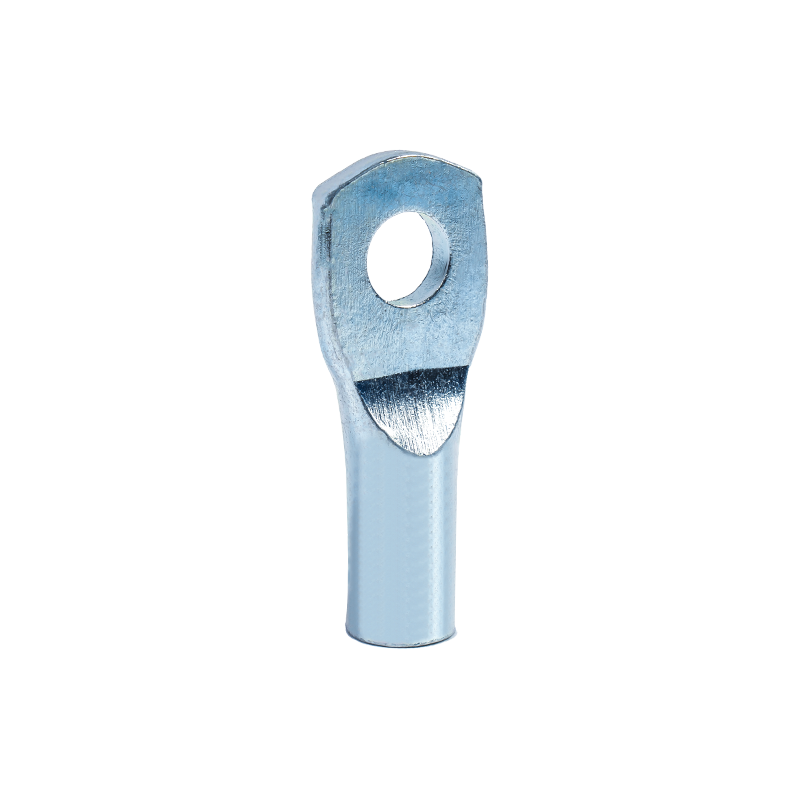
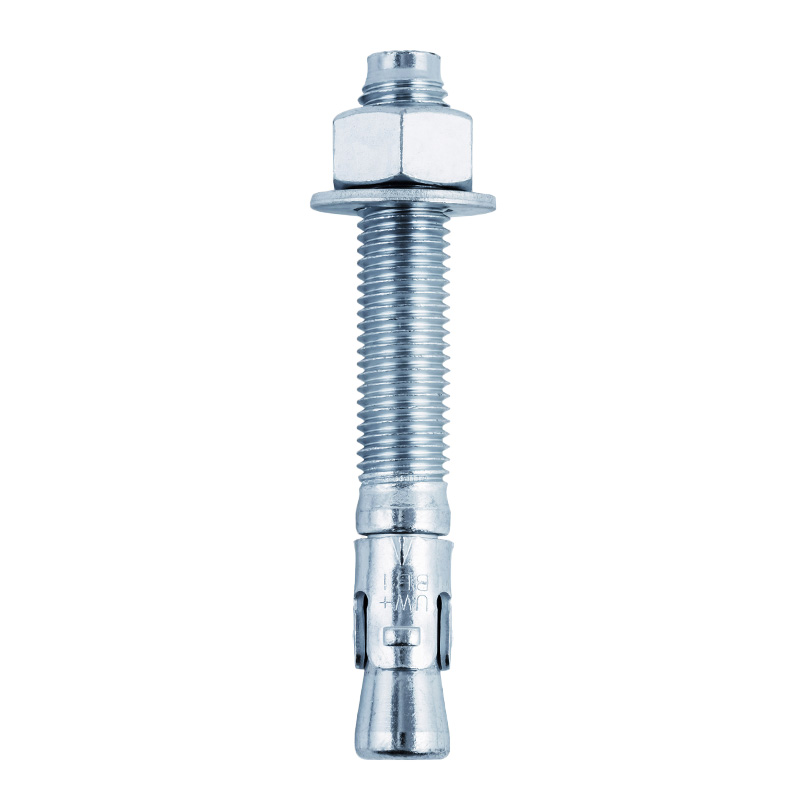
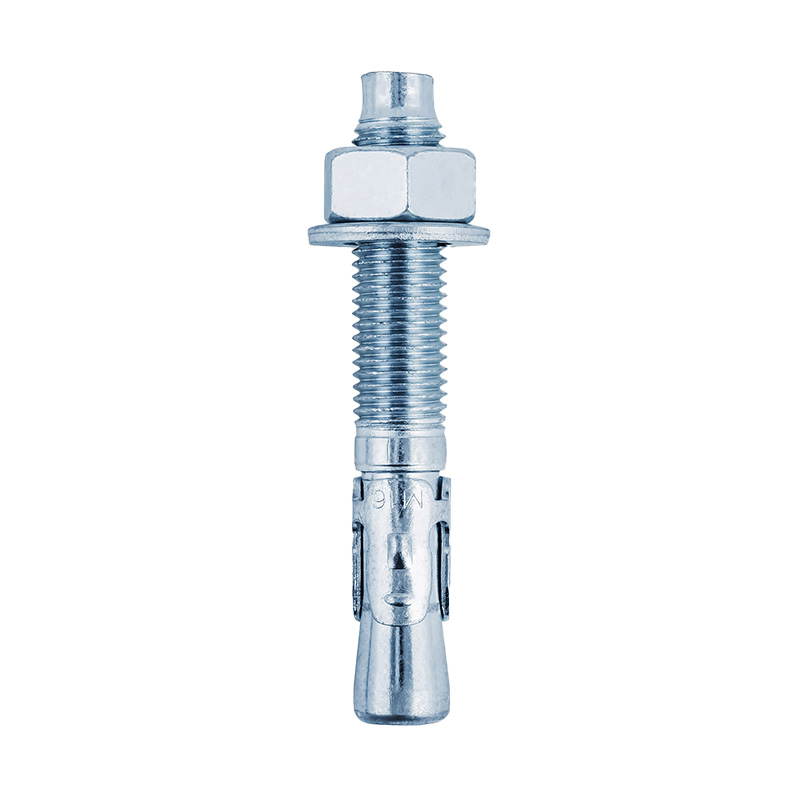
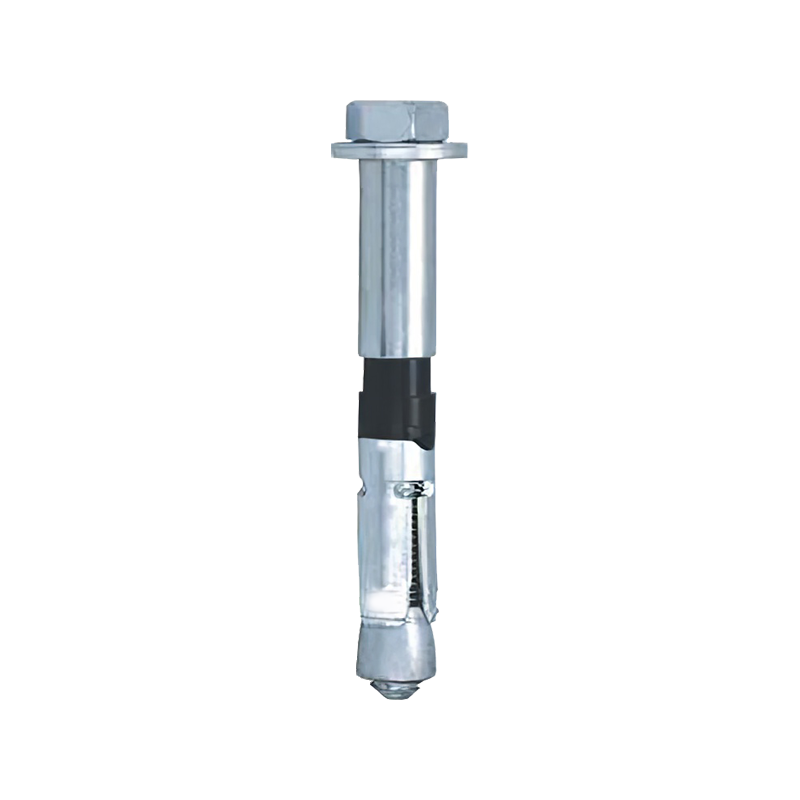
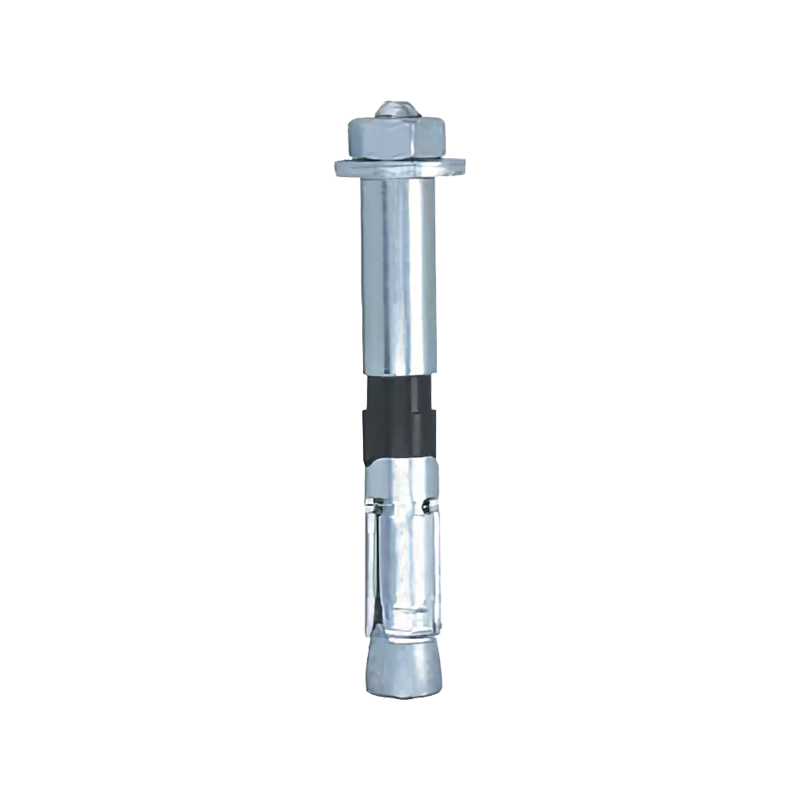
PRODUCT INFORMATION: Fastening hole connectors have been installed for the expansion bolt or screw, can come to hang pipe fixed other installed equipment, with the hoop set of anchors with the use or possession of sets of gecko, can be used in a variety of fasteners.

01Production Information 02Inquiry

NO.

Specifications

CASE/BOX

Weight (kg/box)

EC14N

1/4

100/1000

10.21

EC38N

3/8

100/1000

22.68

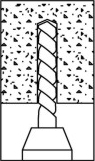
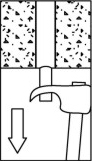
1. Drill holes on the base according to
the required diameter and depth
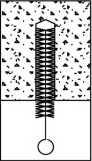
2. Move debris and clean small holes 3. Gently tap the perforated connector
with a hammer until the assembly depth
is reached
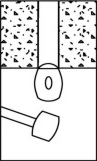
4. Tighten the screws with a wrench

Hole Compression Lug


A hole compression lug is a one-piece copper or aluminum terminal that creates a permanent, gas-tight mechanical and electrical bond between a cable conductor and a mounting point such as a busbar, ground bar, or equipment stud. The barrel receives the stripped conductor; the flat tongue with a precision-drilled hole accepts the fastener. Crimping deforms the barrel around every strand, eliminating voids where oxidation could develop and locking resistance values at their lowest stable level for the service life of the installation.

Barrel Crimp Zone Inspection Window Tongue (Palm) Mounting Hole Conductor

Key Structural Elements

Barrel — The cylindrical sleeve that accepts the stripped conductor. Wall thickness and internal diameter are matched to the target AWG or mm² cross-section. After crimping, zero void space remains between strands and barrel wall.

Crimp Zone — The area where the crimping die applies controlled deformation. Die profiles follow UL 486A/B and IEC 61238-1 tool-indexing conventions so that barrel and die are always matched by wire gauge.

Inspection Window — A sight hole drilled through the barrel wall that allows visual confirmation of full conductor insertion before the crimp cycle begins.

Transition Shoulder — The tapered section between barrel and tongue that distributes mechanical bending stress evenly, preventing fatigue cracking at the palm root.

Tongue & Mounting Hole — The flat contact surface that presses against the terminal pad. Hole diameter is sized slightly above nominal stud diameter to permit assembly while maintaining the maximum possible contact patch.

Engineering Performance Indicators


The figures below represent the design targets applied across the standard production range. Precise values are confirmed by lot-level testing certificates issued with each shipment.

≤ 20 μΩ

Maximum contact resistance at the crimped interface, measured at rated conductor cross-section under ambient conditions per IEC 61238-1.

−40°C / +105°C

Operating temperature range maintained without dimensional change or conductivity loss, covering Arctic cable runs to enclosed industrial panels.

1000 h

Neutral salt-spray endurance (ASTM B117) without visible base-metal corrosion or contact-resistance increase beyond 10% of initial value.

≥ 99.9%

Electrolytic copper purity used in the standard range. Maintains conductivity at ≥ 97% IACS, minimising resistive heating at full load current.

6 – 1000 kcmil

Standard conductor range covered in one continuous product family, from branch circuit wiring up to large transformer and switchgear feeders.

35 kV

Application-level voltage suitability when installed with proper creepage and clearance per the governing installation standard.

Tongue Configuration Guide


Selecting the correct tongue profile determines how the lug seats against the busbar or equipment stud, directly affecting contact area, rotation resistance, and whether the connection meets the vibration requirements of the installation environment.

1-Hole Standard General-purpose terminations, panel boards, grounding, and branch circuits up to 4/0 AWG.
2-Hole (NEMA) Heavy conductors 1/0 AWG and above where a second bolt prevents lug rotation under cable torque.
90° Tongue Right-angle palm for side-entry panel connections where straight-tongue geometry conflicts with cable routing.
Long Barrel Fine-stranded and flex-class conductors, plus specifications requiring two crimp indentations per barrel for redundancy.
Slotted Tongue Slide-on installation without fully removing the fastener bolt; suits maintenance-intensive bus systems.

Material & Plating Options


The choice of base metal governs conductivity and load capacity; the surface finish determines long-term corrosion behaviour and galvanic compatibility with the mating terminal. Both selections need to be made together with reference to the installation environment.

Electrolytic Copper (ETP)

Electrolytic tough-pitch copper with purity ≥ 99.9% delivers conductivity at or above 97% IACS — the baseline against which all other conductor materials are measured. The material's inherent ductility absorbs crimping deformation without cracking, ensuring uniform contact along the entire barrel inner surface.

Tin plating (electrodeposited, 5–10 μm) passivates the surface against oxidation and provides a stable, low-resistance interface at the contact pad. It also prevents galvanic corrosion when mating with zinc-coated hardware.

Suitable conductor types:

Cu stranded Cu solid Cu flex class Cu grounding
Aluminum / Dual-Rated AL9CU

Aluminum lugs reduce overall termination weight by approximately 60% compared to copper equivalents. The AL9CU dual-rated designation confirms the product meets UL 486B and CSA 22.2 No.65 for use on both aluminum and copper conductors — eliminating the risk of specifying the wrong type on mixed-metal wiring systems.

The barrel interior receives a corrosion-inhibitor compound at the factory. This compound displaces moisture, prevents oxide re-formation on the aluminum strands, and maintains low contact resistance throughout the thermal cycling that characterises normal load conditions.

Suitable conductor types:

Al stranded Al solid Cu stranded (dual-rated) Cu solid (dual-rated)

Standard Dimensional Reference


The table below covers the most frequently ordered conductor-to-stud combinations in the 1-hole copper series. Custom barrel lengths, alternative tongue widths, and metric conductor cross-sections (mm²) are available on request. All dimensions in inches unless noted.

Conductor Size (AWG/kcmil) Stud Hole Dia. (in) Barrel Length (in) Overall Length (in) Tongue Width (in) Barrel Style Material
#6 AWG 1/4″ (6.35 mm) 1.18 2.44 0.75 Standard Tin-plated Copper
#4 AWG 3/8″ (9.53 mm) 1.30 2.70 0.85 Standard Tin-plated Copper
#2 AWG 3/8″ (9.53 mm) 1.55 3.05 0.90 Standard Tin-plated Copper
#1/0 AWG 1/2″ (12.7 mm) 1.75 3.40 1.00 Long Barrel Tin-plated Copper
#2/0 AWG 1/2″ (12.7 mm) 1.90 3.65 1.00 Long Barrel Tin-plated Copper
#4/0 AWG 1/2″ (12.7 mm) 2.15 4.10 1.15 Long Barrel Tin-plated Copper
250 kcmil 5/8″ (15.88 mm) 2.50 4.70 1.25 Long Barrel Tin-plated Copper
350 kcmil 5/8″ (15.88 mm) 2.80 5.20 1.35 Long Barrel Tin-plated Copper
500 kcmil 3/4″ (19.05 mm) 3.20 5.90 1.50 Long Barrel Tin-plated Copper

Dimensions are nominal and subject to manufacturing tolerance per ANSI/NEMA CC1. Drawings with full GD&T callouts are available upon request.

Application Environments


Hole compression lugs appear wherever a cable conductor must be terminated at a fixed contact point under conditions that exclude the possibility of connection loosening over the installation's service life.

Power Distribution Panels

Busbars and distribution boards require consistent contact pressure across multiple phases and neutral bars. Compression-crimped lugs maintain calibrated resistance values regardless of thermal cycling from load variation.

Grounding & Bonding Systems

Low-impedance ground continuity depends on a termination that cannot loosen over time. The gas-tight barrel eliminates the oxide layer that forms at mechanical screw connections and progressively increases ground-path resistance.

Transformer & Switchgear Feeders

Large kcmil conductors feeding transformer terminals or main switchgear require long-barrel lugs to achieve the additional crimp contact area necessary for both mechanical pull-out and thermal performance at rated load.

Solar & Renewable Energy

Utility-scale PV and battery storage installations specify dual-crimp long-barrel lugs at all combiner box and inverter DC connections. The crimp method withstands the continuous current and outdoor temperature excursions inherent to this application.

Marine & Offshore Installations

Salt-laden atmospheres accelerate corrosion at every exposed joint. Tin-plated copper compression lugs resist chloride ingress and maintain rated conductivity through the hull bonding, bilge pump, and navigation power circuits aboard commercial vessels.

Industrial Motor & Drive Wiring

High-vibration environments around rotating machinery demand connections that cannot be shaken loose over years of continuous operation. Two-hole NEMA-spacing lugs on large motor terminals prevent the rotational movement that degrades single-hole terminations under sustained mechanical vibration.

Crimping Procedure Overview


The following sequence summarises the field and panel-shop procedure for producing a compliant, gas-tight compression termination. Always refer to the specific lug manufacturer's installation instruction and the applicable wiring standard for the jurisdiction.

Conductor Sizing

Confirm that the conductor AWG or mm² cross-section matches the lug barrel designation exactly. The barrel inside diameter is calibrated to that wire class. An oversized conductor will not seat fully; an undersized one leaves voids after crimping.

Strip Length

Remove insulation to the depth of the barrel, measured from the barrel opening to the barrel shoulder. Mark the conductor with a reference line at the barrel entrance before insertion to verify it has not retracted once the crimp cycle starts.

Conductor Preparation

For aluminum conductors, apply the specified oxide-inhibitor compound immediately after stripping. For copper, light wire-brushing removes surface scale on heavily oxidised conductors. Do not use abrasive particles that leave residue inside the barrel.

Die Selection

Match the crimping die index marking on the die to the die index number printed on the lug barrel. Die colour coding follows the industry-standard AWG/MCM convention. Using a mismatched die produces either an under-compressed or an over-compressed joint, both of which are failure modes under UL 486A/B pull-out requirements.

Crimp Execution

Position the die on the barrel body — not on the tongue or the transition shoulder. Apply the full crimp cycle until the tool ratchet releases. Do not stop mid-cycle. For long-barrel lugs on large conductors, apply the second crimp adjacent to the first without overlapping the existing indent.

Inspection

Verify conductor insertion through the inspection window before and after crimping. Confirm the crimp indent is centred on the barrel, the barrel has not split, and the part number markings on the barrel remain legible. Record the die index and tool serial number on the inspection log if required by the project specification.

Quality Compliance

Production is conducted under ISO 9001 quality management and the finished products are tested to international wiring device standards. Third-party test reports and lot traceability certificates are available for every shipment.

UL 486A/B IEC 61238-1 CSA 22.2 RoHS ISO 9001 REACH

Technical Questions


A 1-hole lug attaches to the terminal via a single fastener and suits most branch-circuit and grounding applications up to 4/0 AWG. A 2-hole lug, commonly dimensioned to NEMA standard bolt spacing of 1" or 1-3/4" centres, adds a second fastener that prevents the lug tongue from rotating under the mechanical torque exerted by heavy conductors at 1/0 AWG and above. For transformer and large switchgear feeder work, the 2-hole configuration is the preferred default.
Standard copper lugs are not rated for aluminum conductors because the differential thermal expansion and the galvanic potential between the two metals degrades the joint over time. For aluminum conductors, specify an AL9CU dual-rated lug. The AL9 designation confirms the barrel alloy and factory-applied inhibitor compound are engineered to compensate for aluminum's oxide reformation rate and expansion coefficient, meeting UL 486B and CSA 22.2 No.65 requirements for long-term performance on either conductor metal.
The most common failure modes are: (1) incomplete insertion of the conductor into the barrel before crimping, leaving a short unsupported strand section that fractures under vibration; (2) use of a mismatched crimp die that produces an under-compressed joint with residual void space where oxidation develops; (3) stud hole diameter too large for the bolt, reducing the contact patch by up to 75% and increasing interface resistance; and (4) using the wrong lug material for an aluminum conductor. All four are prevented by strict adherence to the die-index matching system, using an inspection window to verify conductor seating, and specifying the correct material designation for the conductor type.
A long barrel is needed in two distinct situations. First, for fine-stranded and flex-class conductors (Class K per ASTM B174 or equivalent), the smaller individual strand diameter means that a standard-barrel crimp does not achieve the same contact area as it would on a solid or coarse-stranded conductor of the same AWG. The longer barrel compensates by increasing the crimped interface area. Second, certain project specifications — particularly utility interconnect and photovoltaic installations — explicitly require two crimp indentations per lug barrel for redundancy. Long barrels provide the physical length for two distinct, non-overlapping crimp positions.
The hole diameter must be the next nominal size above the fastener's shank diameter — large enough for free assembly but no larger. Oversizing the hole reduces the contact area between tongue and terminal pad proportionally to the square of the hole radius. A 1/2" hole fitted to a 1/4" stud, for example, loses approximately 75% of the available contact patch, increasing resistance and thermal rise at rated current. When the stud diameter is unknown, it must be measured physically before ordering. Metric M-series and imperial inch-series stud sizes require separate lug families; the two are not interchangeable within the same hole diameter.
Orders are accepted from single-box quantities through to full production-run volumes. For project procurement requiring multiple conductor sizes within the same voltage system, a consolidated packing list per conductor gauge simplifies site logistics. Custom part marking, private-label packaging, and inspection-report documentation bundled at the carton level are available for volume orders. Lead times and packaging configurations are confirmed at the quotation stage.

Request Specifications or a Quotation


Provide conductor cross-section, stud size, operating environment, and the applicable installation standard. A technical response including dimensional drawings, material certifications, and pricing is returned within one working day.

Yuyao Nanshan Development Co., Ltd.
About Nanshan

Yuyao Nanshan Development Co., Ltd.

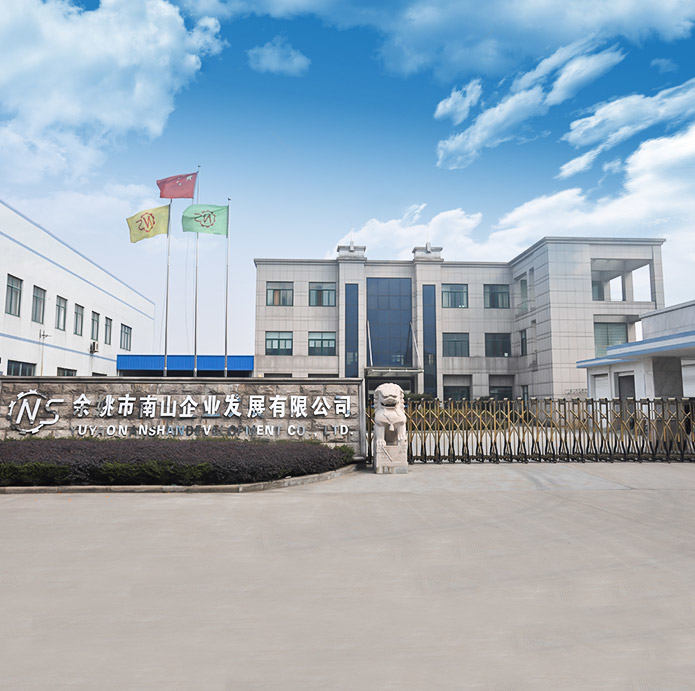
Yuyao Nanshan Development Co., Ltd. was established in 1999 and is located in Ningbo with elegant and charming environments and enjoys convenient transportation.
Yuyao Nanshan Development Co., Ltd. is China Hole Compression Lug Manufacturers and Wholesale Hole Compression Lug Suppliers, specializes in producing Hole Compression Lug with professional production equipment. Nanshan has strong technologies with advanced facilities and imported automatic production machines and inspection equipment. Nanshan also is using the ERP to control the production process line and has set up a research & development center for continued innovation and to meet the requirements of more and more customers from all over the world.
Our products extensively are used in steel high constructions, tunnel projects, bridges, railways, airport stations, high way, sea ports, nuclear power plants,s and so on. And it sold to USA market and Europe market morely and Asia, that all makes customers satisfied exactly.
Yuyao Nanshan Development Co., Ltd. adheres to the principle of “quality the eternal base, credit forever pursuit”, we will spare no effort to provide our customers with more stable quality and more wonderful service. We welcome domestic and overseas customers to contact us for more information and business opportunities.

Witness strength

Honorary Qualifications

Update news
NEWS AND BLOG
Hole Compression Lug Industry knowledge

Advantages and features of hole compression lug

In the field of modern engineering, the choice of connectors has a vital impact on the safety, stability and durability of the project. Among many connecting parts, hole compression plug has gradually become the product of choice for many engineering projects due to its unique performance advantages. Since its establishment in 1999, Yuyao Nanshan Development Co., Ltd. has continuously worked intensively in the field of bore compression plugs, committed to the research and development and production of high-quality products, and provided excellent solutions to customers around the world.
Core advantages of hole compression plugs
Efficient connection performance
The hole compression plug achieves a tight connection through a compression mechanism, eliminating the need for traditional fixing methods such as welding and bolts, greatly simplifying the installation process. This efficient connection method not only significantly shortens the installation time, but also effectively reduces the project cost and helps the project be completed faster.
Stability and reliability
The hole compression plug is made of high-strength, corrosion-resistant materials and can adapt to various harsh environmental conditions to ensure the stability and durability of the connection. During long-term use, the hole compression plug is not easy to loosen or fall off, thus providing safety guarantee for the engineering project.
Wide adaptability
The design of hole compression plugs is flexible and can adapt to holes of different sizes and shapes to meet various connection needs. At the same time, it has strong compatibility and can be used with a variety of substrates (such as metals, non-metals, etc.), making it perform well in many fields of application.
Easy maintenance
The installation and removal process of the hole compression plug is simple and convenient, requiring no special tools or professional skills, reducing the complexity of the maintenance process. This feature not only improves maintenance efficiency, but also significantly reduces maintenance costs and time.
The innovative advantages of Yuyao Nanshan Development Co., Ltd.
Advanced production equipment
Yuyao Nanshan Development Co., Ltd. is equipped with industry-leading production equipment and testing instruments to ensure that products undergo strict quality control in every aspect from raw materials to finished products. This systematic quality management enables the company's bore compression plugs to enjoy a good reputation in the market.
Continuous technological innovation
The company has established a dedicated R&D center and continues to invest resources in technological innovation and product upgrades. By introducing advanced domestic and foreign technologies and combining them with market demand, Yuyao Nanshan has successfully developed a variety of hole compression plug products with independent intellectual property rights to meet the individual needs of different customers and promote technological progress in the industry.
Excellent customer service
Yuyao Nanshan Development Co., Ltd. has always adhered to the business philosophy of "quality is the eternal foundation, reputation is the eternal pursuit". The company has won the trust and support of customers with stable product quality and excellent service, and established good customer relationships.
Widely used
The company's bore compression plug products are widely used in infrastructure projects such as steel structure high-rise buildings, tunnel projects, bridge construction, railways, airports, highways, seaports and nuclear power plants. These projects have extremely high performance requirements for connecting parts, and Yuyao Nanshan's hole compression plugs have successfully won widespread recognition and trust from customers with their excellent performance and stability.