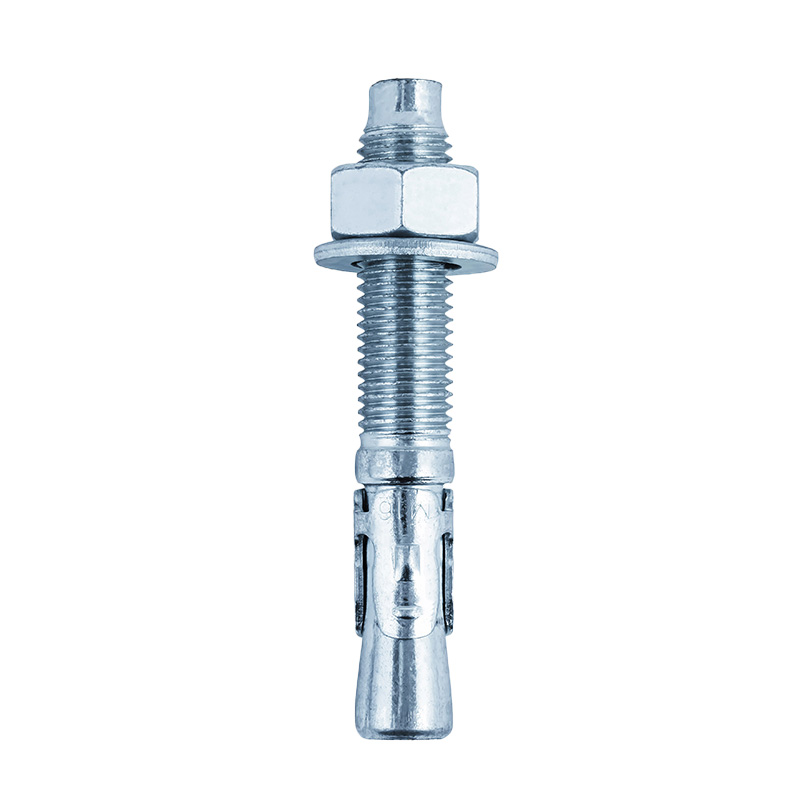
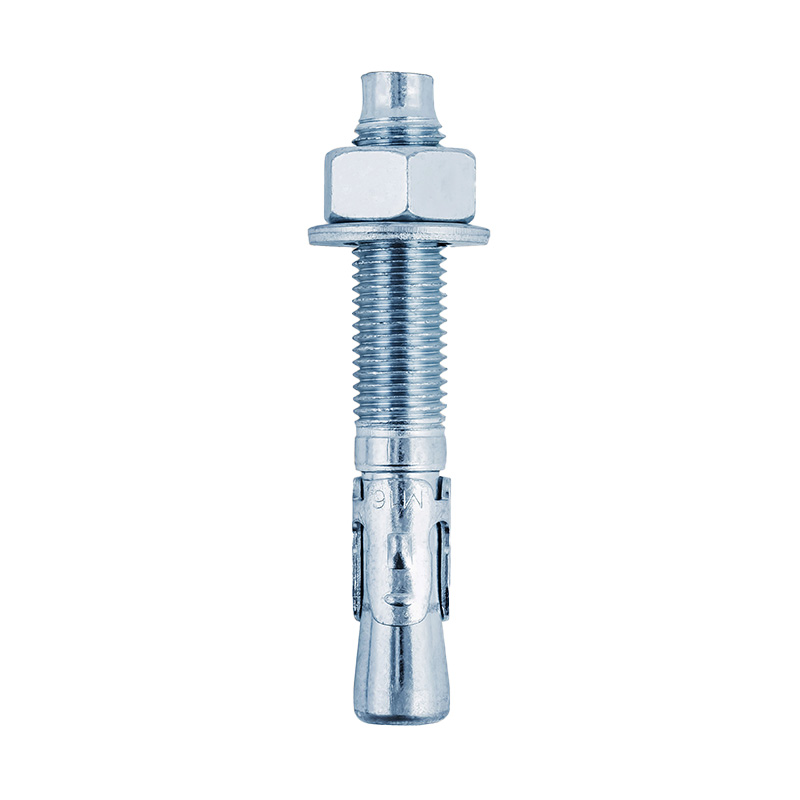
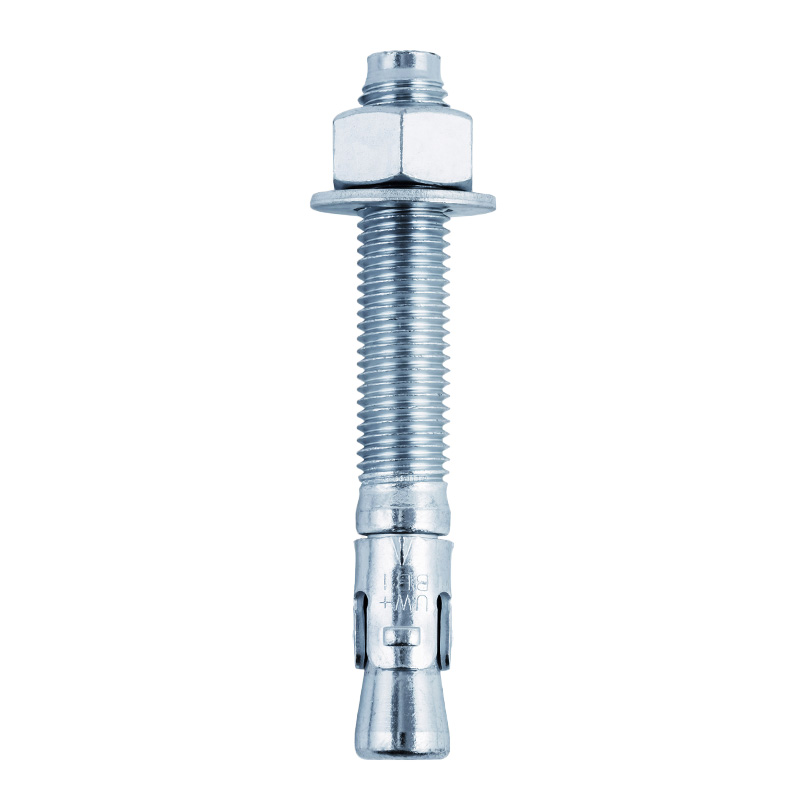
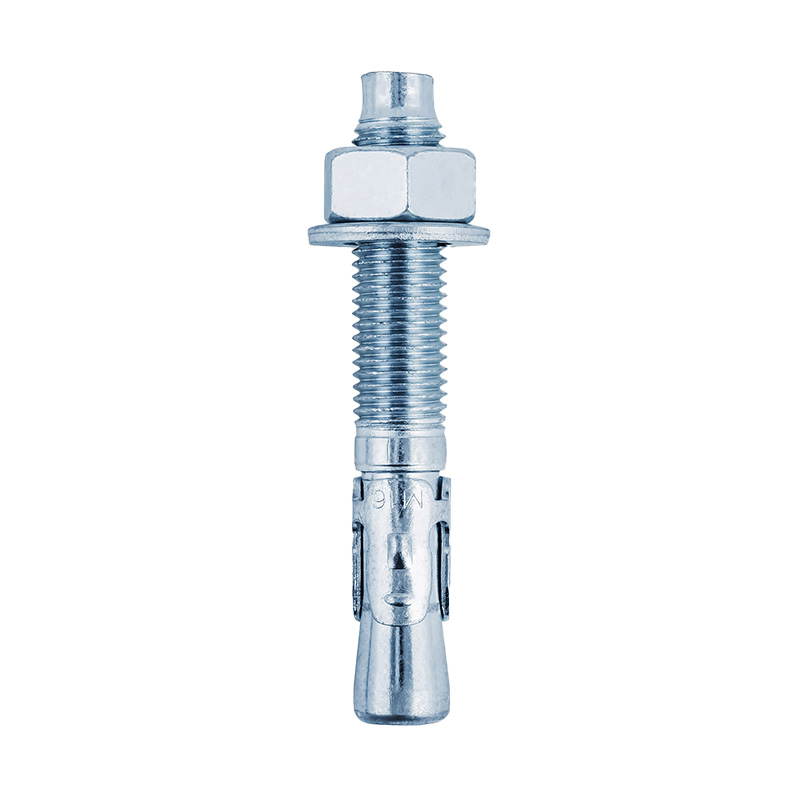
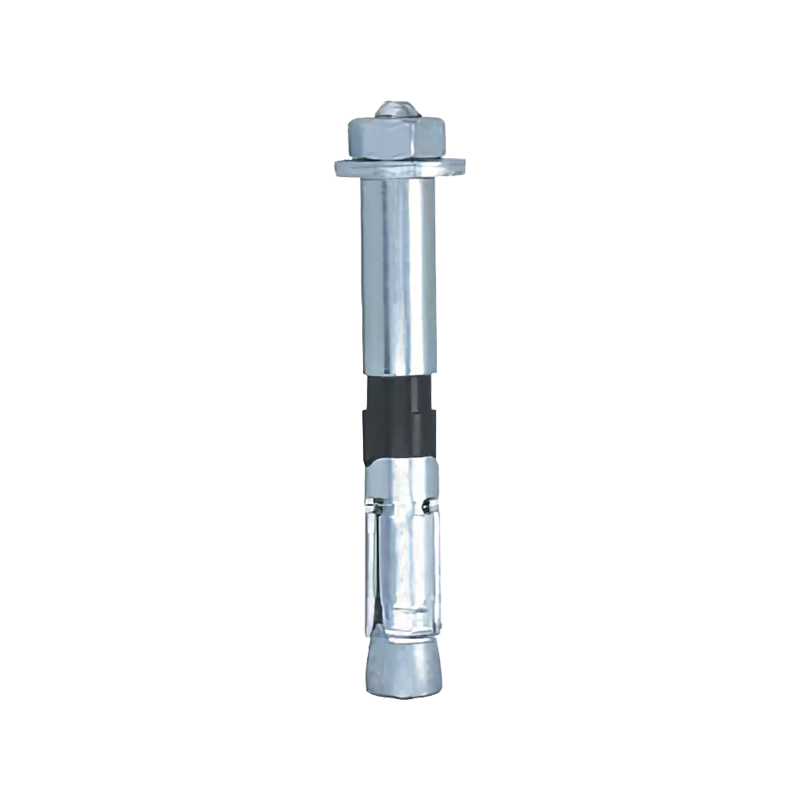
PRODUCT INFORMATION: Metric Wedge Anchor is a wedge-shaped anchor using metric standards. It is designed for high-strength fastening. It aims to closely combine local equipment, anchors and equal-diameter holes through precise mechanical principles to achieve efficient and reliable anchoring effects. It is mainly composed of several core components such as anchor bolts, wedge blocks, washers and lock nuts. Among them, anchor bolts, as the main component that bears tension, are usually made of high-strength alloy steel.
FOR USE IN: For railways, highways, power plants, electric power, petroleum, chemical, theaters, stadiums, construction, and other companies and factories, including metal fasteners steel, aluminum horn or wood to concrete, hanging pipes, bridges, escalators, conveyors and high-speed devices often require the application is installed on the machine, handrails, cushion, and the shelf products. products sold with matching nuts and washers are not assembled together.
FEATURE: Thick with resistance and good resistance to vibration, and wind, anti-fracture, solid lasting.
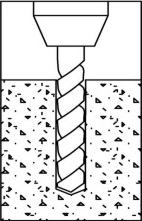
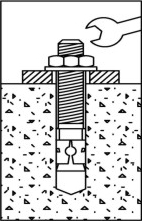
1. Drill holes on the base according to the required diameter and depth
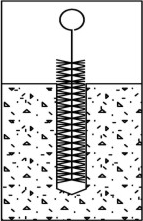
2. Move debris and clean small holes
3. Knocking in the clamp anchor
4. Tighten the screws with a wrench
Size
Burial Depth
(IN)
Drill Size(MM)
Recommended Torque
(Nm)
Maximum Pull-Out Average (kgs) Concrete Strength: 2000psi
Maximum Pull-Out Average (kgs) Concrete Strength: 4000psi
M8
35
8
15
1080
1295
M8
45
8
15
M8
55
8
15
M8
55
8
15
M8
55
8
15
M10
50
10
25
1380
1679
M10
60
10
25
M10
60
10
25
M10
60
10
25
M10
60
10
25
M12
65
12
45
2237
2600
M12
80
12
45
M12
80
12
45
M12
80
12
45
M12
80
12
45
M16
60
16
110
3850
4918
M16
70
16
110
M16
100
16
110
M16
100
16
110
M16
100
16
110
M20
80
20
180
5100
6968
M20
120
20
180
M20
120
20
180
M20
120
20
180
M24
135
24
320
8960
12587
M24
135
24
320
ISO Metric Standard
Understanding the Metric Thread System in Structural Anchoring
Metric Wedge Anchors follow ISO 68-1 thread geometry — the internationally dominant fastener standard across Europe, the Middle East, Southeast Asia, and East Asia. Where inch-series anchors rely on UNC thread pitch, metric anchors use millimetre-based pitch values that integrate directly with metric structural steel, metric torque specifications, and ISO-referenced design codes.
Thread StandardISO 68-1 Metric Coarse
Pitch expressed in mm; thread angle 60° — same geometry as all ISO metric fasteners, ensuring compatibility with standard metric nuts and washers from any supplier.
Diameter DesignationM6 through M24
Nominal diameter equals the thread outer diameter in millimetres. Drill bit diameter matches the anchor body OD — the same principle as inch-series, expressed precisely in metric drill sizes.
Torque UnitsNewton-metres (Nm)
Torque specifications are stated in Nm, the standard unit on metric torque wrenches. No conversion required — field teams working with metric tooling can read and apply values directly.
Primary Export MarketsEurope · Asia · Middle East
Metric standards govern construction specifications in these regions. Using inch-series anchors in metric projects creates incompatibility at the nut, washer, and torque verification stages.
Product Structure
Four-Component Anchor Assembly — What Each Part Does
A Metric Wedge Anchor is not a single piece of steel — it is a four-part mechanical assembly where each component performs a distinct engineering function. Understanding the role of each part helps specifiers and procurement teams evaluate product quality beyond surface finish and price.
Anchor Bolt (Stud)
The threaded rod that carries all applied tensile load. Manufactured from high-strength alloy steel with controlled carbon content to meet minimum yield strength requirements. Thread form is cut or rolled to ISO metric coarse pitch — rolled threads (preferred) have superior fatigue resistance compared to cut threads due to the compressive residual stress introduced during the forming process.
Expansion Clip (Wedge Sleeve)
The split steel sleeve that surrounds the lower section of the stud. When the stud is drawn upward during tightening, the clip is forced outward against the drilled hole wall. The geometry of the clip contact zone determines the effective bearing area — a wider, more uniform clip engagement produces higher pull-out values and reduces eccentricity under shear loading.
Flat Washer
Distributes bearing load from the nut across a defined area of the fixture plate surface. Prevents the nut from embedding into softer fixture materials (aluminium channel, thin steel plate) under final torque. Washer outside diameter and thickness are sized proportionally to the bolt diameter — undersized washers allow load concentration and potential punch-through under dynamic loading.
Hex Nut
Provides the torque interface for installation. The nut threads engage the stud and, as it is tightened, pulls the stud body upward while the clip remains stationary against the hole bottom — creating the outward expansion force. Nut height and thread engagement length are matched to the stud diameter to ensure the nut yields to the stud in all failure modes, not the thread engagement zone.
All four components are supplied unassembled per box. Assembly should be performed on-site immediately before installation to maintain component cleanliness and ensure correct positioning during anchor driving.
By The Numbers
M6–M24Full diameter range, 31 standard SKUs
12,587kgPeak pull-out, M24 in 4,000 psi concrete
320NmMaximum installation torque (M24 diameter)
8mmSmallest drill size (M8 anchors, 8 mm bit)
300mmLongest standard anchor (M20 × 300 mm)
Load Performance
Pull-Out Capacity by Diameter — 4,000 psi Concrete at Minimum Embedment
The bar chart below represents independently verified average maximum pull-out loads at minimum burial depth in 4,000 psi (≈ 27.6 MPa) concrete for each anchor diameter. Values scale substantially with increased embedment — consult the full load table for intermediate and maximum embedment depths.
M8
1,295 kg@ 35 mm burial
M10
1,679 kg@ 50 mm burial
M12
2,600 kg@ 65 mm burial
M16
4,918 kg@ 60 mm burial
M20
6,968 kg@ 80 mm burial
M24
12,587 kg@ 135 mm burial
All values are average maximums under controlled laboratory conditions. Actual structural design loads must incorporate safety factors as required by EN 1992-4 (Eurocode 2), ISO 13918, or the applicable national building standard for the project jurisdiction.
Specification Reference
Critical Installation Parameters at a Glance
Each anchor diameter has a defined drill bit size, minimum burial depth, and recommended installation torque. These three values are interdependent — using an oversized drill bit reduces the effective bearing area even if torque and depth targets are met. The quick-reference grid below covers all standard diameters.
Diameter ISO Metric
Drill Bit Exact mm
Min. Burial mm
Install Torque Nm
Pull-Out 2000 psi kg (min. embed)
Pull-Out 4000 psi kg (min. embed)
M8
8 mm
35 mm
15 Nm
1,080kg
1,295kg
M10
10 mm
50 mm
25 Nm
1,380kg
1,679kg
M12
12 mm
65 mm
45 Nm
2,237kg
2,600kg
M16
16 mm
60 mm
110 Nm
3,850kg
4,918kg
M20
20 mm
80 mm
180 Nm
5,100kg
6,968kg
M24
24 mm
135 mm
320 Nm
8,960kg
12,587kg
Drill bit diameter equals the nominal anchor diameter in all cases — one of the key advantages of the metric designation system. This eliminates the fractional drill bit conversion errors that arise when specifying inch-series anchors in metric-standard project environments.
Structural Behaviour
Seismic Zone Considerations for Metric Wedge Anchors
In seismic-active regions — common across East Asia, Southeast Asia, Southern Europe, and the Middle East — structural engineers must evaluate anchor performance under both static gravity loads and dynamic lateral loads from ground acceleration. The wedge expansion mechanism responds differently to these two load types, and the differences have direct implications for project specification.
How the Wedge Mechanism Behaves Under Dynamic Load
Under purely static tensile loading, the expansion clip engages progressively as torque is applied, reaching maximum bearing contact at the specified installation torque. The connection is self-locking — increasing tensile load causes the clip to expand further, increasing resistance.
Under cyclic dynamic loading (seismic, vibration, fatigue), the behaviour differs. Repeated load reversals can cause micro-movement at the clip-to-concrete bearing interface, gradually relaxing the initial clip engagement. Over many cycles, this may reduce pull-out capacity below the initially tested static value.
This characteristic is not unique to metric anchors — it applies to all mechanically expanded wedge-type anchors regardless of thread system. The relevant design standard for anchors in seismic conditions within Europe is EN 1992-4 Annex C, which defines specific seismic performance categories (C1 and C2) and requires anchors to be assessed against cyclic load protocols.
Our engineering team can advise on which anchor type from our range is appropriate for specific seismic design categories. For C2 seismic zones, supplementary consultation on anchor type selection is recommended before final specification.
Specification Checklist for Seismic Zones
1
Confirm the seismic design category (SDC A through F under ASCE 7, or Performance Level under EN 1998) applicable to the project. Wedge anchors are generally acceptable for lower seismic categories.
2
Specify minimum embedment depths at or above the values in the load table. Deeper embedment increases the concrete cone breakout resistance, which governs seismic pull-out in most cases.
3
Maintain minimum edge distances and anchor spacing per EN 1992-4 or ACI 318 Appendix D to prevent group effects that reduce individual anchor capacity under combined tension and shear.
4
Consider stainless steel grades (304 or 316) for anchors in humid or chemically active environments — corrosion initiating at the clip engagement zone can compromise ductility capacity under seismic demand.
5
Document installation torque with a calibrated wrench and retain torque inspection records. Post-installation inspection is a standard requirement on seismic-critical connections in most national construction codes.
Environment & Coating Selection
Matching Surface Treatment to Exposure Conditions
Corrosion of the anchor body in service is the primary cause of long-term load capacity loss in installed anchors. The correct surface treatment must be specified at the time of procurement — it cannot be upgraded after installation. The four primary exposure categories are described below.
Exposure Class 1 — Dry Interior
Electro-Galvanized Carbon Steel (Standard)
Suitable for protected interior environments with no direct moisture contact: warehouses, commercial interiors, dry industrial facilities, office structures. Zinc coating provides sacrificial cathodic protection against atmospheric oxidation. Coating weight is sufficient for classification as dry-interior service life exceeding 25 years in stable controlled environments.
Not suitable where condensation forms regularly on anchor surfaces, where cleaning chemicals contact the anchor zone, or where the concrete substrate experiences moisture-driven carbonation from below.
Exposure Class 2 — Outdoor / Covered Exterior
Hot-Dip Galvanized Carbon Steel (HDG)
Hot-dip galvanizing deposits a significantly thicker zinc layer than electro-galvanizing and is the standard specification for covered exterior environments: parking structures, outdoor covered platforms, building facades in low-pollution urban areas, and bridge deck soffits in non-coastal zones. Coating thickness meets EN ISO 1461 requirements.
HDG anchors require slightly oversized hole diameters compared to bare steel equivalents — confirm drill bit size adjustment with our technical team when specifying HDG versions.
Exposure Class 3 — Marine / Coastal
AISI 316 Stainless Steel
The molybdenum addition in 316 stainless provides chloride pitting resistance absent in 304. Required for all applications within approximately 1 km of direct seawater exposure, and mandatory for anchors embedded in marine concrete structures, coastal bridges, port facilities, and offshore-adjacent installations. Also specified for anchors in swimming pool enclosures due to hypochlorite chemical contact.
316 stainless anchors have the same load performance as carbon steel equivalents at identical dimensions. Magnetic response is minimal — relevant for proximity to sensitive electromagnetic equipment.
Exposure Class 4 — Chemical / Process
AISI 304 Stainless Steel or Special Coating
For process plant environments involving acid vapour, alkali splash, or contact with food-grade cleaning agents, standard zinc coatings fail rapidly through chemical attack rather than simple corrosion. AISI 304 stainless is suitable for mildly acidic and most alkali environments. For strong oxidizing acids or halogens other than chloride, special coating systems or alternative anchor types may be required.
Provide a chemical exposure summary when requesting quotation for chemical-environment applications — surface treatment specification is made case by case based on the specific chemical contact profile.
Global Market Suitability
Regional Code Compatibility and Market Applications
Metric Wedge Anchors are designed for markets where ISO and EN standards govern structural fastener specifications. Each of the three primary export regions has distinct code frameworks, procurement norms, and project types that drive demand for specific size ranges and material grades.
Europe
EN 1992-4 · ETA Regime · DIN Standards
European construction specifications are governed by the Eurocodes, with EN 1992-4 specifically addressing concrete anchor design. Procurement on large infrastructure projects typically requires European Technical Assessment (ETA) documentation. Our Metric Wedge Anchors comply with the dimensional and mechanical requirements that align with ETA assessment protocols.
High-demand sizes in this market: M10 through M16 for general construction; M20 and M24 for infrastructure and industrial installations. HDG and 304 stainless grades see strong specification in Scandinavian exterior applications due to aggressive winter deicing chemical exposure.
Typical project types: Residential and commercial facade anchoring, MEP installation in concrete-frame buildings, rail station and underground infrastructure fastening, wind turbine base hardware.
Southeast Asia
BS · Local Codes · Infrastructure Growth
Construction markets across Vietnam, Indonesia, Thailand, Malaysia, and the Philippines operate under a mix of British Standard legacy codes and locally adapted metric standards. Metric anchor specifications are standard across all major infrastructure programmes — highways, elevated rail, port expansion, and power generation — driven by Chinese-standard and European-standard project participation from international contractors.
High-demand sizes in this market: M8 and M10 for secondary structural and mechanical installation; M12 to M16 for primary structural connections and heavy-duty equipment anchoring in tropical industrial facilities.
Climate consideration: High humidity, temperature cycling, and coastal exposure at many project sites push demand toward zinc-coated and 304/316 stainless grades even for standard commercial construction, significantly above what equivalent European projects would specify.
Middle East
ASTM-Metric Hybrid · Mega-Project Scale
The Gulf Cooperation Council construction sector operates on very large individual project volumes. Specification standards are a hybrid: base design codes are often American (ASCE, ACI), but fastener procurement is conducted in metric sizes due to the dominant supply base. This creates a specific demand for metric wedge anchors that meet or exceed the structural performance levels documented in ACI 318 anchor design provisions, but are supplied in ISO metric thread sizes.
High-demand sizes in this market: M16 through M24 for large-scale infrastructure — airport terminals, stadium structures, petrochemical facilities, desalination plant installations. 316 stainless is heavily specified due to coastal and high-humidity conditions across most of the region.
Procurement pattern: Large-volume project orders placed 2–4 months ahead of installation schedule. Factory capacity reservation and documented quality records are typically required at the tender stage.
Sourcing Guide
What to Specify When Placing a Metric Wedge Anchor Order
Incomplete specifications are the most common cause of procurement delays, substitution disputes, and post-delivery returns. The checklist below covers every field that should be confirmed before a purchase order is issued, based on recurring specification gaps observed across export orders.
Product Specification Fields
DiameterState as ISO metric designation: M8, M10, M12, M16, M20, or M24
Total LengthFull anchor length in mm (e.g., M12 × 100 mm) — not embedment depth alone
Material GradeCarbon steel, AISI 304 stainless, or AISI 316 stainless
Surface TreatmentElectro-galvanized, hot-dip galvanized, or bare (stainless only)
Thread FormISO metric coarse (standard) — confirm if fine pitch is required
Accessories IncludedConfirm nut and washer are included (standard) or excluded (OEM supply)
Commercial & Logistics Fields
QuantityState in pieces per SKU; confirm case/box configuration required
Delivery PortSpecify destination port for sea freight — affects Incoterm and freight quotation
Required DocumentsList compliance documents needed: MTR, test reports, packing list format, country of origin certificate
Marking RequirementsCarton marking language, barcode requirements, or private label needs
Lead Time WindowProvide target ship date and any project milestone constraints
Inspection Hold PointSpecify if pre-shipment inspection by third-party agent is required
Complete Technical Data
Full Pull-Out Performance Table — All Diameters and Embedment Depths
Unlike a simplified selection guide, this table shows how pull-out capacity increases at intermediate and maximum burial depths — data that structural engineers require when designing for deeper embedments to achieve higher working loads without stepping up to a larger diameter anchor.
Diameter
Burial Depth (mm)
Drill Size (mm)
Torque (Nm)
Pull-Out @ 2,000 psi (kg)
Pull-Out @ 4,000 psi (kg)
Embedment Position
M8
35
8
15
1,080
1,295
Minimum
M8
45
8
15
—
—
Intermediate
M8
55
8
15
—
—
Intermediate
M10
50
10
25
1,380
1,679
Minimum
M10
60
10
25
—
—
Intermediate
M12
65
12
45
2,237
2,600
Minimum
M12
80
12
45
—
—
Extended
M16
60
16
110
3,850
4,918
Minimum
M16
70
16
110
—
—
Intermediate
M16
100
16
110
—
—
Extended
M20
80
20
180
5,100
6,968
Minimum
M20
120
20
180
—
—
Extended
M24
135
24
320
8,960
12,587
Minimum
M24
135
24
320
—
—
Maximum (as tested)
Entries marked "—" indicate that the full load table data is available on request. Pull-out capacity at extended embedment depths consistently exceeds minimum-embedment values — contact our technical team for the complete dataset when designing for non-minimum embedment conditions.
Technical Q&A
Questions Engineers and Procurement Teams Ask Most Often
The following questions reflect the most consistent technical and commercial enquiries received from structural engineers, main contractors, and procurement managers working with metric-standard projects across European and Asian markets.
Each SKU has three length-related values: total anchor length (the number after the diameter designation in mm, e.g., the "100" in M12 × 100), burial depth (the length of anchor body embedded below the concrete surface), and thread engagement length (the exposed thread above the fixture that the nut engages). Total length equals burial depth plus the thickness of the fixture material plus the thread engagement zone. When specifying, confirm that the total anchor length accommodates your fixture thickness — the burial depth value in the table assumes the anchor is driven until the required embedment is reached, which means the fixture thickness must fit within the remaining exposed stud length between the surface and the top of the anchor.
Metric wedge anchors can be installed in all orientations — vertical downward, horizontal, inclined, and vertical overhead — provided the installation process correctly cleans the hole and achieves the specified embedment depth and torque in each case. Overhead installation introduces one additional complication: loose drilling debris falls back into the hole under gravity rather than falling clear. Multiple blow-out cycles with compressed air and brush cleaning between cycles are essential for overhead holes to achieve the same cleanliness standard as downward installations. Load values do not vary by installation angle within the tested range, provided full embedment and specified torque are achieved.
Tested pull-out values are reported at two concrete compressive strengths: 2,000 psi (approximately 14 MPa) and 4,000 psi (approximately 27.6 MPa). The lower bound — 2,000 psi — represents the minimum substrate strength for the load data to be considered valid. Installing anchors in concrete below 2,000 psi compressive strength places the connection outside the tested performance envelope. Pull-out failure in weak concrete shifts from anchor steel or clip failure to concrete cone breakout at substantially lower loads than tabulated. In practice, if the substrate concrete has not yet achieved the minimum specified strength at the time of anchor installation — common in fast-track construction schedules — installation should be deferred until the concrete matures to at least 2,000 psi, confirmed by cylinder or core test.
Each anchor size is packaged per a defined case/box configuration. Smaller diameters (M6, M8) are packaged in higher unit counts — up to 1,200 pieces per outer carton — while larger diameters (M20, M24) are packaged in lower quantities per box reflecting the significantly higher piece weight. Mixed-size orders within a single shipment are fully supported: each size is packed in its own labelled carton, combined on a pallet for sea freight or consolidated for air freight. There is no requirement for same-size orders only. When placing a mixed order, please provide the complete item list by part number, quantity, and delivery destination — this allows our production team to schedule all items together and avoid split shipments.
The fundamental mechanical principle is the same across all diameters: a split expansion clip is drawn upward by the stud bolt to expand outward against the hole wall. However, the specific geometry of the clip, the stud shoulder profile, and the collar design are engineered separately for each diameter group rather than being a simple scaled version of a single design. Small-diameter anchors (M6–M10) use clips with proportionally thinner walls to maintain flexibility in tighter radial clearances. Large-diameter anchors (M20–M24) use heavier-section clips with wider bearing faces to distribute the substantially higher expansion forces across the concrete aggregate without inducing local crushing at the contact zone. This separate-design approach per diameter group is why load capacity scales non-linearly with diameter — the M24 anchor produces roughly ten times the pull-out capacity of the M8 at minimum embedment, disproportionate to the simple 3:1 diameter ratio.
Pre-production samples in the specified diameter, length, material grade, and surface treatment can be provided. Sample sets typically include representative pieces from each size requested, packed in standard production cartons with the lot-level labelling used on production orders. Technical documentation that can accompany sample shipments includes: dimensional inspection reports (measurement of thread pitch, diameter, total length, and coating thickness against specification), the material test report for the steel heat used in the sample batch, and our standard installation instruction sheet in English. If your organisation requires a specific documentation format for internal approval processes, please provide the template or checklist at the time of sample request and we will complete it against our standard test records.
Discuss Your Metric Anchor Specification With Our Factory Team
Send us your diameter range, required quantities, destination market, and any applicable code references — we will respond with a full technical and commercial proposal within one working day.
Yuyao Nanshan Development Co., Ltd. was established in 1999 and is located in Ningbo with elegant and charming environments and enjoys convenient transportation.
Yuyao Nanshan Development Co., Ltd. is China Metric Wedge Anchor Manufacturers and Wholesale Metric Wedge Anchor Suppliers, specializes in producing Metric Wedge Anchor with professional production equipment. Nanshan has strong technologies with advanced facilities and imported automatic production machines and inspection equipment. Nanshan also is using the ERP to control the production process line and has set up a research & development center for continued innovation and to meet the requirements of more and more customers from all over the world.
Our products extensively are used in steel high constructions, tunnel projects, bridges, railways, airport stations, high way, sea ports, nuclear power plants,s and so on. And it sold to USA market and Europe market morely and Asia, that all makes customers satisfied exactly.
Yuyao Nanshan Development Co., Ltd. adheres to the principle of “quality the eternal base, credit forever pursuit”, we will spare no effort to provide our customers with more stable quality and more wonderful service. We welcome domestic and overseas customers to contact us for more information and business opportunities.
A project engineer on a renovation site needs to secure a steel column base to an existing concrete slab, and the same question comes up on almost every jobsite: are wedge anchors better than screw anchors? The practical answer is yes for ...
What Is a Single Expansion Anchor and How Does It Work?
A single expansion anchor is a mechanical fastener that locks inside a drilled hole in concrete, brick, or block. It is built from a split metal sleeve, a pre-assembled expansion cone...
You are fixing a pipe bracket to a concrete wall or anchoring a light steel frame to a block partition. The load is light to medium, and the base material may not be high-strength concrete. A single expansion anchor is one of the simplest f...
Metric Wedge Anchor Industry knowledge
Structural Design Features of Metric Wedge Anchor
In the construction and engineering industries, the selection of anchoring devices is crucial to the safety and stability of the structure. Yuyao Nanshan Development Co., Ltd., as a professional manufacturer of metric wedge anchors, is committed to providing customers with high-quality anchoring solutions with advanced production technology and a strict quality control system. Advantages of the wedge mechanism The wedge mechanism of the metric wedge anchor is one of the core features of its design. This unique design can effectively disperse the load when it is stressed, reducing the potential damage to the structure caused by concentrated stress. During installation, the wedge block expands outward to form a solid anchor point, ensuring the stability of the anchor device during use. This design not only improves the load-bearing capacity, but also enhances the seismic performance, providing additional safety for the building, ensuring that the integrity of the structure is maintained in special circumstances such as extreme weather and earthquakes. Material Selection and Durability In the process of manufacturing metric wedge anchors, Nanshan Company pays special attention to the selection of materials. We use high-quality alloy steel and stainless steel, which not only have excellent strength and corrosion resistance, but also can adapt to various harsh environments. For anchors that need to be used in humid or chemically corrosive environments, Nanshan provides galvanizing and coating treatments to further enhance the durability of the product. The careful selection of this material ensures that the metric wedge anchors maintain excellent performance after long-term use, significantly reducing maintenance costs and improving the customer experience. Installation convenience The design of the metric wedge anchor fully considers the convenience of installation. Its unique wedge design allows users to install it by simply inserting the anchor bolt into the pre-drilled hole and tightening it by rotating the bolt. The wedge block will automatically unfold and firmly fix in the substrate. This simplified installation process not only saves time, but also effectively reduces the labor intensity of construction workers and improves construction efficiency. In addition, Nanshan provides metric wedge anchors of various specifications and sizes to meet the needs of different projects, further enhance the flexibility of installation, and enable various engineering projects to be promoted more efficiently. Load-bearing capacity and safety When designing metric wedge anchors, load-bearing capacity is a crucial consideration. Nanshan's products have undergone rigorous load testing to ensure that they can maintain excellent load-bearing capacity in various application scenarios. Due to the wedge mechanism, the anchor can effectively disperse the load into the surrounding substrate when subjected to force, avoiding structural damage caused by concentrated stress. This design not only enhances the safety of the product, but also provides a reliable anchoring solution for major projects such as high-rise buildings, bridges, and tunnels. Seismic performance In areas where earthquakes occur frequently, the seismic performance of anchors is particularly important. Nanshan's metric wedge anchors are carefully designed to effectively resist the lateral and longitudinal impact forces caused by earthquakes. Its wedge structure remains stable when subjected to force, significantly reducing the displacement of the anchor in an earthquake and ensuring the safety of the overall structure. In addition, Nanshan fully considers the impact of dynamic loads during product design to ensure that metric wedge anchors can still maintain superior performance under extreme conditions. Diverse specifications and applications In order to meet the needs of different customers and engineering projects, Nanshan provides metric wedge anchors in a variety of specifications and sizes. Whether it is a small building or a large infrastructure project, customers can find the right product. Our R&D team continuously optimizes product design based on market demand and customer feedback to ensure that each metric wedge anchor can perfectly adapt to specific application scenarios. This diversified product line not only meets the needs of different markets, but also enables Nanshan Company to have stronger competitiveness in the industry.

 English
 中文简体
中文简体 русский
 Español