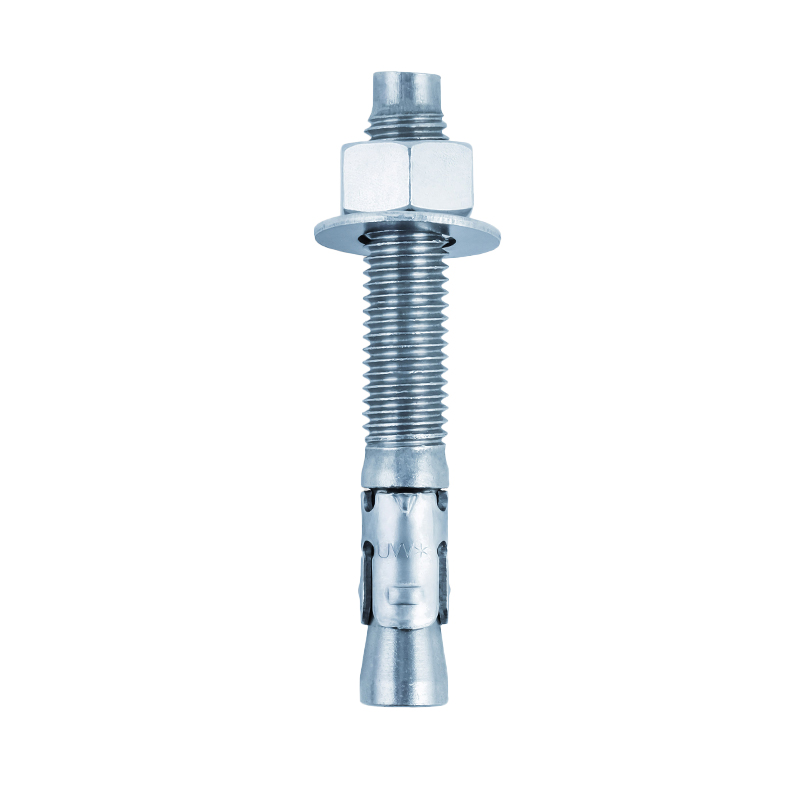
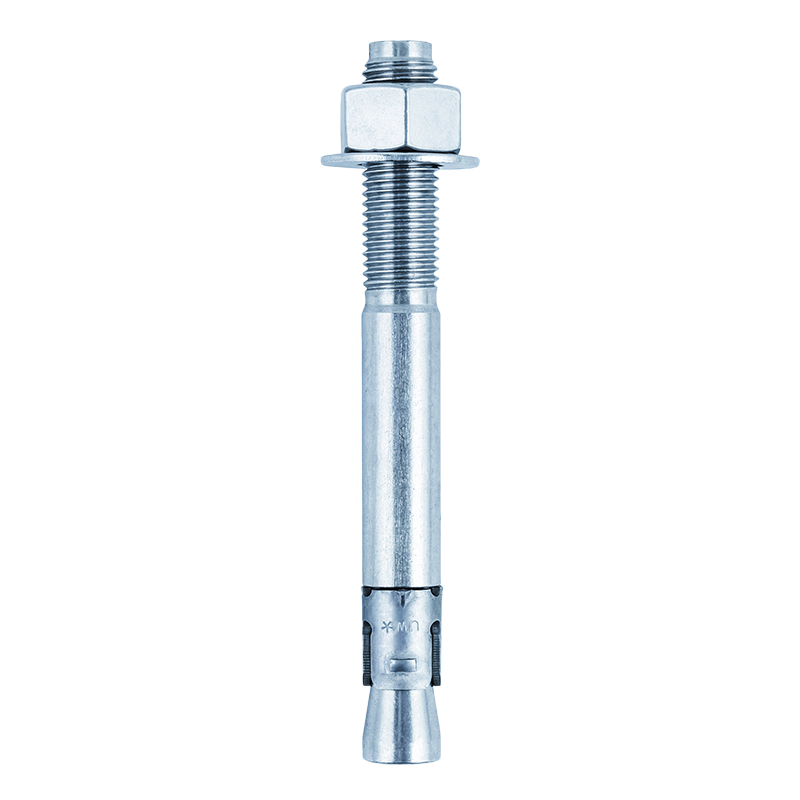
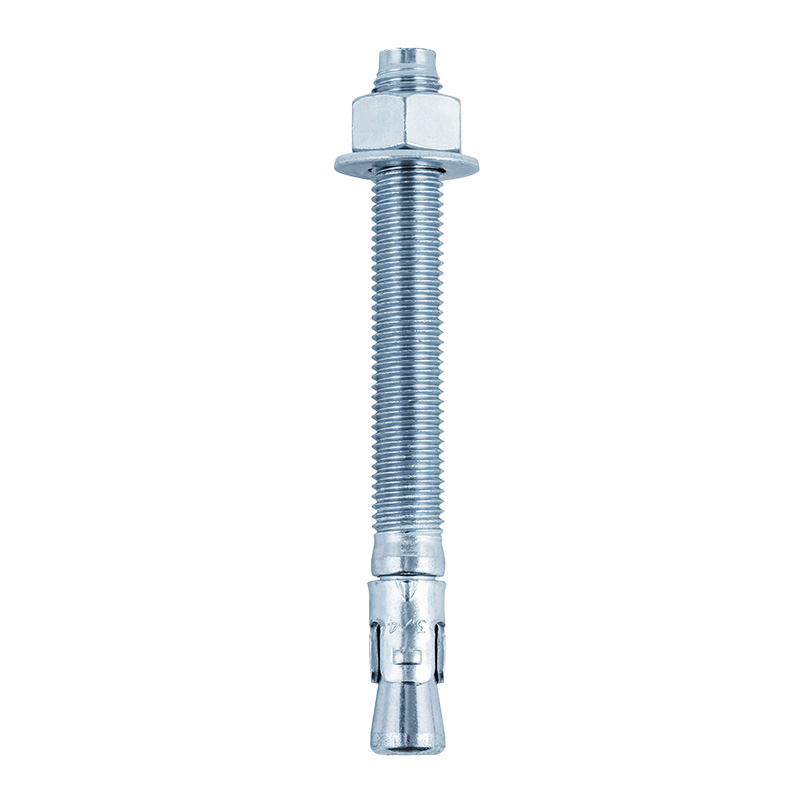
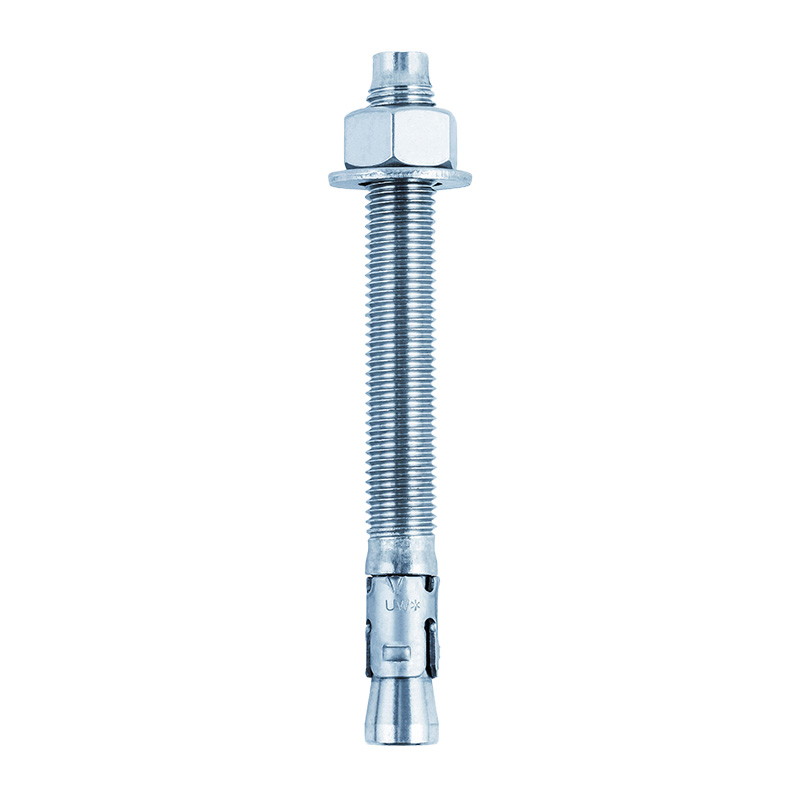
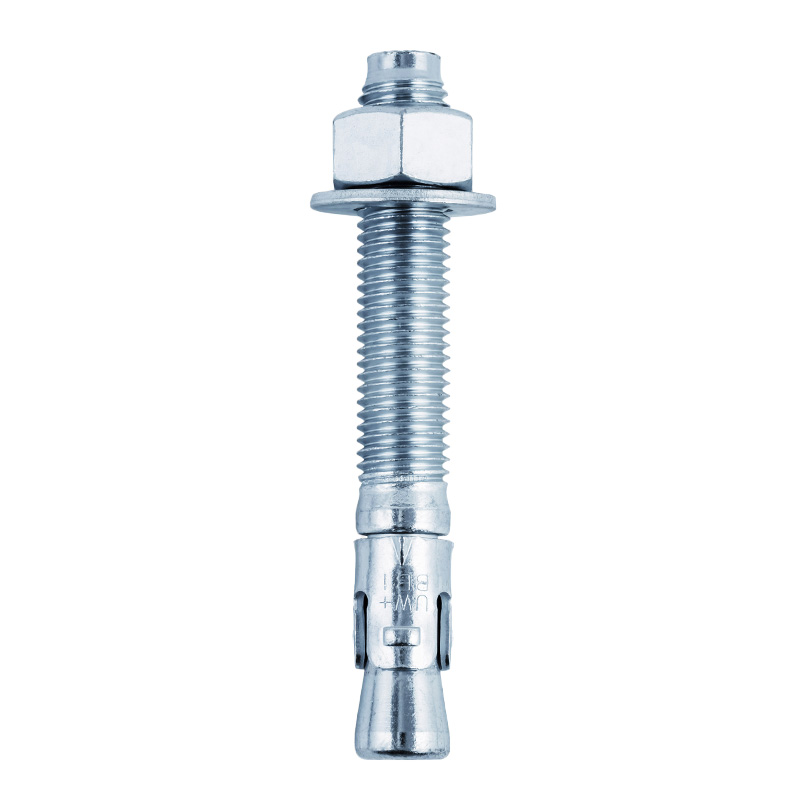
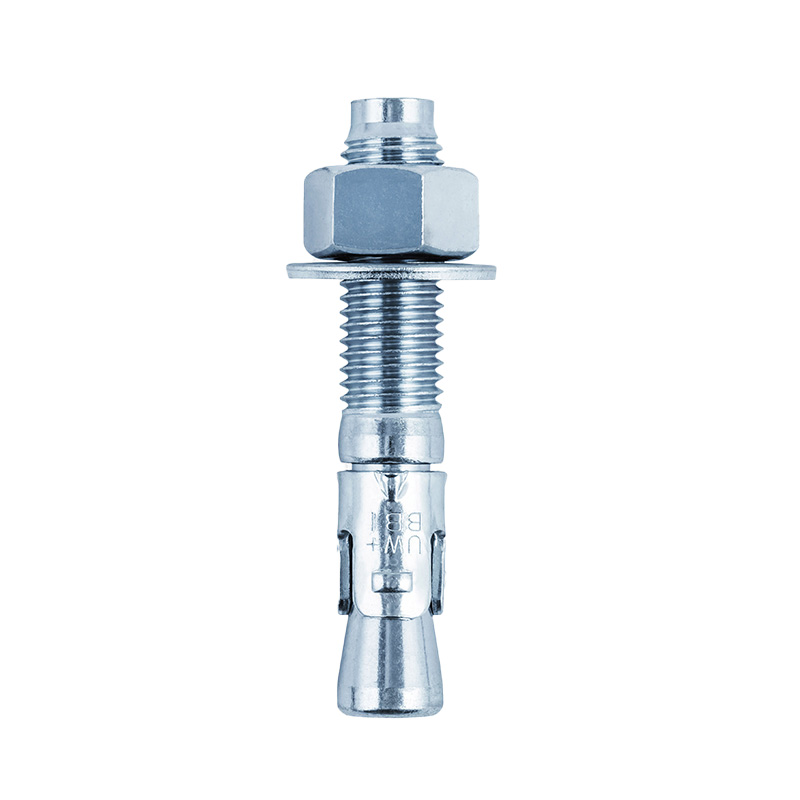
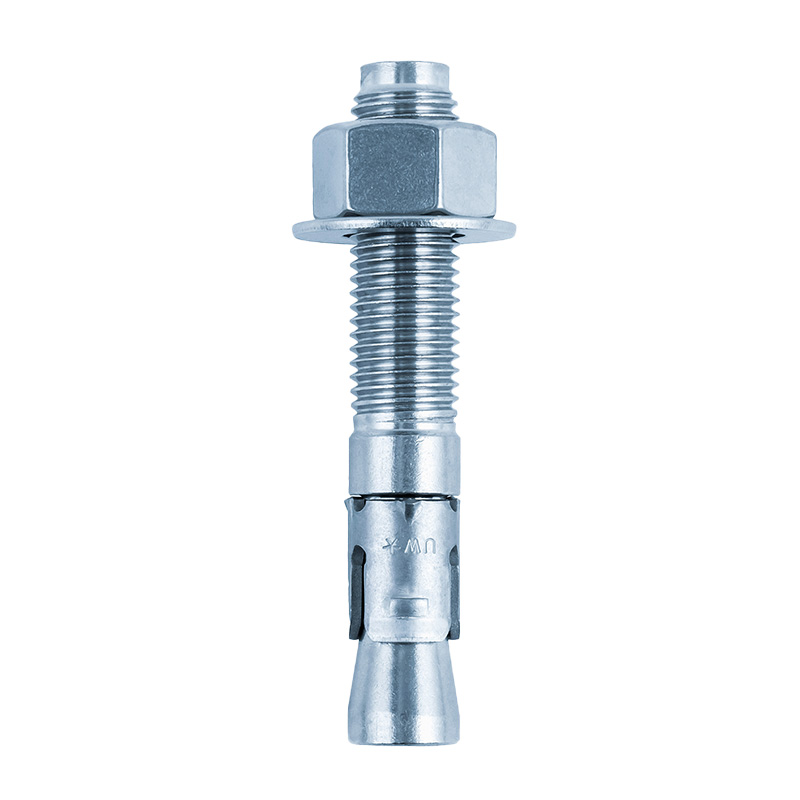
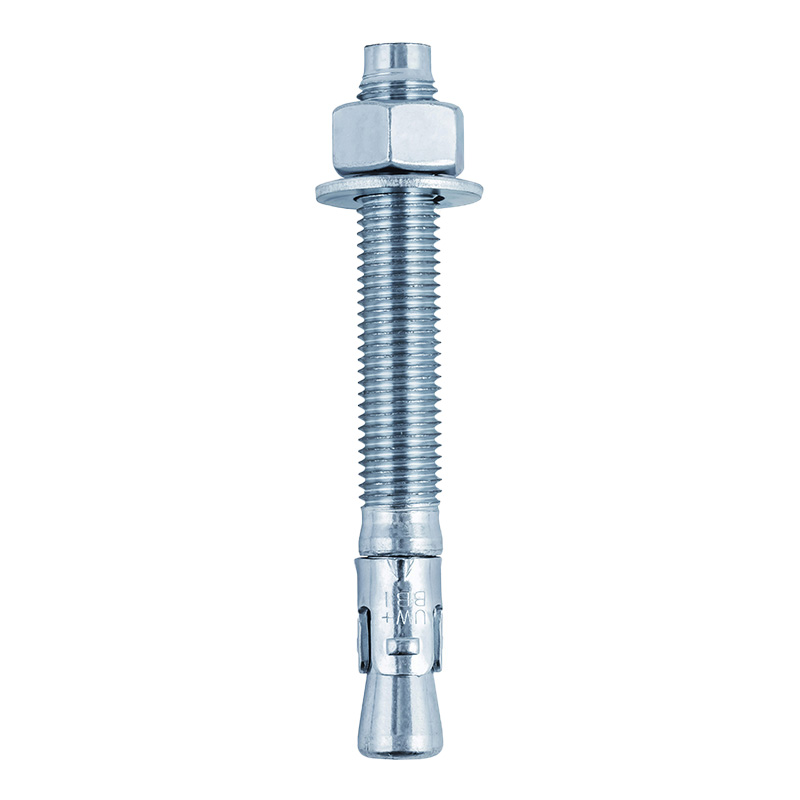
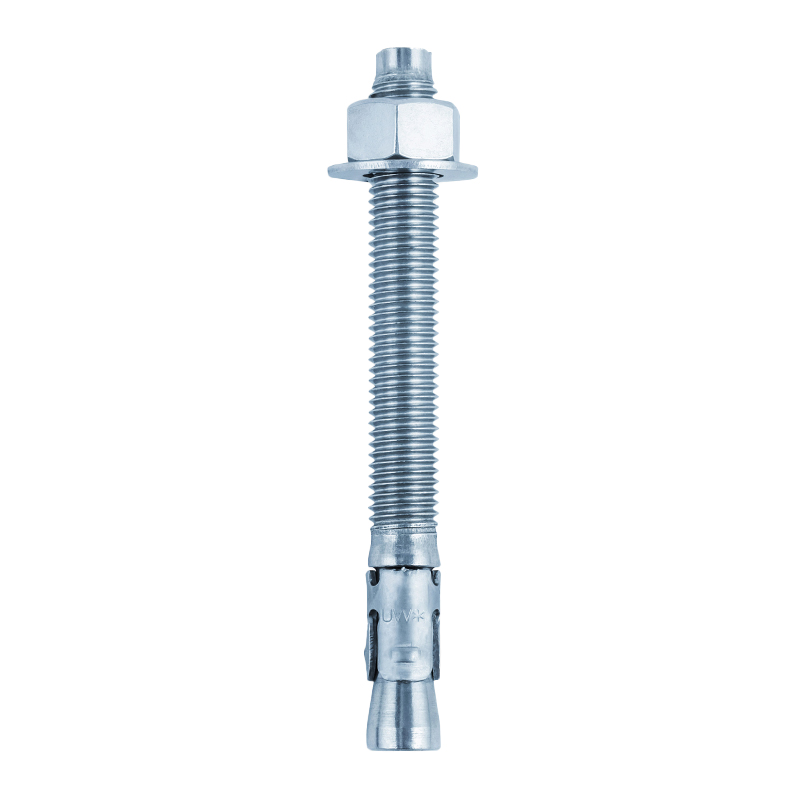
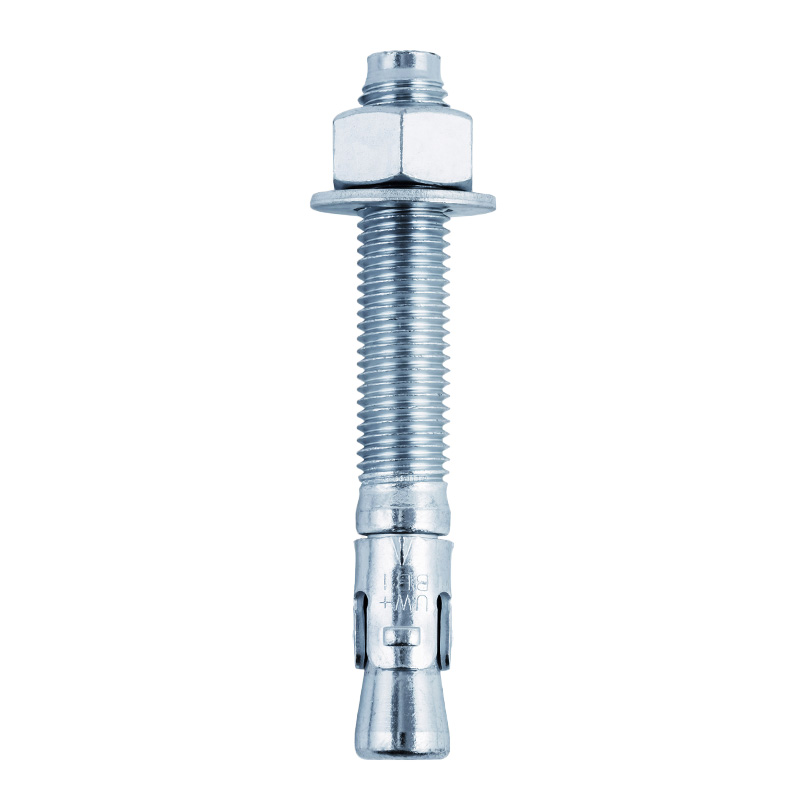
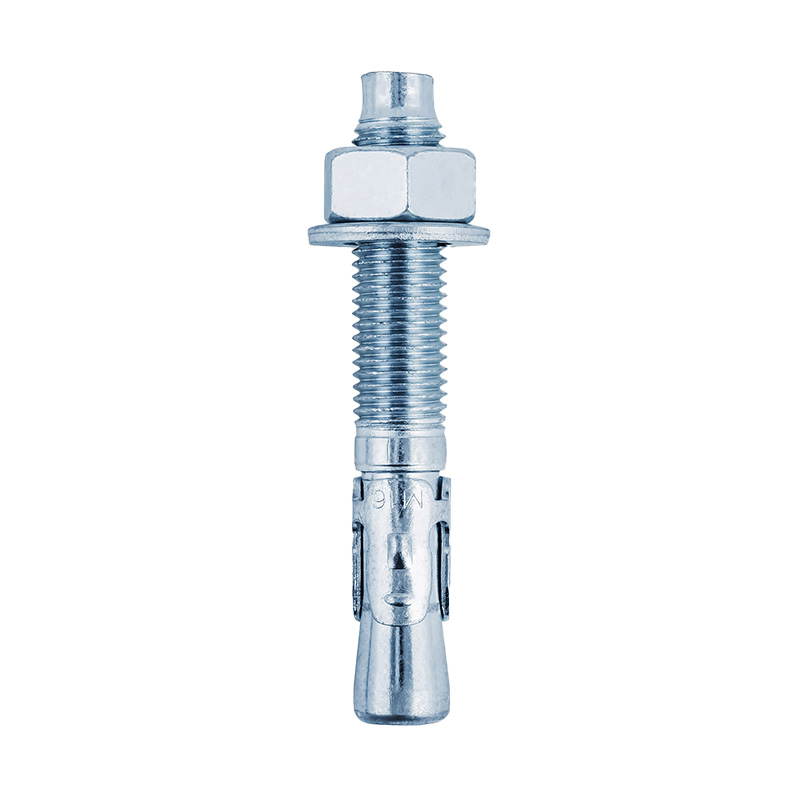
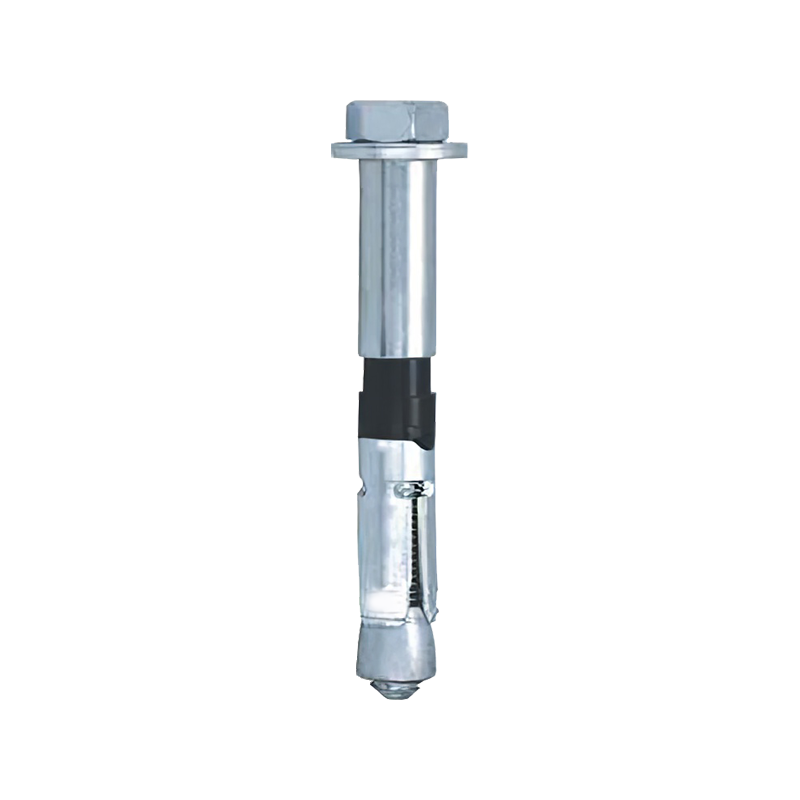
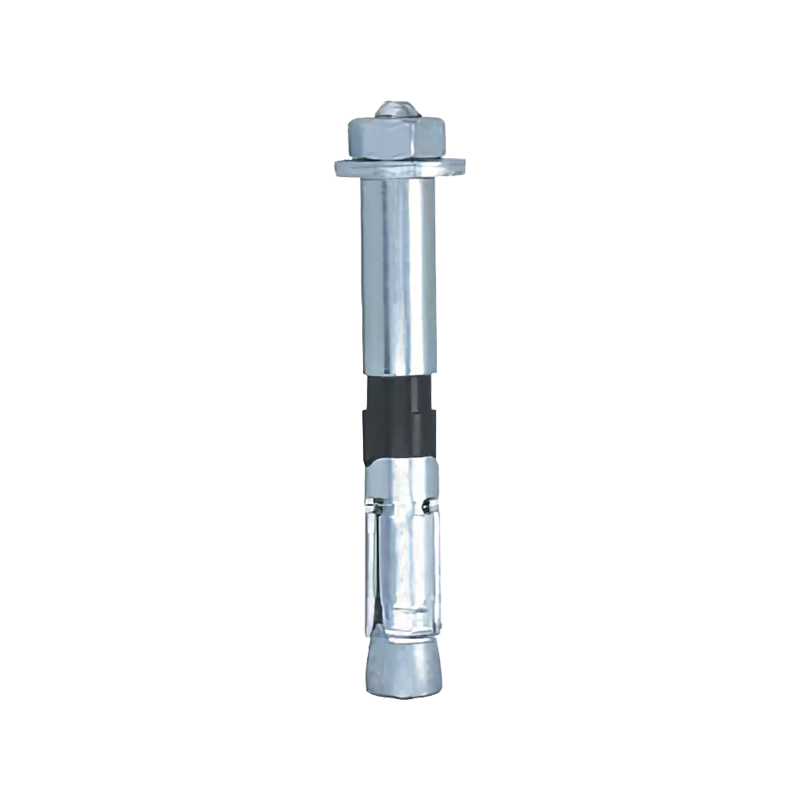
PRODUCT INFORMATION: Ultra wedge anchor is used for high-strength fastening to pull out the value of local equipment, anchors, and holes the same diameter. The advanced hoop set design can reduce the possibility of rotating anchors, proper installation requirements, and clear holes, in accordance with the installation instructions on the recommended level, for the torque wrench to install.
FOR USE IN: For railways, highways, power plants, electric power, petroleum, chemical, theaters, stadiums, construction, and other companies and factories, including metal fasteners steel, aluminum horn or wood to concrete, hanging pipes, bridges, escalators, conveyors and high-speed devices often require the application is installed on the machine, handrails, cushion, and the shelf products. products sold with matching nuts and washers are not assembled together.
FEATURE: Thick with resistance and good resistance to vibration, and wind, anti-fracture, solid lasting.
The Ultrawedge Anchor is used for heavy-duty fastening applications where high pullout values are required. The anchor and the hole diameter are the same. The advanced design of the collar reduces the likelihood of the anchor “spinning". Proper installation requires cleaning out the hole. install using a torque wrench set to the suggested level as provided in the instruction sheet. The Ultrawedge is used in a wide variety of structural applications, including fastening sheet metal, steel, aluminum angles or wood to concrete. Pipe-hanging, tilt-ups, bridges, elevator equipment, conveyors and highway construction frequently require the wedge type anchor, The Uitrawedge Anchor is ideal for installing machinery, handrails, dock bumpers & storage racks, etc. Ultrawedge anchors are sold unassembled with the appropriate nuts and washers. Meets GSA Spec, FF-S-325 Group ll, Type 4, Class 1.
WEDGE ANCHOR LENGTH IDENTIFICATION CODES
CODE
FROM/TO(in)
CODE
FROM/TO(in.)
CODE
FROM/TO (in.)
A
1.5”<2"
I
5.5”<6"
Q
9.5"<10"
B
2"<2.5"
J
6“<6.5”
R
10"<11"
C
2.5"<3"
K
6.5"<7"
S
11"<12"
D
3"<3.5"
L
7"<7.5"
T
12"<13"
E
3.5”<4"
M
7.5"<8"
U
13“<14”
F
4"<4.5"
N
8"<8.5"
V
14"<15"
G
4.5"<5"
0
8.5"<9"
H
5"<5.5"
P
9"<9.5"
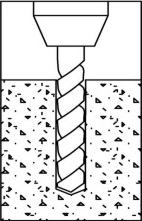
1. Drill holes on the base according to the required diameter and depth
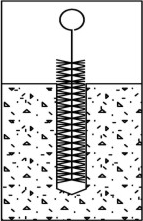
2. Move debris and clean small holes
3. Knocking in the clamp anchor
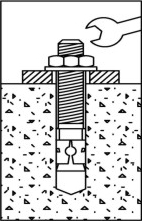
4. Tighten the screws with a wrench
Size
Burial Depth
(IN)
Middle-Value Size of Drill Bit
(MM)
Recommended Torque
(Nm)
Maximum Pull-Out Average (kgs) Concrete Strength: 2000psi
Maximum Pull-Out Average (kgs) Concrete Strength: 4000psi
1/4
11/8
6.60-6.68
6
2263
2878
1/4
115/16
6.60-6.68
6
2907
3560
1/4
23/4
6.60-6.68
6
3342
3762
3/8
11/2
9.90-9.98
30
2773
4076
3/8
31/4
9.90-9.98
30
4481
5755
3/8
5
9.90-9.98
30
5493
6392
1/2
21/4
13.21-13.31
60
6609
7831
1/2
41/8
13.21-13.31
60
7104
11810
1/2
6
13.21-13.31
60
9269
13773
5/8
23/4
16.51-16.61
90
7936
11772
5/8
47/8
16.51-16.61
90
12574
16621
5/8
7
16.51-16.61
90
14890
17371
3/4
31/4
19.69-19.79
180
13107
14890
3/4
55/8
19.69-19.79
180
14373
19079
3/4
8
19.69-19.79
180
18802
20091
1
41/2
26.16-26.26
280
19199
25486
1
71/4
26.16-26.26
280
24939
39597
1
10
26.16-26.26
280
42444
45456
1-1/4
5
32.64-32.74
450
16096
27247
1-1/4
71/2
32.64-32.74
450
31361
39814
1-1/4
10
32.64-32.74
450
43396
48664
Manufacturer Advantage
Why Source Ultra Wedge Anchors Direct From Our Factory
Since 1999, Yuyao Nanshan Development Co., Ltd. has manufactured high-performance wedge anchors with end-to-end process control — from raw steel selection to final tensile verification — serving demanding structural projects across North America, Europe, and Asia.
01
In-House Precision Manufacturing
Every Ultra Wedge Anchor passes through our automated cold-forging lines and CNC threading stations. Dimensional tolerances are held within ±0.02 mm, ensuring consistent fit with drilled hole diameters and eliminating field rework.
02
Traceable Material Certification
Steel rod stock is sourced from certified mills with full mill test reports (MTR). Each production batch carries an alloy grade trace record, giving procurement teams the documentation needed for structural compliance submissions.
03
Custom Specification Capability
Standard product line covers diameters from 1/4" to 1-1/4". Beyond that, our engineering team accepts custom thread forms, non-standard lengths, and special coatings. MOQ and lead time are quoted per project requirement.
04
Verified Pull-Out Performance
Pull-out load data has been independently tested in 2,000 psi and 4,000 psi concrete substrates. Results are documented per size and burial depth — not estimated — giving structural engineers reliable design values.
05
ERP-Controlled Production Scheduling
Our integrated ERP system tracks every order from raw material receipt to shipping release. This means stable lead times, proactive delay alerts, and lot-level traceability — critical for large-volume project procurement.
06
Flexible Export Packaging
Products ship with matching nuts and washers, boxed per established case/box quantities. Carton marking, inner bag labeling, and pallet configuration can be adapted to meet importer or end-user warehouse requirements.
FF-S-325GSA Specification Compliance — Group II, Type 4, Class 1
Material Selection
Choosing the Right Material Grade
Ultra Wedge Anchors are manufactured in carbon steel and stainless steel. The correct choice depends on the exposure environment, chemical contact, and applicable structural codes. The table below outlines the principal differences to inform your specification.
Exterior facades, covered parking structures, general infrastructure
Coastal bridges, water treatment plants, chemical processing facilities
Surface Finish
Electro-galvanized per ASTM B633
Passivated bright finish
Passivated bright finish
Relative Unit Cost
Reference baseline
Approx. 2.5× carbon steel
Approx. 3.5× carbon steel
Material selection should be confirmed by the project engineer of record in accordance with applicable building codes. Contact our technical team to discuss project-specific requirements.
Product Comparison
Ultra vs. Metric Wedge Anchor — Which Suits Your Project?
Both product lines perform the same core function — mechanical expansion into solid concrete — but differ in thread system, torque tooling compatibility, and target market. Understanding the difference prevents costly specification errors.
Ultra Wedge Anchor (Inch)
Thread SystemUNC (Unified National Coarse) — inch-based
Diameter Range1/4" to 1-1/4"
StandardGSA Spec FF-S-325, Group II, Type 4, Class 1
Primary MarketsUSA, Canada, Latin America
Torque ToolingSAE/imperial wrench sets
Nut & WasherIncluded unassembled per box
Hole Diameter MatchAnchor OD equals drilled hole dia.
Metric Wedge Anchor
Thread SystemISO Metric Coarse
Diameter RangeM6 to M20+
StandardETAG 001 / ETA assessment applicable
Primary MarketsEurope, Southeast Asia, Middle East
Shield Anchor (Heavy Duty)High shear in cracked concrete zones
Machine Screw AnchorFlush mount for machine screw connections
Installation Process
Four-Step Installation Protocol
Correct installation is the single most significant factor in achieving rated load performance. Each step below addresses a common field error that reduces pull-out capacity or causes anchor spin during tightening.
01
Drill to Exact Diameter and Depth
Use a carbide-tipped rotary hammer bit matched to the anchor diameter. Refer to the drill bit size column in the load table (e.g., 13.21–13.31 mm for 1/2" anchors). Drilling oversize by even 0.5 mm measurably reduces friction grip. Minimum burial depth must be met — deeper embedment is permitted and increases pull-out values.
02
Clean the Hole Completely
Blow out drilling debris with compressed air, then brush with a wire cleaning brush, then blow again. Residual concrete dust acts as a lubricant between the anchor clip and hole wall, preventing the expansion mechanism from engaging fully. This step is mandatory, not optional.
03
Drive Anchor to Minimum Embedment
Insert the anchor (with nut and washer pre-placed on the threaded stud) and drive it into the hole using a hammer on the top of the stud. The advanced collar design resists anchor rotation during this stage. Verify the embedment depth marking aligns with or is below the concrete surface before proceeding.
04
Torque to Specification
Using a calibrated torque wrench, tighten the nut to the recommended torque value for the specific diameter (e.g., 60 Nm for 1/2", 180 Nm for 3/4"). Over-torquing does not improve load capacity and risks stripping the clip. Under-torquing leaves the expansion clip partially closed, reducing holding strength significantly.
These steps apply to standard solid concrete substrates at minimum 2,000 psi compressive strength. Consult our technical data sheet for cracked concrete, lightweight concrete, or elevated-temperature environments.
End-Use Industries
Where Ultra Wedge Anchors Perform in the Field
High pull-out values, resistance to vibration, and suitability for one-sided access make the wedge anchor type the preferred choice in load-critical structural connections across multiple industries.
Industry / Application
Typical Connection Type
Key Performance Requirement
Recommended Diameter Range
Heavy Civil & Bridge Construction
Guardrail posts, expansion joint hardware, pier cap equipment
High shear + pull-out in exposed concrete; corrosion resistance in deicing salt zones
5/8" – 1-1/4"
Industrial Plant & Equipment
Pump bases, motor mounts, compressor pads, conveyor supports
Vibration resistance under dynamic cyclic loading; consistent clamp force retention
Code-compliant design values; ease of inspection after installation
1/4" – 3/4"
Petrochemical & Process Facilities
Pipe rack supports, vessel skirt anchors, fire suppression system hangers
Chemical-environment corrosion resistance; defined breakaway torque for inspection
3/4" – 1-1/4" (316 SS)
Specification Guidance
How to Specify the Correct Anchor Size
Anchor selection involves matching four variables: required embedment depth, available concrete thickness, applied load, and torque tool access. The simplified guide below covers the most common structural loading conditions for reference purposes. All design loads should be confirmed by a licensed structural engineer.
Maximum-duty structural connections in heavy industrial and civil projects
Pull-out values shown are average maximums at minimum burial depth in 4,000 psi concrete. Actual design loads must include safety factors per applicable code (ACI 318, AISC, or equivalent). Values increase substantially at greater embedment depths — refer to full load table for complete data.
Standards & Compliance
Compliance Documentation Available
Structural procurement teams and project engineers consistently require documented compliance with recognized testing standards before including products in construction specifications. Our factory maintains the following certifications and test records.
GSA Spec FF-S-325 — Group II, Type 4, Class 1
The U.S. General Services Administration specification governing wedge-type expansion anchors for use in federal construction. This is the primary compliance reference for Ultra Wedge Anchors sold to the North American market. Our products meet dimensional and performance requirements of this specification.
ASTM B633 — Electrodeposited Zinc Coating
Carbon steel anchors receive electrodeposited zinc coatings tested in accordance with ASTM B633 for corrosion resistance and coating thickness uniformity. Coating class (SC1–SC4) can be specified based on end-use environment severity.
Mill Test Reports (MTR) — Steel Chemistry
Certified mill test reports are retained per production heat number and available upon request. Reports document chemical composition, mechanical properties, and heat treatment records for all raw steel inputs — a standard requirement for infrastructure and defense-adjacent procurement.
In-House Pull-Out Testing — Concrete Substrate
Factory verification testing is conducted in representative concrete test blocks at both 2,000 psi and 4,000 psi compressive strength, at multiple embedment depths per diameter. Test records accompany production batches on request for quality-sensitive project submissions.
Our Manufacturing Capacity
Factory Credentials at a Glance
1999
Year established in Yuyao, Ningbo — over two decades of continuous production
41+
Standard Ultra Wedge Anchor SKUs — from 1/4" × 1-3/4" to 1-1/4" × 12"
ERP
Integrated production management system for lot traceability and delivery reliability
3+
Global export markets: North America, Europe, and Asia-Pacific project supply
Technical Questions
Frequently Asked Technical Questions
Questions below are drawn from recurring pre-purchase and specification inquiries received from structural engineers, procurement managers, and general contractors across multiple export markets.
Standard Ultra Wedge Anchors are rated and tested in uncracked concrete substrates. The expansion mechanism relies on a stable surrounding aggregate matrix to develop full bearing area contact. In seismic zones or applications where cracked concrete must be assumed per ACI 318 Appendix D / ACI 355.2, a seismic-rated or undercut anchor system should be specified instead. If your project requires cracked-concrete rated anchors, contact our sales team — we can advise on compatible alternative products from our range.
As a general rule, the concrete member thickness below the embedded anchor tip should be at least equal to the burial depth of the anchor plus 50 mm (approximately 2 inches) to maintain full concrete bearing capacity and prevent cone breakout failure. For thin-section slabs or precast members, the actual minimum thickness should be calculated per ACI 318 anchor design provisions using the actual burial depth and applied load. Our technical data sheets include minimum edge distance and spacing requirements by diameter.
Concrete drilling generates fine dust that coats the hole wall. When an expansion anchor is driven into a dusty hole, the clips expand against compressible dust rather than hard aggregate, reducing the effective bearing area by up to 30%. The correct procedure is: (1) blow out with compressed air directed to the bottom of the hole, (2) scrub the walls with a wire cleaning brush sized to the hole diameter, (3) blow out again. In wet conditions or where the hole has been standing open, a third blow-out cycle is recommended. Some project specifications require witnessed hole cleaning — our installation guide can be provided to field supervisors.
Wedge anchors are classified as permanent mechanical anchors and are not designed for removal and reuse. Once fully torqued, the expansion clips are permanently deformed against the hole wall. The stud can be cut flush for aesthetic purposes, but the embedded clip assembly cannot be extracted without destroying the surrounding concrete. For temporary or removable fastening applications, a through-bolt or removable adhesive anchor system is more appropriate. Please let us know if this application requirement affects your selection.
For standard catalog items (inch-series, carbon steel), typical production lead time is 15–25 working days from order confirmation, depending on the size mix and total quantity. Minimum order quantities vary by diameter — smaller diameters (1/4" to 1/2") have higher per-box case counts and generally require less total volume to meet MOQ thresholds. Stainless steel grades and custom specifications require additional lead time. Our sales team will provide a specific lead time and MOQ quotation based on your confirmed item list.
The Ultra Wedge Anchor incorporates a formed steel collar at the base of the expansion clip zone. When the nut is tightened, torque is transferred down the stud. Without a collar, the rotational force can cause the entire anchor to spin in the hole rather than drawing the clip upward to expand against the concrete. The collar bites mechanically into the hole wall as the expansion clip opens, creating rotational resistance independent of the clip engagement. This design feature reduces installation failures significantly compared to simpler clip-only designs, particularly in applications where access space limits the use of a backup holding tool.
Request a Specification Sheet or Project Quotation
Provide your required sizes, quantities, and delivery destination — we will respond with pricing, lead time, and available compliance documentation within one business day.
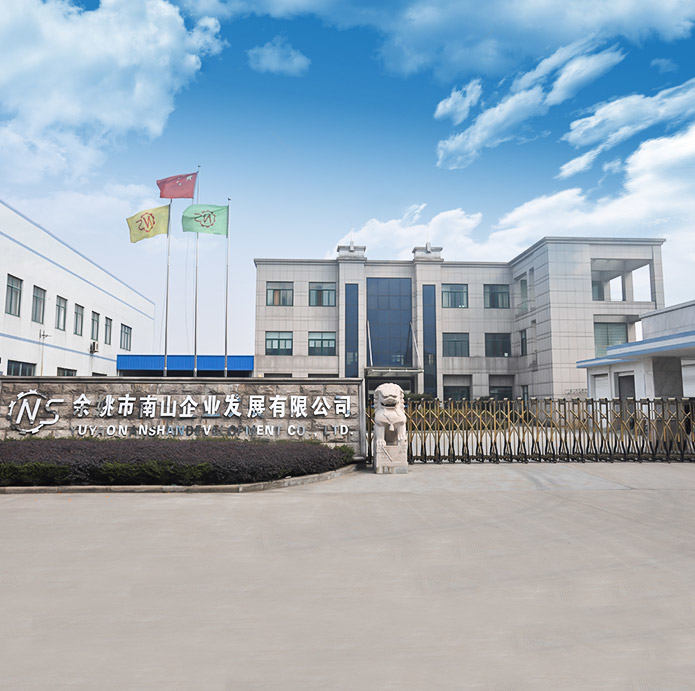
Yuyao Nanshan Development Co., Ltd. was established in 1999 and is located in Ningbo with elegant and charming environments and enjoys convenient transportation.
Yuyao Nanshan Development Co., Ltd. is China Ultra Wedge Anchor Manufacturers and Wholesale Ultra Wedge Anchor Suppliers, specializes in producing Ultra Wedge Anchor with professional production equipment. Nanshan has strong technologies with advanced facilities and imported automatic production machines and inspection equipment. Nanshan also is using the ERP to control the production process line and has set up a research & development center for continued innovation and to meet the requirements of more and more customers from all over the world.
Our products extensively are used in steel high constructions, tunnel projects, bridges, railways, airport stations, high way, sea ports, nuclear power plants,s and so on. And it sold to USA market and Europe market morely and Asia, that all makes customers satisfied exactly.
Yuyao Nanshan Development Co., Ltd. adheres to the principle of “quality the eternal base, credit forever pursuit”, we will spare no effort to provide our customers with more stable quality and more wonderful service. We welcome domestic and overseas customers to contact us for more information and business opportunities.
A project engineer on a renovation site needs to secure a steel column base to an existing concrete slab, and the same question comes up on almost every jobsite: are wedge anchors better than screw anchors? The practical answer is yes for ...
What Is a Single Expansion Anchor and How Does It Work?
A single expansion anchor is a mechanical fastener that locks inside a drilled hole in concrete, brick, or block. It is built from a split metal sleeve, a pre-assembled expansion cone...
You are fixing a pipe bracket to a concrete wall or anchoring a light steel frame to a block partition. The load is light to medium, and the base material may not be high-strength concrete. A single expansion anchor is one of the simplest f...
Ultra Wedge Anchor Industry knowledge
What are the precautions for installing Ultra Wedge Anchor?
In the construction and engineering industry, as the core component of structural connection, the professionalism and accuracy of the installation process of wedge anchors (Ultra Wedge Anchor) are crucial. Since its establishment in 1999, Yuyao Nanshan Development Co., Ltd. has been committed to the research and development and production of high-quality Ultra Wedge Anchors. With rich industry experience and technical accumulation, it has become an important player in this field. Preparation before installation Before installing the Ultra Wedge Anchor, it is necessary to ensure that all relevant tools and materials are fully prepared. This includes suitable drill bits, hammer tools, wrenches, dowel pins, and necessary measuring instruments. The evaluation of the installation environment cannot be ignored. It is necessary to ensure that the strength, humidity, and temperature of the concrete substrate meet the installation specifications of the Ultra Wedge Anchor. In addition, according to the specific application requirements, choosing the appropriate anchor specifications and models is a key step to ensure installation accuracy and reliability. Drilling and cleaning Drilling is an important part of the installation process of Ultra Wedge Anchor. First, the installation position of the anchor needs to be accurately measured and marked to ensure the accuracy and consistency of the drilling depth. During the drilling process, a drill bit that matches the diameter of the anchor should be used, and the manufacturer's recommended drilling depth and diameter should be strictly followed. After drilling, the hole must be thoroughly cleaned to remove dust and debris to ensure that the anchor can be inserted smoothly and form good friction, which is essential for subsequent load-bearing capacity. Installation and Adjustment When installing the Ultra Wedge Anchor, first insert the anchor into the pre-drilled hole and tap it gently with a hammer tool until the required depth is reached. During this process, it is necessary to ensure that the anchor remains vertical to avoid deflection or damage that affects the installation quality. To prevent the anchor from moving or rotating during installation, it is necessary to use a dowel pin to fix its position. After installation, tighten the anchor with an installation wrench to ensure that it reaches the designed load-bearing capacity and ensure the safety and stability of the structure. Inspection and Testing After installation, the Ultra Wedge Anchor must be fully inspected and tested. This includes confirming that the anchor is installed correctly and securely, and checking for any damage or defects. At the same time, a tensile test is performed to verify the performance of the anchor under the expected load. During the test, professional testing equipment is applied, and the standards and methods provided by the manufacturer are followed to ensure the accuracy and reliability of the test results. Yuyao Nanshan Development Co., Ltd. has a strong technical foundation and rich industry experience in the production of Ultra Wedge Anchor. The company is equipped with advanced production equipment, including imported automated production lines and precision testing equipment to ensure that each product meets international standards. By implementing an advanced ERP system, the company has achieved comprehensive monitoring and management of the production process, significantly improving production efficiency and product quality.
Application Fields of Ultra Wedge Anchor
In the field of engineering technology, anchors are key components for connecting and fixing structures, and their performance and quality directly affect the safety and stability of the entire system. Ultra Wedge Anchor has become an important choice in this field with its advanced design concept and excellent performance. Ultra Wedge Anchor adopts a unique wedge design, which not only significantly improves the pull-out and shear resistance of the anchor, but also greatly enhances its adaptability and durability in complex environments. Its unique structural characteristics enable Ultra Wedge Anchor to provide excellent anchoring effects in a variety of substrates, such as concrete, rock and brick walls, and is widely used in many fields such as construction, bridges, tunnels, subways, water conservancy and wind power. In the construction industry, Ultra Wedge Anchor is widely used in the reinforcement and connection of structures such as high-rise buildings, large commercial complexes and bridges. With the acceleration of urbanization, high-rise buildings and large commercial complexes have sprung up like mushrooms after rain, and these buildings have put forward extremely high requirements for the safety and stability of structures. Ultra Wedge Anchor has become an indispensable and important part of these buildings with its excellent anchoring performance and durability. It is not only suitable for connecting and fixing structural materials such as steel bars and steel plates, but also can effectively reinforce key parts such as walls, beams and columns, thereby ensuring the stability and safety of the entire building structure. In bridge engineering, Ultra Wedge Anchor also plays a vital role. As an important channel connecting the two sides, the safety and stability of the bridge are directly related to the safety of people's lives and property. Ultra Wedge Anchor can be effectively used for bridge reinforcement and maintenance, especially in key parts such as bridge supports, piers and bridge decks. It provides reliable anchoring effect to ensure the stability and safety of bridges in various harsh environments. In underground projects such as tunnels and subways, Ultra Wedge Anchor also shows its wide application potential. These projects usually face complex geological conditions and great construction difficulties, and have extremely high performance requirements for anchors. Ultra Wedge Anchor can provide reliable anchoring effect in these projects with its excellent pull-out resistance and shear force, as well as good adaptability, to ensure construction quality and safety.

 English
 中文简体
中文简体 русский
 Español