
 English
 中文简体
 русский
 Español
Can Wedge Anchors Be Used in Cracked Concrete? A Practical Technical Guide
2026-10-26Can a wedge anchor be used in cracked concrete? The direct answer
A wedge anchor can be used in cracked concrete only when the anchor has been tested against cracked-concrete criteria. Without that qualification, the expansion mechanism faces a base material that cannot provide the same reaction force, and the result is lower load capacity and unpredictable movement.
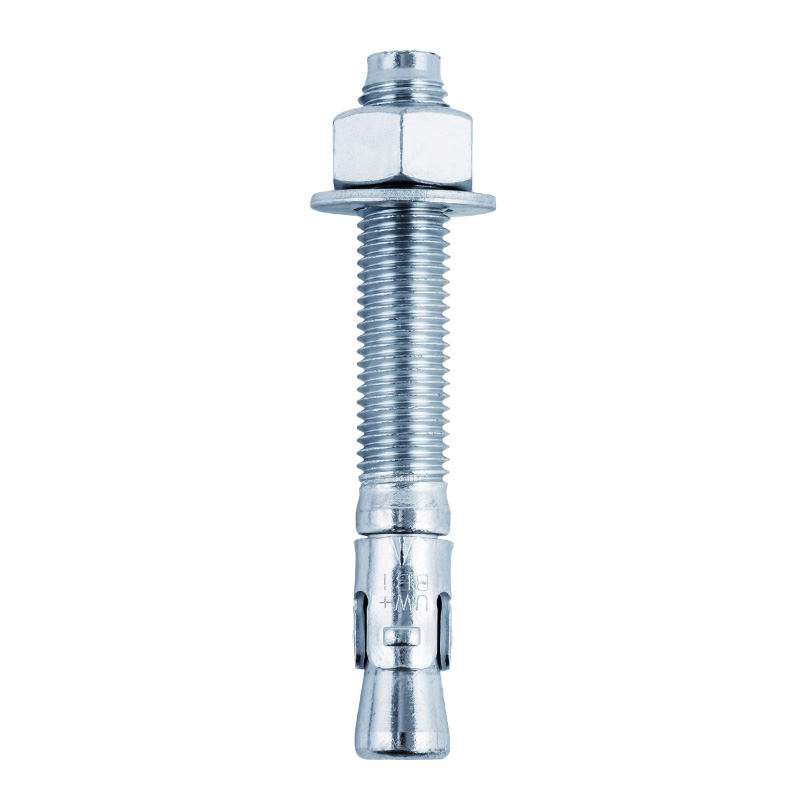
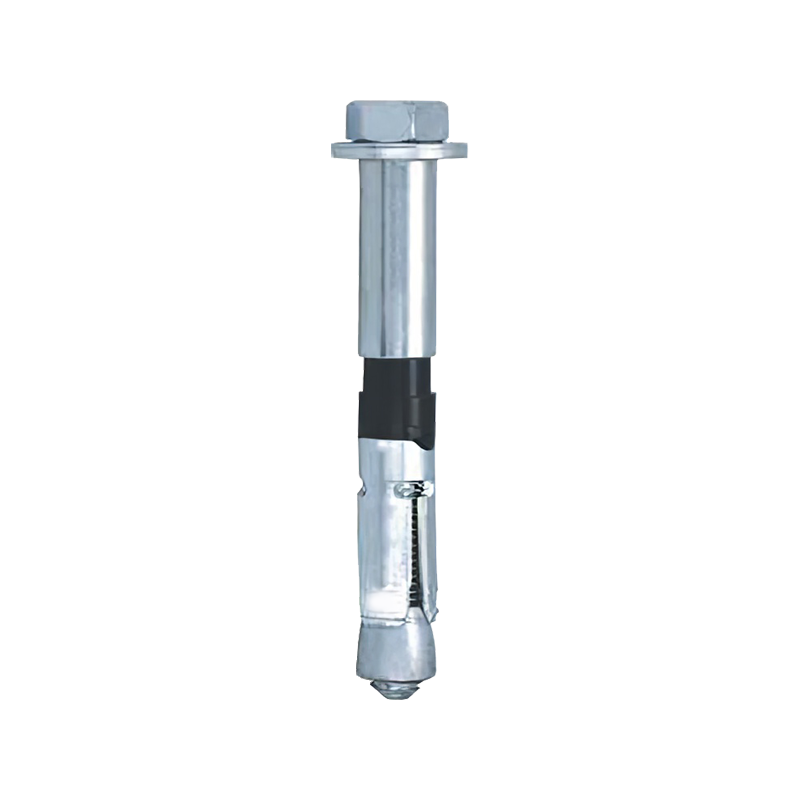
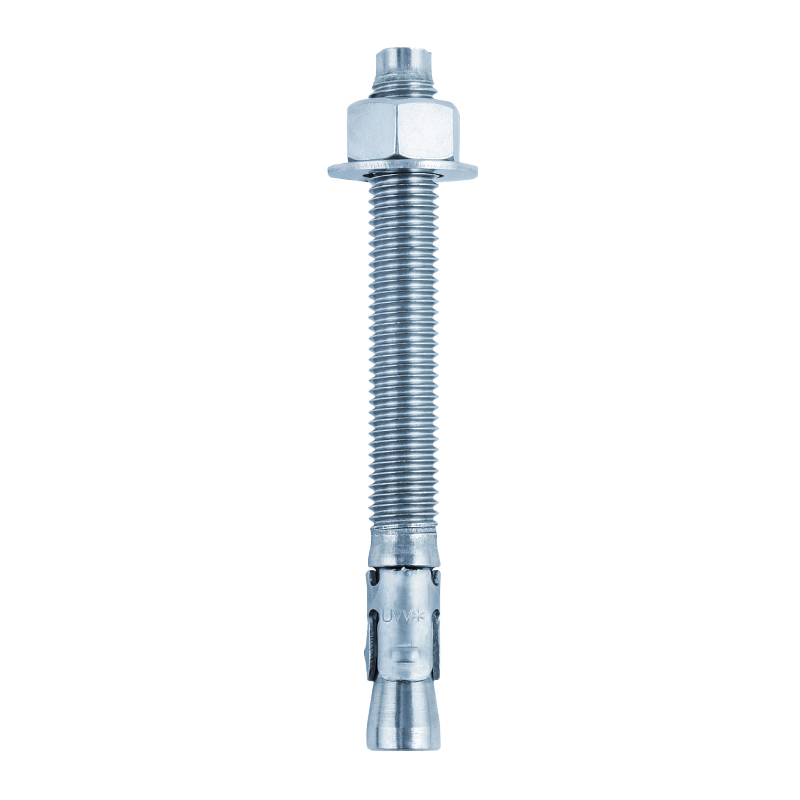 Ultra Wedge Anchor for High-Strength Concrete FasteningHeavy-duty expansion anchor for structural applications, but requires cracked-concrete qualification. Consider its load tables and material options when evaluating reliability in cracked conditions.View Product →
The presence of a crack does not make installation impossible. The problem is reliability. A wedge anchor is an expansion anchor, not a chemical bond. Its performance depends on mechanical pressure between the expansion clip and the concrete wall. When concrete cracks, that wall loses stiffness and can move. The anchor may still hold for a short time, but under sustained or cyclic load, performance cannot be guaranteed without a suitable evaluation.
In engineering terms, the question is not whether the threaded body can be inserted into a hole in cracked concrete. It is whether the anchor can consistently transfer the design load after the concrete has cracked. Codes and approval systems separate anchors into cracked concrete and uncracked concrete categories for this reason.
How a wedge anchor develops holding power in sound concrete
A wedge anchor consists of a threaded stud with an expansion clip fixed near the lower end, a washer, and a nut. The clip is tapered so that tightening the nut pulls the stud upward and forces the clip outward against the drilled hole.
In sound concrete, the hole wall is strong, continuous, and confined by surrounding material. The expansion clip creates two forms of resistance: friction along the contact surfaces and mechanical bearing against irregularities in the concrete. These two actions produce the anchor’s tension capacity.
Concrete compressive strength has a direct influence on this process. Harder concrete resists the embedding of the clip more effectively. However, even a high-strength concrete can be evaluated as uncracked or cracked depending on the design condition. A high compressive strength does not automatically convert an uncracked anchor into a cracked concrete anchor.
What “sound concrete” means in anchor design
In anchor approval documents, sound concrete normally means concrete that is uncracked, or cracking is limited to shrinkage microcracks not considered structurally significant. The anchor design tables are developed from tests in concrete blocks that do not have induced cracks at the anchor location. These tables remain valid only when the installed condition matches that assumption.
It is also important to understand that structural cracks can form after installation. Thermal movement, shrinkage, foundation settlement, applied loads on the attached member, and earthquake events can create cracks that pass through the anchor zone. Therefore, the initial state of the concrete is not always a reliable indicator of future conditions.
What changes when a crack reaches an anchor location
When a crack intersects the anchor hole, the concrete that surrounds the expansion clip no longer acts as a single rigid body. The two sides of the crack can separate, close, and slide. As the crack opens, the normal force between the clip and the concrete decreases. This reduces friction and loosens the mechanical interlock.
The most critical parameter is crack width. A very narrow crack of 0.1 mm already produces measurable loss of stiffness. At 0.3 mm, the reduction in capacity becomes significant. At 0.5 mm or wider, standard expansion anchors may not be permissible under design codes unless specifically approved.
Crack movement also matters. A static crack that stays closed after installation may still reduce capacity. A crack that opens and closes through load cycles is more demanding because the clip must re-expand after each movement to maintain clamping force.
The curve shows a typical pattern for an expansion-type wedge anchor. Exact values vary by product, size, embedment depth, and approval report.
In practical terms, this means an anchor selected near its rated limit in uncracked concrete can become overstressed when a crack appears. Planners should either choose an anchor qualified for cracked concrete or use a lower load value derived from cracked concrete tests.
Cracked concrete approval: ICC-ES and ETA qualifications
To prove that a wedge anchor is suitable for cracked concrete, independent evaluation is required. In North America, this typically means ICC-ES AC193 evaluation criteria, which references ACI 318. In Europe, the ETA route follows EAD 330232-01-0601 or the earlier TR029 guideline.
An anchor approved for cracked concrete has been installed in concrete with an induced crack, and that crack has been cycled open and closed during testing. This is much more demanding than a simple pull test in a solid block. Therefore, an anchor with only uncracked concrete data cannot be substituted.
| Region | Document | Crack width covered | Typical status |
|---|---|---|---|
| North America | ICC-ES AC193 / ACI 318-19 | 0.3 mm standard; 0.5 mm for seismic cases | Accepted by building departments |
| Europe | EAD 330232-01-0601 | 0.3 mm; 0.5 mm in some approvals | Reference in ETA documents |
| International | ACI 355.2 | 0.3 mm | Laboratory and code-based approval |
When reviewing an anchor product page, look for the phrase “cracked concrete” in the evaluation report or the technical data sheet. If the report only lists uncracked concrete capacity, treat the product as suitable for uncracked concrete only.
Conditions that allow a wedge anchor to be used in cracked concrete
There are cases where a properly approved wedge anchor is a practical and reliable solution in cracked concrete. These conditions come from the evaluation report and the nature of the cracked zone.
Crack width within range
The crack at the anchor position must be equal to or narrower than the width covered by the approval, normally 0.3 mm or 0.5 mm.
Stable crack behavior
The crack should not be exposed to wide cyclic movement under normal working loads. Repeated opening and closing reduces the grip of the expansion clip.
Reduced applied load
Capacity values for cracked concrete, not uncracked values, must be used in the design. This usually means a noticeable downgrade from the standard table.
In addition, the anchor should be positioned so that the expansion zone does not sit directly inside an open crack. In many projects, the crack location is not known until the hole is drilled. If the drilled hole intersects a crack wider than the qualified value, the standard practice is to move the anchor or select an alternative anchor.
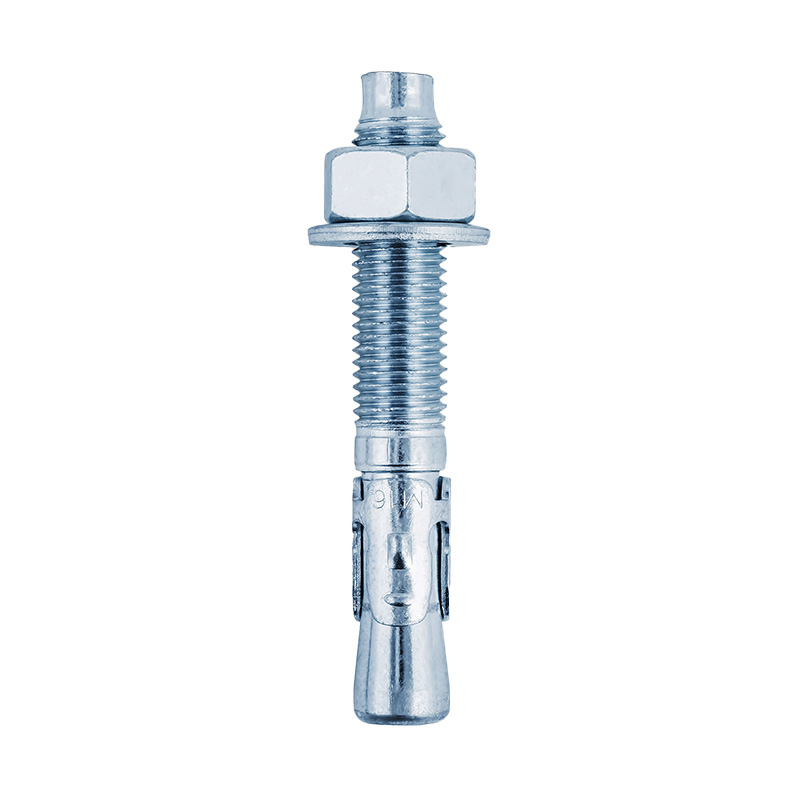
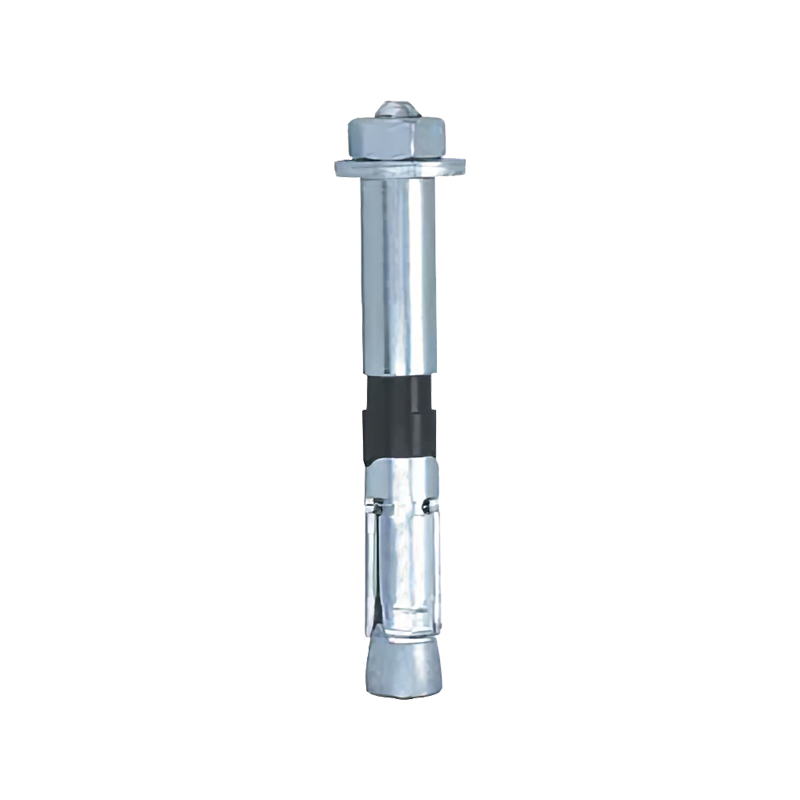
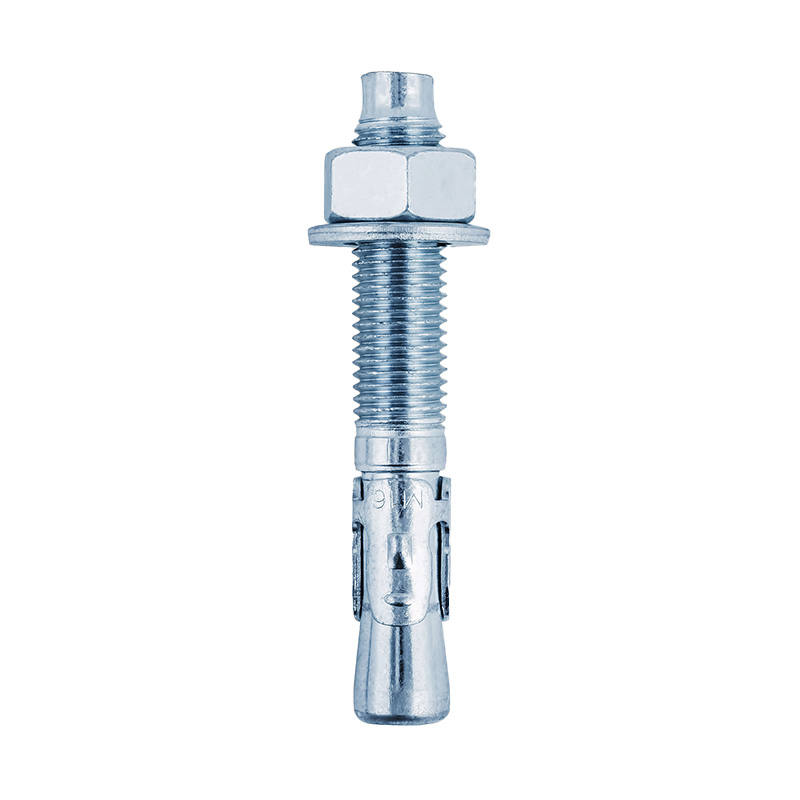 Metric Wedge Anchor with Deep Embedment OptionsMetric-sized wedge anchor offering longer lengths and larger diameters for increased edge distance. Useful for mitigating crack effects when qualified and using reduced load values.View Product →
Edge distance and spacing must also be increased. Cracks near a free edge reduce the confining effect even further. Doubling the edge distance is a common mitigation when project-specific limit states are not defined. Metric wedge anchors are available in a range of lengths and diameters that allow a designer to select a deeper embedment and a larger body size. This does not convert an uncracked product into a cracked product, but it helps once the anchor has been qualified and the lower cracked concrete load values are used.
Installation steps that protect performance in cracked concrete
Installation quality becomes more important when the substrate is cracked or may crack. A minor deviation in hole diameter or cleaning procedure can turn a qualified anchor into an unreliable one.
- Inspect the concrete surface and identify visible cracks. Mark zones where cracks run within a distance of five to ten times the anchor diameter.
- Select the correct drill bit size for the wedge anchor. An oversized hole cannot be corrected by higher torque, while an undersized hole can damage the concrete during insertion.
- Drill with a rotary hammer or a hammer drill, keeping the bit perpendicular. Avoid side pressure that could break the edge of the hole.
- Clean the hole thoroughly. Use a wire brush along the full depth, then blow out remaining dust. This step is often skipped but has a large effect in cracked concrete because dust reduces the expansion clip’s grip.
- Insert the wedge anchor until the depth mark on the anchor reaches the concrete surface. Use the minimum embedment depth required for wedge anchors before applying the final torque.
- Tighten the nut to the torque stated in the manufacturer’s instructions. Do not overtorque in an attempt to compensate for a weak grip, because overtorquing can create new microcracks around the hole.
For precise settings, use a torque wrench. If the anchor is in a location with an active crack, check the crack width before tightening and again after installation. A sudden increase in crack width during loading is a warning that the anchor is not engaging properly.
Timing is also relevant. Concrete that has not finished curing is more likely to microcrack around expansion anchors. Wedge anchors should not be installed in green concrete unless the anchor’s approval specifically allows it.
Embedment depth and load values for cracked concrete
The load values in uncracked concrete tables are not valid once a crack is present. The comparison below is indicative and intended to show how much reduction can occur for a common carbon steel wedge anchor. The exact values depend on the product, thread size, embedment, concrete strength, and the applicable evaluation report.
| Anchor size | Minimum embedment | Uncracked tension | Cracked tension | Approx. retained capacity |
|---|---|---|---|---|
| 3/8 in. (M10) | 2-1/8 in. (54 mm) | 2,050 lb | 1,180 lb | 58% |
| 1/2 in. (M12) | 3-1/4 in. (83 mm) | 3,800 lb | 2,240 lb | 59% |
| 5/8 in. (M16) | 4-1/4 in. (108 mm) | 6,200 lb | 3,500 lb | 56% |
| 3/4 in. (M20) | 5-1/2 in. (140 mm) | 9,100 lb | 5,100 lb | 56% |
The reduction is not simply a safety factor. It comes from load tests with controlled cracks. Always refer to the specific evaluation report for the anchor being installed. Longer embedment usually gives higher absolute capacity, which is why designers often look for the largest practical diameter and depth in cracked concrete applications. For a more complete reference, see our wedge anchor weight capacity guide.
How wedge anchors compare with other anchors in cracked concrete
Wedge anchors are not the only mechanical choice for cracked concrete. The table below compares the main categories found in construction and industrial projects.
| Anchor type | Cracked concrete approval | Risk in cracked concrete | Best suited for |
|---|---|---|---|
| Wedge anchor | Possible with ICC-ES or ETA approval | Moderate; depends on crack width and cycling | Heavy static loads, steel base plates, equipment |
| Sleeve anchor | Limited; most approvals are for uncracked concrete | Higher; sleeve has less expansion area | Light to medium loads in solid concrete |
| Double expansion anchor | Some approved systems exist | Lower if the approval covers crack cycling | Multi-point distribution of expansion force |
| Concrete screw | Selected screws have cracked concrete approvals | Depends on thread engagement | Light to medium loads and temporary fixing |
| Adhesive anchor | Qualified systems can handle cracked concrete | Low when installed correctly | High loads, small edge distances, uncertain crack patterns |
Among these options, a qualified wedge anchor remains a good choice because it does not require curing time, can be loaded immediately, and is easy to inspect after tightening. The main limitation is the crack width and the need for enough concrete around the anchor.
Adhesive systems behave differently. They bond to the concrete along the entire bonded length, so a crack that crosses the bond line can still be bridged. This makes adhesives attractive when the crack pattern is uncertain or when anchors must be placed close to an edge. However, not every adhesive is approved for cracked concrete either.
Common mistakes when using wedge anchors near cracks
- Selecting wedge anchors by diameter or price without checking cracked-concrete qualification.
- Assuming a visible crack will not widen after the load is applied.
- Installing the anchor directly into a crack wider than the tested value.
- Reducing edge distance to zero by placing the anchor near a corner with an existing crack.
- Using installation torque from an uncracked table without reading the manufacturer’s remarks for cracked concrete.
- Cleaning the hole with compressed air only and skipping the brushing step.
- Ignoring seismic crack cycling requirements when the structure is located in a seismic zone.
- Using the uncracked pullout value to calculate fixture design after the concrete has cracked.
Frequently asked questions
Can a standard wedge anchor be installed in cracked concrete?
It can be physically installed, but the installation is not code-compliant if the anchor lacks cracked concrete qualification. The anchor may hold a light load, but the rated load cannot be justified without test evidence from cracked concrete.
What crack width is acceptable for wedge anchors?
Usually 0.3 mm for standard cracked concrete qualification. Some seismic approvals extend to 0.5 mm. Confirm the crack width class in the ETA or ICC-ES report before proceeding with the design.
Does a deeper embedment make a wedge anchor suitable for cracked concrete?
No. A deeper embedment increases capacity and can move the expansion zone beyond a surface crack, but qualification is based on testing, not geometry. If the anchor is not approved for cracked concrete, increasing embedment does not create that approval.
Can wedge anchors be used in seismic cracked concrete?
Only when the anchor has been evaluated under seismic crack cycling and the design uses cracked concrete strength reduction factors. Seismic demand requires additional checks on spacing, edge distance, and ductility.
When should an adhesive anchor be selected instead of a wedge anchor?
When cracks are expected to exceed the qualified width, when concrete cover is small, or when the load direction and geometry require a long bonded length. Choose an adhesive system with its own cracked concrete approval for the same substrate conditions.


Contact Us