
 English
 中文简体
 русский
 Español
When to Use a Wedge Anchor? Practical Selection Guidance for Concrete Installations
2026-10-19What Is a Wedge Anchor and How Does It Create a Secure Fixing?
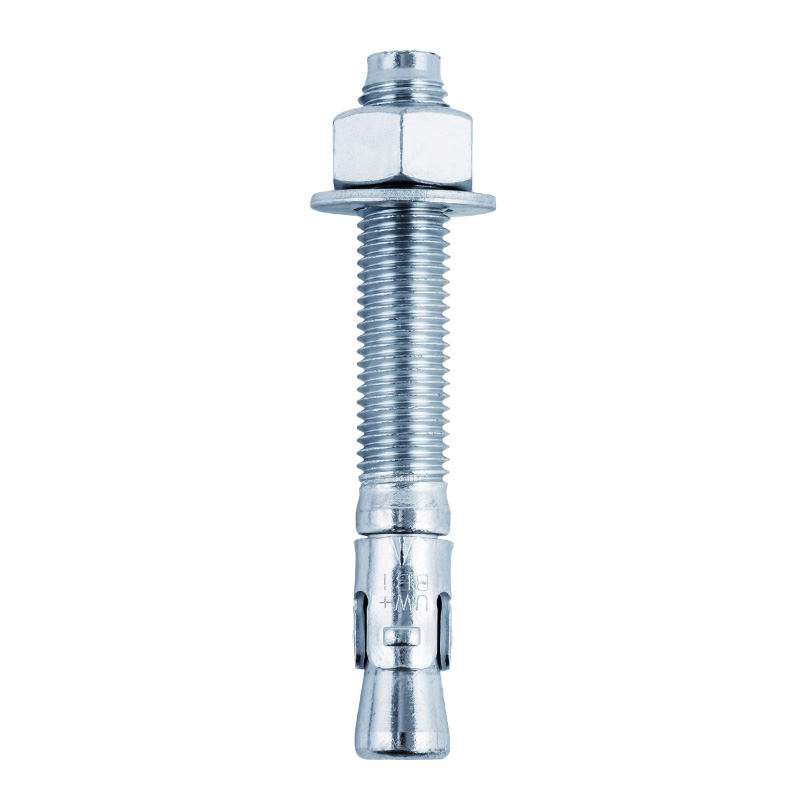
A wedge anchor is a mechanical expansion anchor designed for solid concrete. It consists of a threaded rod, a tapered wedge plug, an expansion clip, a washer, and a hex nut. When the nut is tightened, the expansion clip is pulled along the tapered plug and pressed outward against the drilled hole. This pressure creates the clamping force that holds the fixture in place.
The grip is immediate. Unlike adhesive anchors, a wedge anchor does not need time to cure or a controlled temperature range. It develops load as soon as the installation torque is reached. For an installer, this means the holding power can be verified with a torque wrench instead of by guesswork.
What Are the Main Components of a Wedge Anchor?
| Component | Function |
|---|---|
| Threaded bolt | Produces the clamping force and supports the applied tension and shear loads. |
| Tapered wedge plug | Pushes the expansion clip outward as the nut is tightened. |
| Expansion clip | Transfers the clamping force to the surrounding concrete. |
| Hex nut and washer | Spread the tightening load evenly over the fixture surface. |
The word "wedge" describes the tapered shape inside the anchor body. The clip spreads evenly around the taper, so the anchor pulls from several directions at once. That is what gives the wedge anchor its reputation for reliability under heavy loads. A closed clip design also protects the wedge from concrete dust during installation, which avoids a common cause of reduced grip.
A wedge anchor works only if the material around it is hard enough to resist the expansion force. Solid concrete is the intended base material. The anchor is less sensitive to temperature than adhesive systems, which makes it useful in damp or hot environments where epoxy and resin can be difficult to handle.
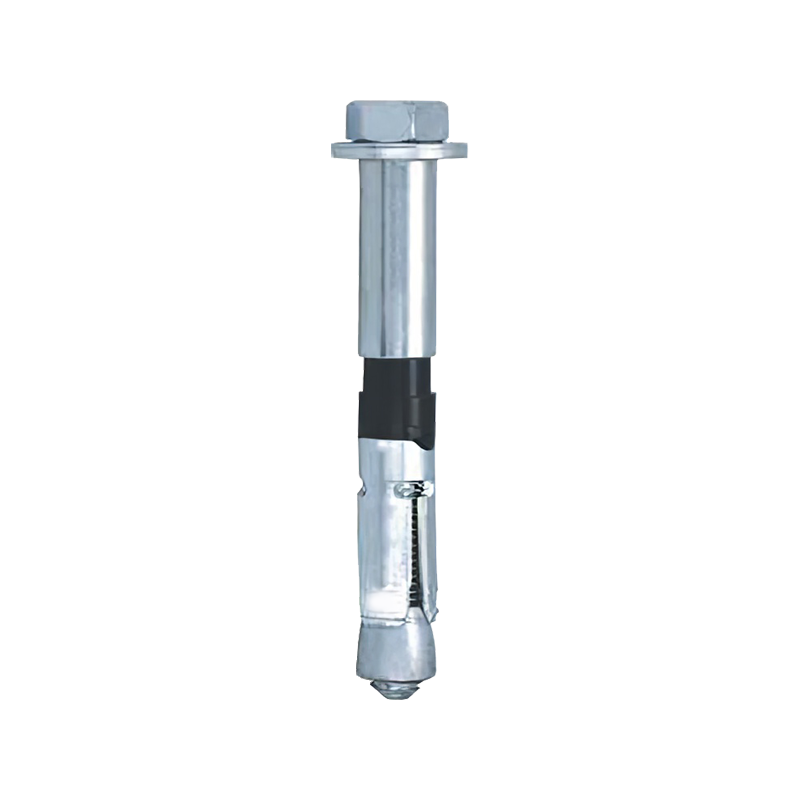
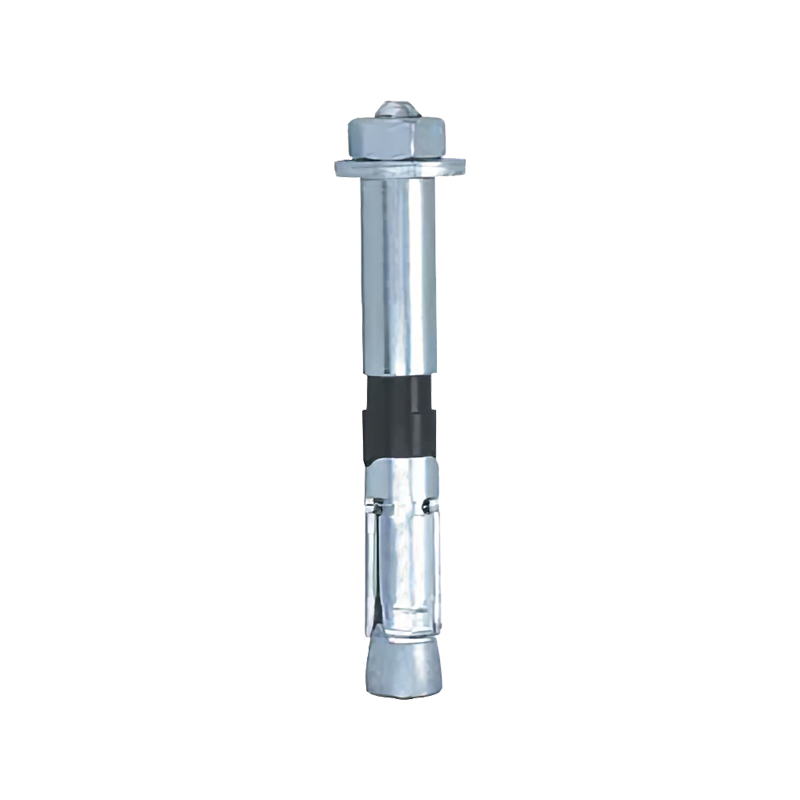
For applications that need the highest clamp load in solid concrete, a heavy-duty wedge anchor such as the Ultra Wedge Anchor is a common starting point. It uses a longer expansion zone and a wider clip for better stress distribution. Confirm the load values against the project specification before ordering.
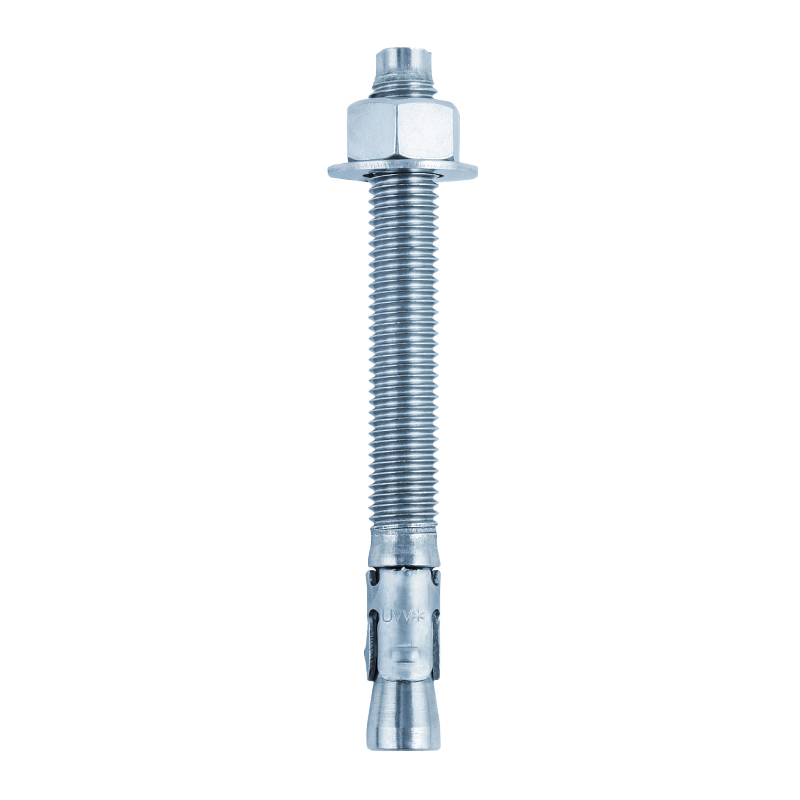 Ultra Wedge Anchor for High-Strength Concrete FasteningA heavy-duty mechanical expansion anchor designed for solid concrete, offering high pull-out values and reduced spinning during installation. Suitable for demanding structural fastening applications.View Product →
Base Material: The First Question Before Choosing a Wedge Anchor
The clearest answer to "when to use a wedge anchor" is that the substrate must be solid concrete. Wedge anchors cannot be used in brick, concrete block, hollow masonry, or mortar joints. The expansion clip needs a continuous, dense wall to bite into. In hollow units, there is not enough material to confine the clip, and the anchor will pull out or crack the unit.
Concrete strength is the second condition. Most wedge anchors are rated for normal-weight concrete with a minimum compressive strength of 2,500 psi (17 MPa). If the concrete strength is lower, or if the mix is lightweight, the anchor capacity has to be adjusted. For concrete below roughly 2,000 psi, mechanical expansion anchors are generally not recommended unless the manufacturer provides specific approval data.
The third condition is the state of the concrete. A wedge anchor should not be expected to hold in concrete with large cracks through the expansion zone. When a crack passes through the anchor location, the expansion clip loses the confinement it needs. In that case, a wedge anchor with a cracked-concrete approval or an adhesive anchor should be used instead.
Slab thickness is the fourth factor. The combined requirement is the embedment depth of the wedge anchor plus a cover of at least one anchor diameter, usually around 1 inch. If the slab is not thick enough, the expansion zone may reach the underside of the concrete and create a cone breakout under load.
| Base material | Is a wedge anchor suitable? | Reason |
|---|---|---|
| Solid structural concrete | Yes | Provides a dense wall for the expansion clip. |
| Brick | No | The material is porous and brittle; the clip can crack the unit. |
| Concrete block / CMU | No | Hollow cores leave no continuous material for expansion. |
| Natural stone with solid cross-section | Sometimes | Requires a pilot test and careful torque control. |
| Hollow masonry | No | The expansion clip cannot develop grip. |
Detailed depth values depend on the diameter and the manufacturer, and our guide on how deep a wedge anchor should go into concrete gives the minimum depth for each size. The practical message is simple: if the base material is concrete and the hole can be drilled to the minimum depth, the wedge anchor is a valid choice.
One more check is the presence of reinforcement. Wedge anchors are installed in drilled holes; if the bit hits rebar, the hole may need to be repositioned. On congested concrete members, check the drawings or use a concrete scanner before drilling.
Load Direction and Magnitude: When a Wedge Anchor Is the Right Level of Strength
Wedge anchors are intended for medium to heavy mechanical loads in concrete. They work best when the force is tension, pulling the anchor outward, or shear, sliding the fixture across the concrete surface. Because the expansion clip presses against a relatively large area of concrete, the load is distributed instead of being concentrated at one point.
Tension loads appear when a base plate is bolted to a concrete slab, when equipment is tied down against uplift, or when an overhead fixture is suspended. Shear loads appear when lateral forces push a racking column, a guardrail, or a heavy machine across the floor. Many real installations combine both, which is why anchors are rated for combined loading conditions.
| Anchor size | Drill bit | Minimum embedment | Ultimate tension | Ultimate shear |
|---|---|---|---|---|
| 1/4 inch | 3/8 inch | 1-1/8 inch | 1,850 lbf | 2,395 lbf |
| 3/8 inch | 1/2 inch | 1-3/4 inch | 3,375 lbf | 4,265 lbf |
| 1/2 inch | 5/8 inch | 2-1/4 inch | 6,030 lbf | 7,565 lbf |
| 5/8 inch | 3/4 inch | 2-3/4 inch | 9,330 lbf | 11,475 lbf |
| 3/4 inch | 7/8 inch | 3-1/4 inch | 13,140 lbf | 15,860 lbf |
These values should be read as the anchor steel or concrete breakout limit from controlled tests, not as the working load. Designers normally apply a safety factor and sometimes additional reduction factors for cracked concrete, seismic loading, or sustained tension. The table simply shows how capacity increases with diameter and embedment.
Relative tension capacity of standard wedge anchors, shown as a percentage of the largest size tested.
Dynamic loads need a closer check. A wedge anchor can handle moderate vibration, including the operation of pumps, motors, and compact conveyor lines. However, for loads that reverse direction, for high-impact hammering, or for very long fatigue life, a standard wedge anchor may not be enough. Use a torque-controlled expansion anchor that has been tested for fatigue, or switch to an adhesive anchor that bonds along the full depth.
Another consideration is the stiffness of the fixture. A wedge anchor is stiff, so it attracts load. If the base plate is thin and bends, the top of the anchor sees a prying force that increases tension on the concrete. Use a thicker base plate or add a hardened washer under the nut to distribute the load.
Project Scenarios Where a Wedge Anchor Is the Natural Choice
The fastest way to decide is to compare your job with familiar applications. When a structure is permanently fixed to concrete, the fixture is made of steel, and the load path goes directly through the anchor, a wedge anchor fits naturally.
Structural Steel and Column Base Plates
Steel columns, post bases, and equipment stands often have slotted or round clearance holes. A wedge anchor passes through the hole and is tightened from the top. The clamp force keeps the base plate in contact with the concrete, limiting movement under wind, vibration, or operational loads.
Heavy Machinery and Production Lines
Machine tools, pumps, compressors, and assembly equipment generate continuous vibration. Wedge anchors resist loosening better than simple concrete screws because the expansion clip creates constant pre-tension. Torque is critical: an under-torqued anchor lets the equipment walk, while an over-torqued one crushes the concrete.
Guardrails, Handrails and Safety Barriers
A railing post must resist impact and overturning, which creates tension at the rear anchor and shear at the front. Wedge anchors provide the predictable values needed for safety-critical fastenings. Use stainless steel versions in wet or coastal environments to avoid rust streaks on concrete.
Storage Racking and Conveyor Systems
Vertical loads from loaded pallets and lateral forces from product movement demand anchors with high tension and shear capacity. Wedge anchors are commonly specified for racking, especially when the racking fabricator includes "wedge-type anchors" in the installation manual.
These applications share the same access requirement: the anchor nut must be reachable with a socket or wrench. If a fixture is already in place and the anchor goes through a closed section, a through-bolt or a drop-in anchor with an adjustable stud is easier to use. Otherwise, the wedge anchor is usually the strongest and most direct solution.
The next step after matching the application is to verify the capacity for your exact fixture thickness. A short wedge anchor cannot reach the required embedment if the fixture is thick, while an oversized anchor may be unnecessarily expensive. The load ratings by size in our weight capacity guide for wedge anchors show the relationship between anchor diameter, embedment, and allowable load.
When a Wedge Anchor Is Not the Right Product
Using a wedge anchor in the wrong substrate is the most common cause of site failure. The clip expands with several thousand pounds of force in a small zone. If the surrounding material cannot resist that force, the anchor becomes loose or the material cracks.
- Hollow masonry or brick: the clip has no continuous wall to grip, so the anchor pulls out under light load.
- Cracked concrete: once the crack reaches the expansion zone, the clip cannot produce enough confinement to transfer the load.
- Thin concrete slabs: the expansion cone may break out the underside of the slab, reducing capacity without visible warning.
- Freshly poured or green concrete: the concrete has not reached its design strength, and the expansion force can distort the surface.
- High-impact or fatigue loads: a standard wedge anchor has not usually been tested for long-term fatigue and can loosen over time.
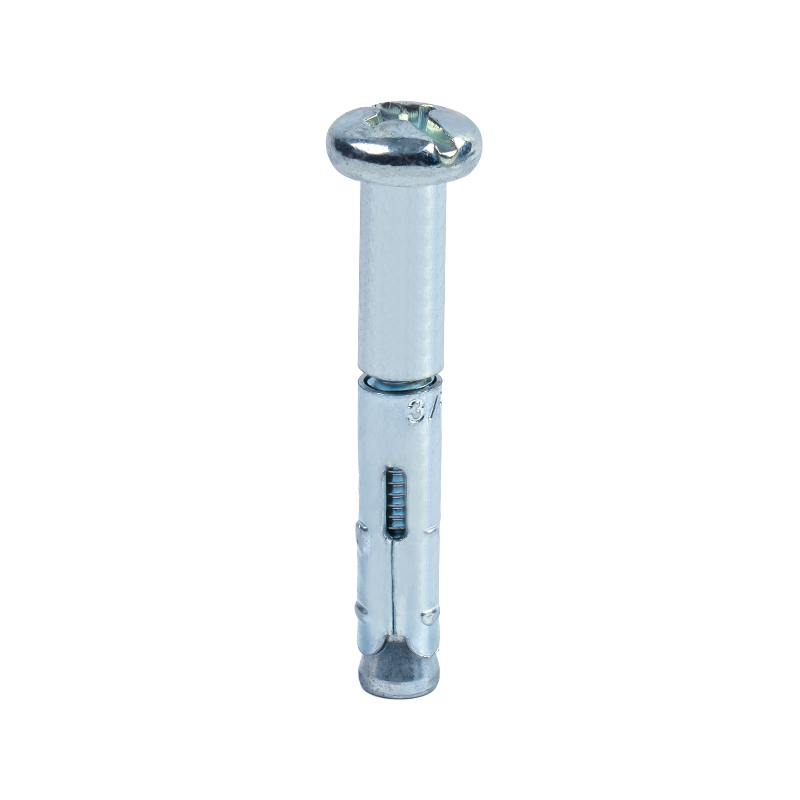
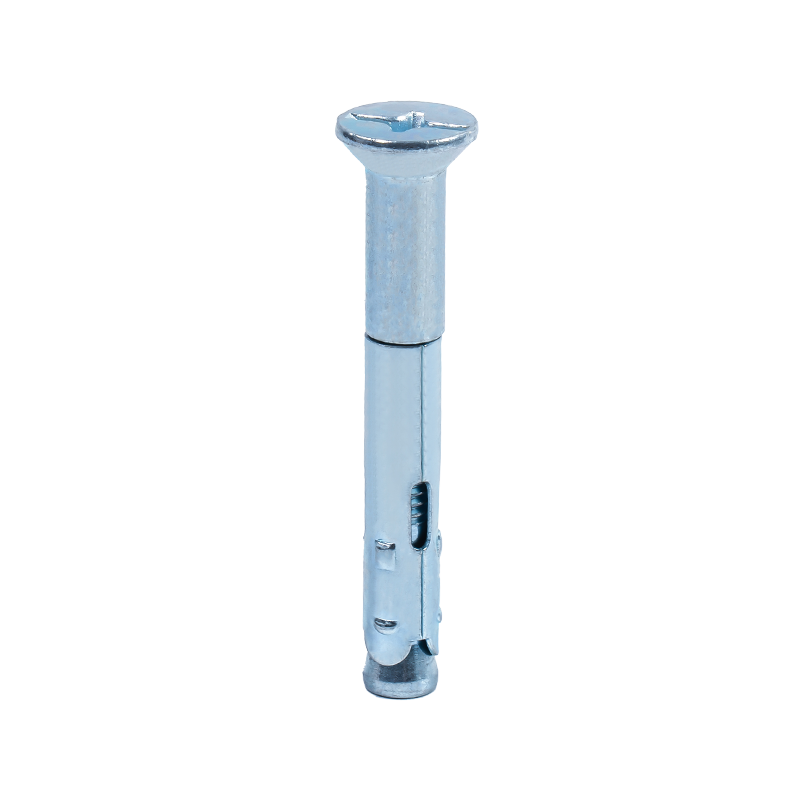
In these conditions, select a different anchor type. A sleeve anchor expands over a shorter length and can work in thinner concrete. A drop-in anchor is set flush below the concrete surface and is a good option for suspended slabs or removable bolts. A machine screw anchor is easier to install in shallow holes and works well for light and medium loads. A concrete screw forms threads in the concrete and is suitable for cracked concrete when the screw has an approval.
| Anchor type | Best use | Limitation | Typical embedment |
|---|---|---|---|
| Wedge anchor | Heavy tension and shear in solid concrete | Requires deeper hole and solid concrete | 1-1/8 to 3-1/4 inch |
| Sleeve anchor | Medium loads in solid or hollow concrete | Lower load capacity than a wedge anchor | Varies by sleeve length |
| Drop-in anchor | Flush installations and removable threaded studs | Needs a setting tool; no external nut | 1 to 2 inch |
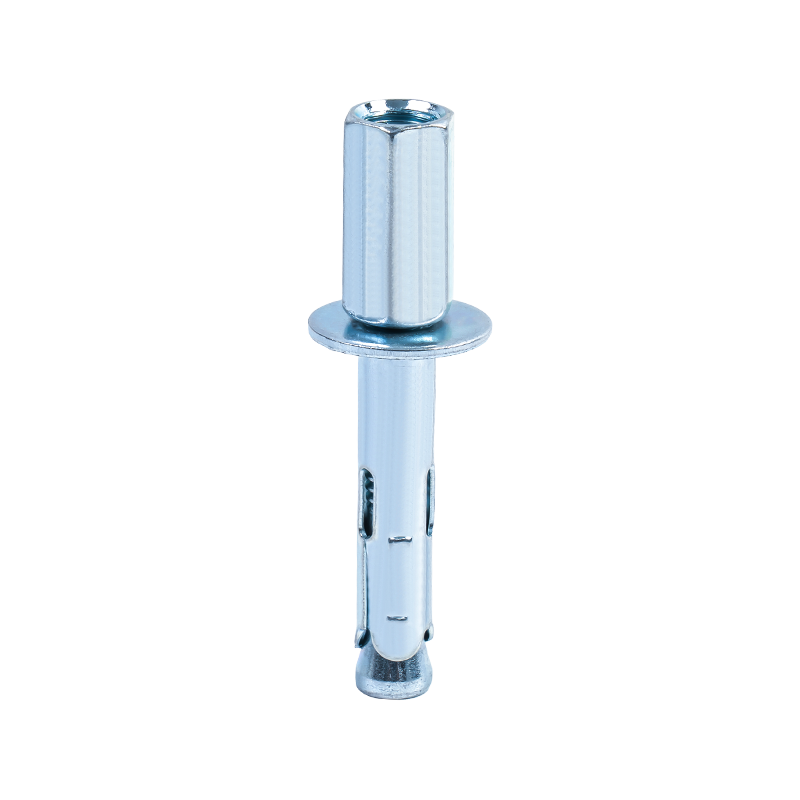
| Machine screw anchor | Light to medium loads in solid concrete | Limited thread engagement | 3/4 to 1 inch |
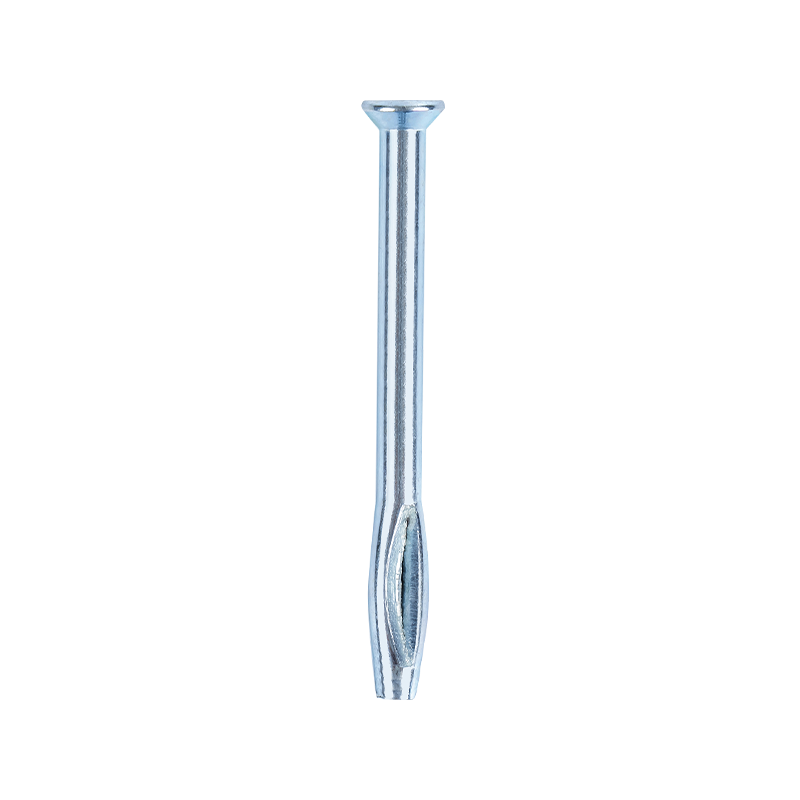
| Hammer drive anchor | Light, fast setting in solid concrete | Not for heavy loads or vibration | 3/4 inch |
The judgment is not "which anchor is strongest overall" but "which anchor is strongest in this particular concrete." A wedge anchor can carry more than a concrete screw in the same solid slab, but in a thin or cracked slab, the wedge anchor might fail while the alternative performs. Match the anchor style to the concrete condition first, then compare load tables.
Do not use a wedge anchor as a temporary brace if it will be removed and the hole patched later. The expansion clip bites into the concrete, so removal is possible but leaves a scarred hole and can damage the surface. A drop-in anchor is better for temporary fastening because removal leaves a cleaner hole.
Embedment Depth, Spacing, and Edge Distance: Installation Parameters That Decide Capacity
The design capacity printed in a technical data sheet is only valid if the anchor is installed with the correct embedment, spacing, and edge distance. If any of these three is wrong, the actual capacity can drop by 30 percent or more.
Embedment depth is measured from the top surface of the concrete to the deepest point of the anchor. It determines how much concrete is engaged in resisting the load. A deeper embedment increases both the concrete breakout capacity and the pullout capacity. For a wedge anchor, the minimum embedment is measured from the concrete surface, not from the top of the fixture.
| Anchor size | Drill bit size | Minimum embedment | Minimum spacing | Minimum edge distance |
|---|---|---|---|---|
| 1/4 inch | 3/8 inch | 1-1/8 inch | 3 inch | 2 inch |
| 3/8 inch | 1/2 inch | 1-3/4 inch | 4 inch | 3 inch |
| 1/2 inch | 5/8 inch | 2-1/4 inch | 5 inch | 4 inch |
| 5/8 inch | 3/4 inch | 2-3/4 inch | 6 inch | 5 inch |
| 3/4 inch | 7/8 inch | 3-1/4 inch | 7 inch | 6 inch |
Minimum embedment depth by wedge anchor size in inches.
Spacing matters because expansion anchors form a tension stress cone in the concrete. When two anchors are closer than the recommended center-to-center distance, the stress cones overlap. The concrete that would resist breaking out is shared, so each anchor carries less effective load. Edge distance works the same way: a free edge is a boundary that the stress cone cannot cross, so the concrete can crack from the anchor to the edge.
In practice, if the bolt pattern has very tight spacing, the designer should reduce the anchor size or increase the number of anchors instead of concentrating a few large anchors in a small area. On the other hand, if the edge distance is small, a smaller anchor with a shorter embedment may produce a higher allowable load because it does not pull against such a large concrete cone.
Another practical parameter is the clearance hole in the fixture. The fixture hole should be slightly larger than the anchor diameter so the anchor can be inserted easily, but not so large that the washer pulls through. A typical rule is 1/8 inch over the anchor diameter for imperial sizes.
Environmental Conditions and Corrosion Protection for Wedge Anchors
The concrete condition and the load path determine the size of a wedge anchor. The environment determines the material. If the anchor is exposed to moisture, chemicals, or chloride, the carbon steel strength values in a table are less important than the corrosion resistance of the specific material grade.
Zinc-plated wedge anchors are the most common for interior use. A thin zinc layer protects the anchor from humidity and mild condensation during storage and installation. The coating is not intended for long-term outdoor exposure. For a dry production hall or an indoor racking system, zinc-plated carbon steel is a reasonable choice.
Hot-dip galvanized anchors have a much thicker zinc coating, often several times the thickness of electroplated zinc. They are recommended for outdoor, sheltered or unsheltered, and high-humidity environments. The coating has a slightly rough surface, and the threads may be slightly thicker, so the nut fit should be checked on delivery.
Stainless steel wedge anchors are the right answer when the environment contains chlorides. Grade 304 stainless steel resists atmospheric corrosion in most fresh-air and fresh-water environments. Grade 316 stainless steel contains molybdenum and is more resistant to pitting in coastal fog, de-icing salts, and chemical splash. For swimming pool facilities, food processing, and offshore installations, 316 is the safer specification.
| Environment | Recommended material | Typical applications |
|---|---|---|
| Dry indoor air | Electro-galvanized carbon steel | Interior storage racks, machinery bases |
| Outdoor but sheltered | Hot-dip galvanized steel | Canopies, building additions, railings |
| Outdoor exposed to rain | Hot-dip galvanized or 304 stainless steel | Fences, roof-mounted equipment |
| Coastal, marine, or chloride | 316 stainless steel | Decks, marina structures, chemical plants |
| Frequently washed or wet | 316 stainless steel | Food production, wash-down areas |
A separate risk is galvanic corrosion between the anchor and the fixture. When a stainless steel anchor is used with a carbon steel base plate, moisture can create a galvanic cell that corrodes the less noble metal. An isolating washer or a compatible coating can break the electrical path. This small detail prevents rust staining and loss of clamp load years later.
Also consider the appearance of the anchor head if it remains visible. A stainless steel wedge anchor in a polished architectural space looks cleaner than a hot-dip galvanized anchor. Performance and visual appearance should be agreed before the anchors are ordered.
Metric Wedge Anchors: When the Project Works in Millimetres
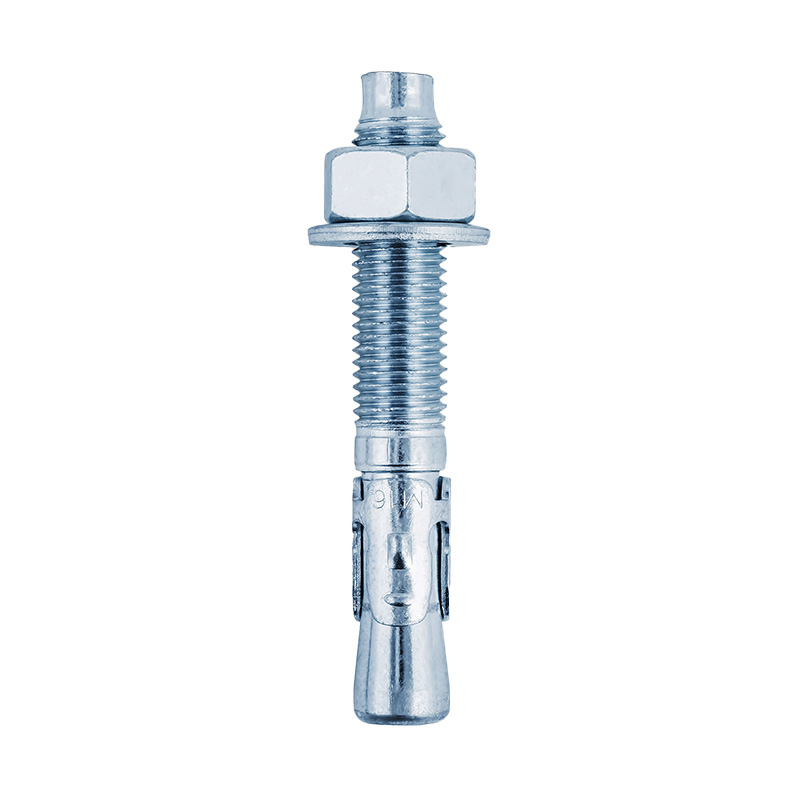
A growing number of construction and industrial projects specify metric dimensions, especially on large infrastructure or equipment imported from Europe and Asia. The wedge anchor logic does not change, but the anchor sizing is expressed as M6, M8, M10, M12, M16, or M20. A metric wedge anchor uses the same tapered clip expansion but is ordered with metric screw threads and metric drill sizes.
The decision to use a metric wedge anchor often comes from the drawing package. If the base plate hole is drilled to 12 mm and the tightening torque is written in N·m, a metric M8 or M10 anchor is the natural match. Converting an imperial anchor to metric is possible but introduces unnecessary risk because thread pitch, wrench sizes, and load tables may not align.
| Metric size | Drill bit | Minimum embedment | Fixture clearance hole |
|---|---|---|---|
| M6 | 10 mm | 30 mm | 7 mm |
| M8 | 12 mm | 40 mm | 9 mm |
| M10 | 16 mm | 50 mm | 12 mm |
| M12 | 18 mm | 60 mm | 14 mm |
| M16 | 22 mm | 80 mm | 18 mm |
| M20 | 28 mm | 100 mm | 22 mm |
Metric wedge anchors are part of the standard product range, and the same spacing and edge distance rules apply in millimetres as the imperial spacing tables described earlier. Metric wedge anchors are available in zinc-plated carbon steel, hot-dip galvanized steel, and stainless steel, so the material choice for marine or chemical environments is not limited by the measurement system.
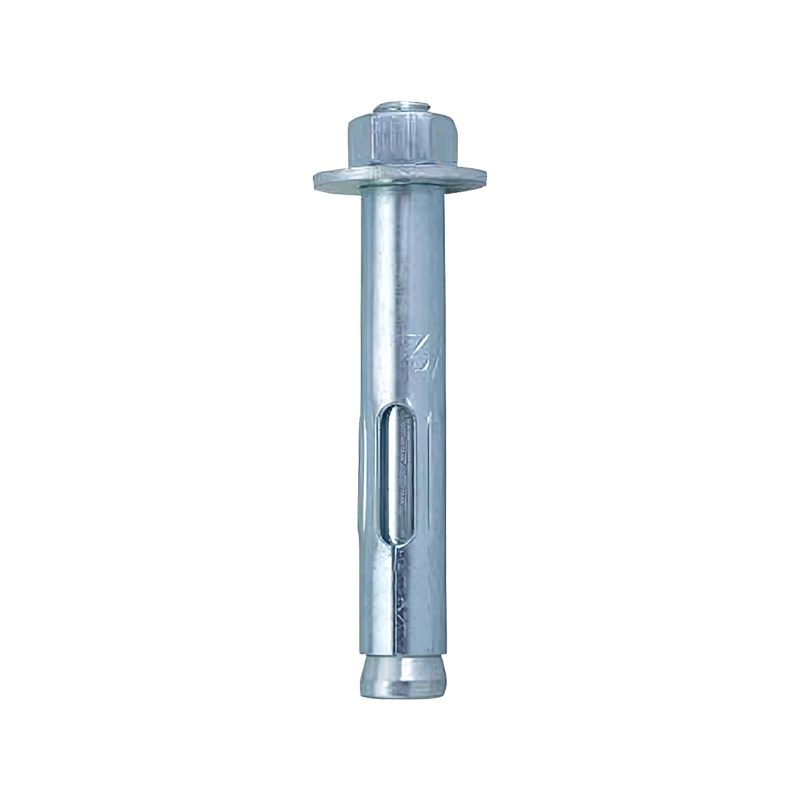
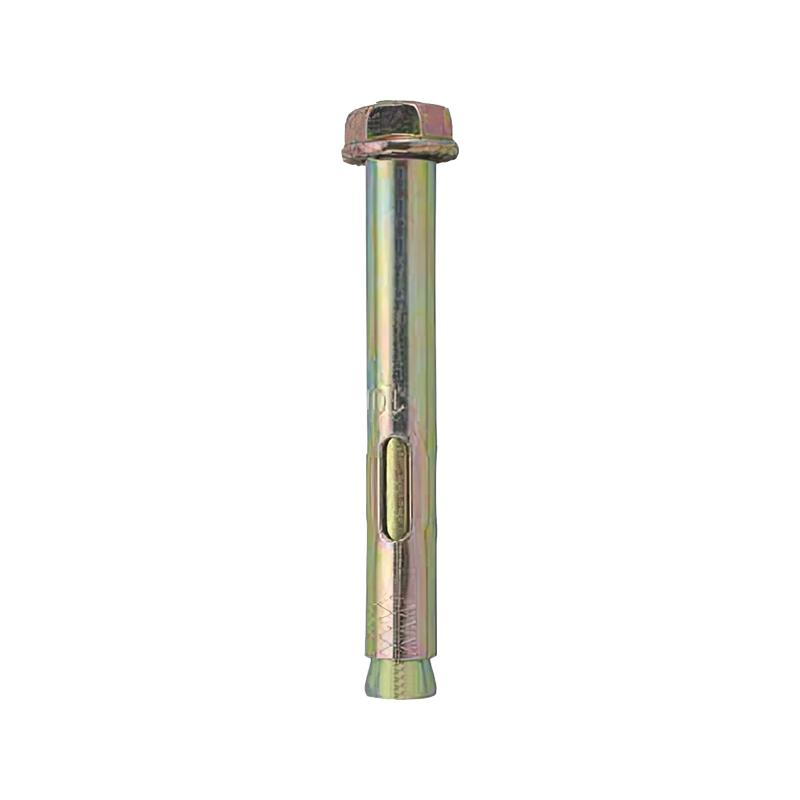
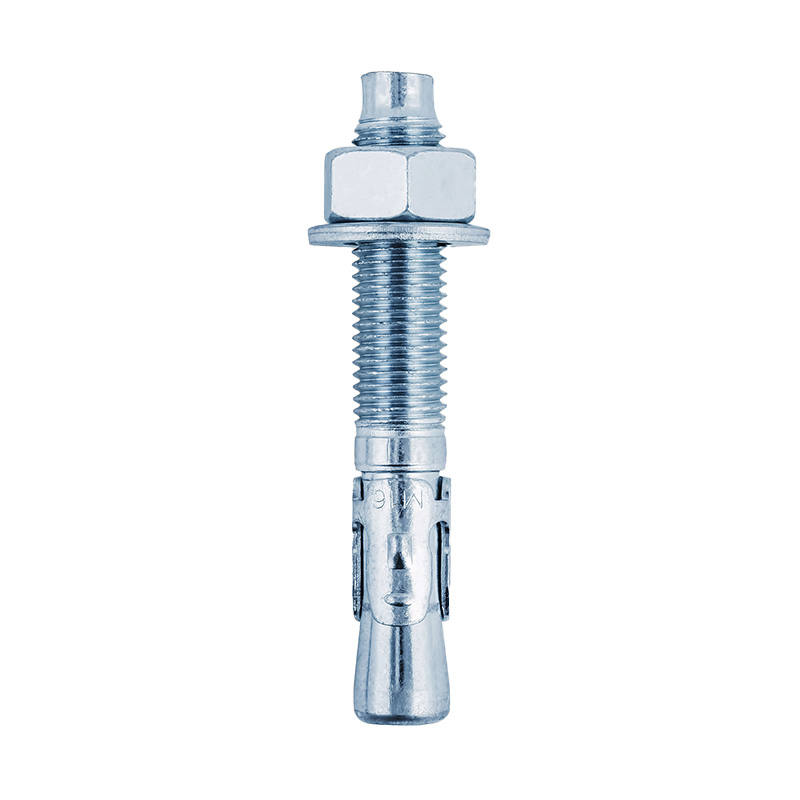 Metric Wedge Anchor for Standardized Metric Concrete InstallationsAvailable in multiple materials and sizes from M6 to M24, this wedge anchor complies with ISO 68-1 and suits regions using metric standards. Includes detailed pull-out data for reliable selection.View Product →
A useful practice is to specify the thread pitch on the purchasing document. A standard metric coarse thread is needed in most fastening applications, but some equipment uses fine pitch threads for precise preload control. The supplier should know exactly which standard is required.
If the project team is accustomed to imperial anchors, convert the hole diameter and depth carefully. A common error is to use an imperial drill bit that is slightly larger than the metric bit, reducing the expansion clip contact area and lowering the pullout value. Keep the metric measurement system for all drilling and torque tools.
Installation Conditions: Does the Site Allow a Wedge Anchor to Perform?
A wedge anchor is not a drill-and-forget fastener. It requires a hammer drill capable of making a straight hole, a properly sized carbide bit, a cleaning step, and a torque wrench for the final tightening. If any of these steps will not be done, the anchor should be changed to a more forgiving type.
- Drill the hole to the specified depth, using a bit that is the same size as the anchor diameter.
- Blow out the dust and clean the hole thoroughly; the expansion clip needs direct contact with the concrete.
- Push the anchor through the fixture and into the hole until the nut and washer are close to the fixture.
- Tap the anchor lightly until the expansion clip is seated below the concrete surface.
- Tighten the nut with a torque wrench to the recommended value.
- Re-check the torque after a short period, especially for heavy vibrating machinery.
The torque values in the table are based on clean, dry, uncracked concrete. If the anchor is installed through a fixture that is thick or soft, friction at the fixture surface changes the relationship between torque and tension. Use a torque wrench or a torque-setting adapter, not a regular wrench alone.
| Anchor size | Torque (ft-lb) | Torque (N·m) |
|---|---|---|
| 1/4 inch | 5 | 7 |
| 3/8 inch | 15 | 20 |
| 1/2 inch | 35 | 47 |
| 5/8 inch | 65 | 88 |
| 3/4 inch | 110 | 149 |
Over-tightening is a serious mistake. When a wedge anchor is tightened beyond the specified torque, the expansion clip can crush the concrete around it. The anchor may feel rigid, but the concrete inside the hole becomes powder, and the pullout capacity drops. For critical connections, mark the torque value on the base plate or in the installation record.
Site access is a practical limit. If the anchor is located in a corner, overhead, or inside a box section, a standard socket may be difficult to position. Deep sockets, wobble extensions, and torque adapters help, but there is a point where a wedge anchor is no longer the simplest solution. In those locations, a drop-in anchor with a female internal thread, or a hammer drive anchor for light loads, avoids the need for direct wrench access.
For outdoor installations, an additional check is the condition of the anchor threads after cutting into the concrete. Concrete dust can damage plated threads if the anchor is tapped into a dirty hole. Wipe the anchor, clean the hole, and use a thread protector if available.
Frequently Asked Questions about Choosing a Wedge Anchor
When should I use a wedge anchor instead of a sleeve anchor?
Use a wedge anchor when the concrete is solid, the hole can be drilled to the full embedment depth, and the load is medium to heavy. Choose a sleeve anchor when the concrete is thinner, the load is light, or the anchor needs to function in hollow masonry.
Can a wedge anchor be used in brick or concrete block?
No. Standard wedge anchors are only for solid concrete. In brick and block, the expansion clip will not develop the same hold, and there is a high risk of material damage and pullout. Use a masonry-specific anchor or an adhesive anchor for block.
Can a wedge anchor be used in cracked concrete?
Not reliably. In cracked concrete, the expansion clip has less confinement because the crack opens under load. Use an anchor with a test report for cracked concrete, or use an adhesive anchor. This is especially important in seismic areas.
How deep should the hole be for a wedge anchor?
The hole depth must be at least the embedment depth from the manufacturer's data sheet, plus a small allowance for dust at the bottom of the hole. For small diameters, that is about 1-1/8 inch; for large diameters, it can be more than 3 inches. The concrete must be thick enough to cover the full embedment.
Can a wedge anchor be removed and reused?
It can be removed by loosening the nut and driving the anchor into the concrete or pulling it out, but it should not be reused. The expansion clip is deformed during installation, and a second installation will not reach the same holding capacity.
How much weight can a wedge anchor hold?
It depends on the anchor diameter, embedment, concrete strength, spacing, and edge distance. In typical 3,000 psi concrete, the ultimate tension value can range from about 1,850 pounds for a 1/4 inch anchor to more than 13,000 pounds for a 3/4 inch anchor. Working loads are lower because of required safety factors.
Can a wedge anchor be used outside or in wet areas?
Yes, provided the material is selected for the environment. Use hot-dip galvanized steel for regular outdoor exposure and 304 or 316 stainless steel for coastal, marine, or chemical environments. Zinc-plated anchors are intended for dry indoor use.
What happens if a wedge anchor is over-tightened?
Over-tightening crushes the concrete around the expansion clip and stretches the threaded rod. The anchor may appear secure, but the concrete inside the hole is damaged and the pullout capacity is reduced. Use a torque wrench and follow the specified value.
Should I use a wedge anchor in lightweight concrete?
Only if the manufacturer provides test data for lightweight concrete. Standard wedge anchor load values are based on normal-weight concrete. For concrete with compressive strength below about 2,500 psi, verify the values carefully or choose a different fastening method.
How long should concrete cure before installing a wedge anchor?
Wait until the concrete reaches its specified design strength. For normal Portland cement concrete, this may be around 7 days, but the job specification may require a 28-day period for full strength. Installing a wedge anchor in green concrete causes loose anchors and reduced capacity.


Contact Us