
 English
 中文简体
中文简体 русский
 Español
Wedge Anchor vs Sleeve Anchor: Differences, Load Data and Selection Guide
2026-10-12A 3/8-inch wedge anchor and a 3/8-inch sleeve anchor can look almost identical on a workbench, yet they transfer load into the base material in completely different ways. The wedge anchor drives a hardened expansion clip against the wall of a drilled hole in solid concrete. The sleeve anchor expands a soft metal sleeve outward against brick, block, or concrete. Pick the wrong one and you change the failure mode, the hole tolerance, the torque requirement, and the maximum load the connection can carry.
The short answer is this: use a wedge anchor when the base material is solid, uncracked concrete and the connection must carry structural or heavy-duty tension and shear. Use a sleeve anchor when the base material is brick, hollow block, or a lower-strength masonry unit, or when the load is moderate and the installation needs to be more forgiving. Everything else in this article explains why that rule exists, where it breaks down, and how to verify it on a real project.
How a Wedge Anchor Holds
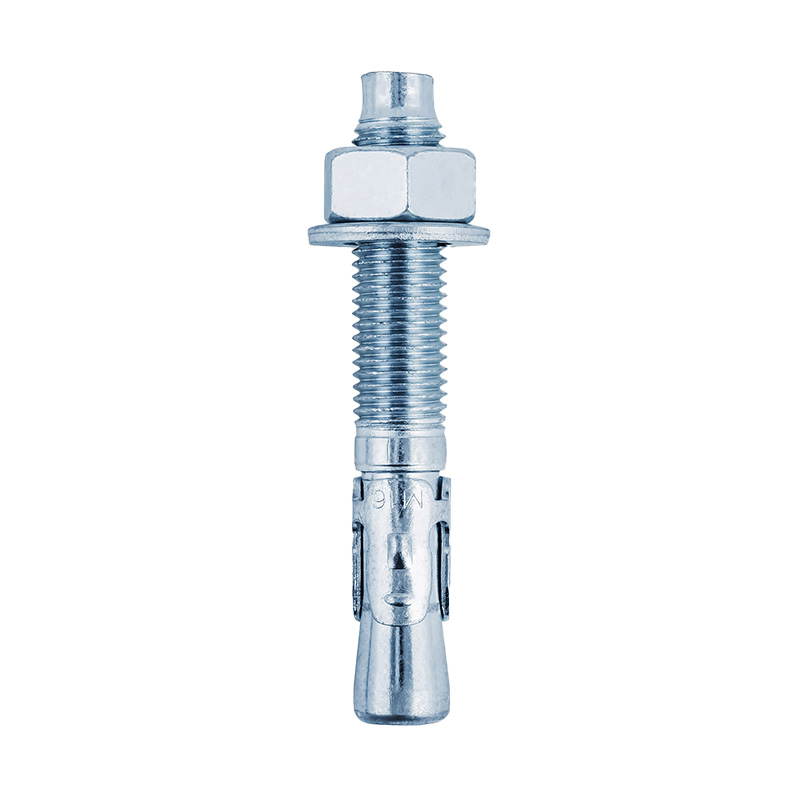
A wedge anchor is a threaded rod with a tapered mandrel at the bottom and a set of expansion clip fingers wrapped around the taper. The anchor is dropped into a drilled hole and struck with a hammer until the washer and nut sit against the fixture. Tightening the nut pulls the anchor upward while the tapered mandrel is pulled down into the clip. The clip expands outward and bites into the concrete wall along the embedment length.
The holding force comes from direct mechanical interference between hardened steel and concrete. Because concrete is strong in compression and relatively weak in tension, the clip must transfer load into the concrete without crushing the surrounding paste. That is why a wedge anchor is only as good as the concrete around it, and why hole diameter, embedment depth, and edge distance matter so much.
- Best base material: solid, uncracked concrete with a compressive strength typically above 2,500 psi.
- Expansion style: a hardened clip expands against the concrete wall.
- Typical use: structural steel columns, machinery bases, guardrails, racking, and heavy fixtures.
- Main sensitivity: hole diameter, embedment depth, and correct torque.
The Ultra Wedge Anchor line covers diameters from 1/4 inch through 1 inch in zinc-plated carbon steel and stainless steel. The clip geometry is the part that determines whether the anchor engages the concrete evenly or concentrates stress at the bottom of the hole. A clip that opens too quickly can crush the concrete around the top of the expansion zone; a clip that opens too slowly may not develop full contact along the embedment length.
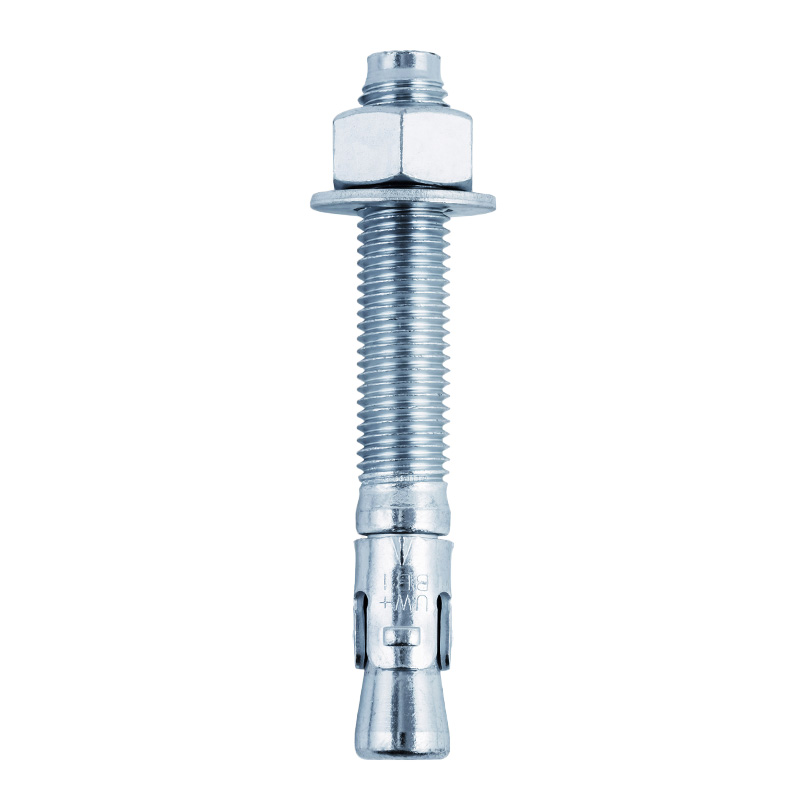
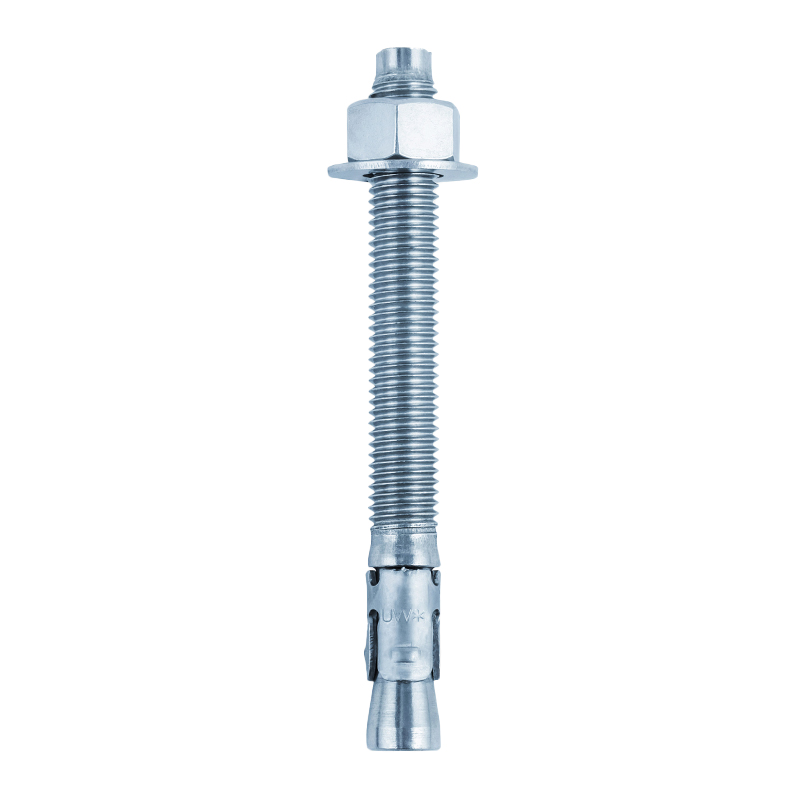 Ultra Wedge Anchor for Solid Concrete and Structural UseHeavy-duty expansion anchor in carbon or stainless steel, sold unassembled with nut and washer for high-strength concrete fastening.View Product →
How a Sleeve Anchor Holds
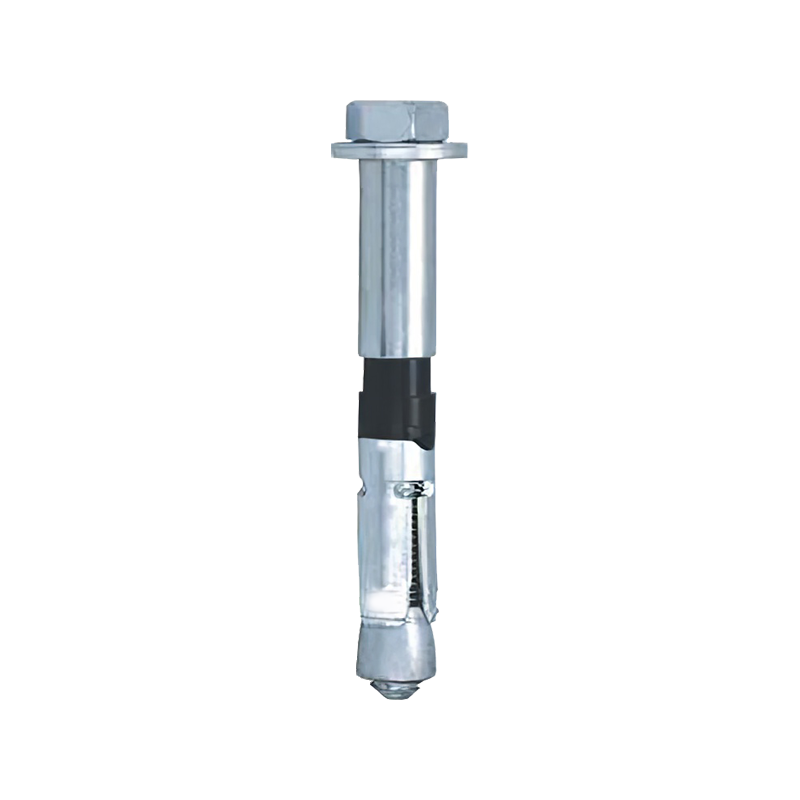
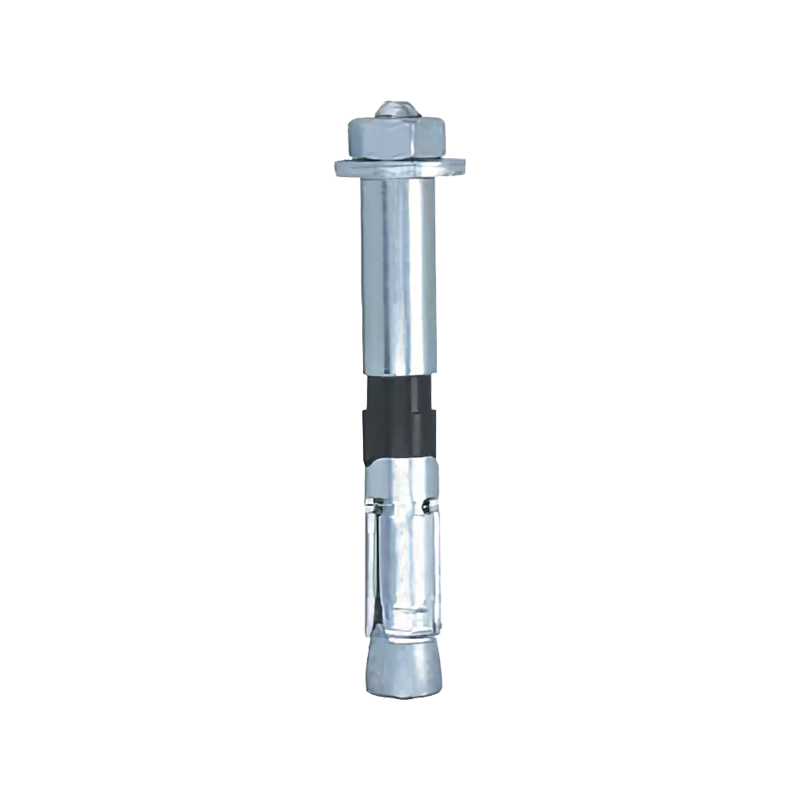
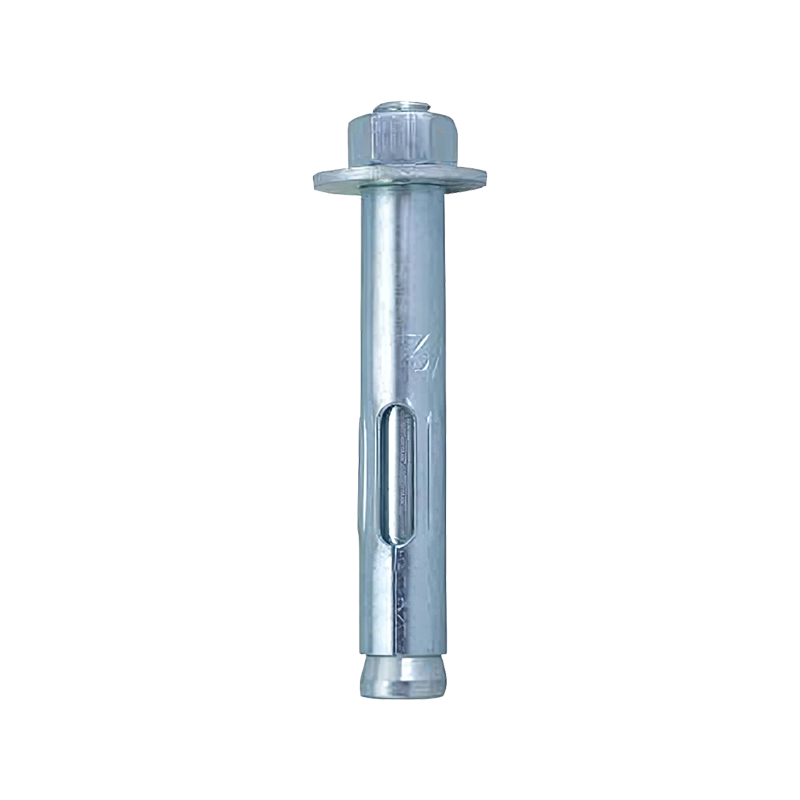
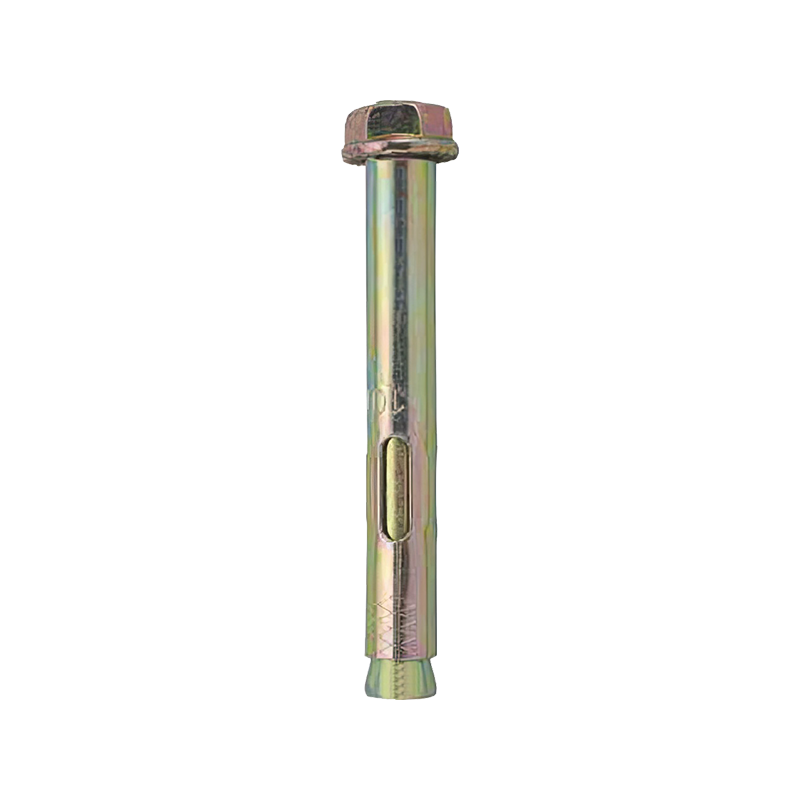
A sleeve anchor is built around a threaded stud, a nut, a washer, and a tubular sleeve that sits over a cone-shaped internal nut. When the installer tightens the nut, the cone is drawn into the sleeve and the sleeve expands outward along its full length. The expansion is spread over a longer contact area than a wedge anchor, which is why a sleeve anchor can develop useful holding power in softer or hollow masonry.
The sleeve itself is usually made from a softer material than the wedge clip. It deforms to match the irregular surface of brick or block instead of biting into a hard, uniform concrete wall. That deformation is an advantage in masonry and a limitation in high-strength concrete, because the sleeve cannot generate the same concentrated bearing stress as a hardened wedge clip.
- Best base material: brick, hollow block, cinder block, and lower-strength concrete.
- Expansion style: a full-length sleeve expands against the base material.
- Typical use: shelving, electrical boxes, handrails, signage, and light to moderate fixtures.
- Main sensitivity: base material strength and the ability of the sleeve to expand without splitting the unit.
Sleeve anchors are often chosen because they are more tolerant of slight variations in hole diameter. The sleeve can deform to fill small gaps, while a wedge anchor relies on a tighter, more precise hole. That tolerance is useful on older masonry walls where the block cores are irregular or the mortar joints are inconsistent.
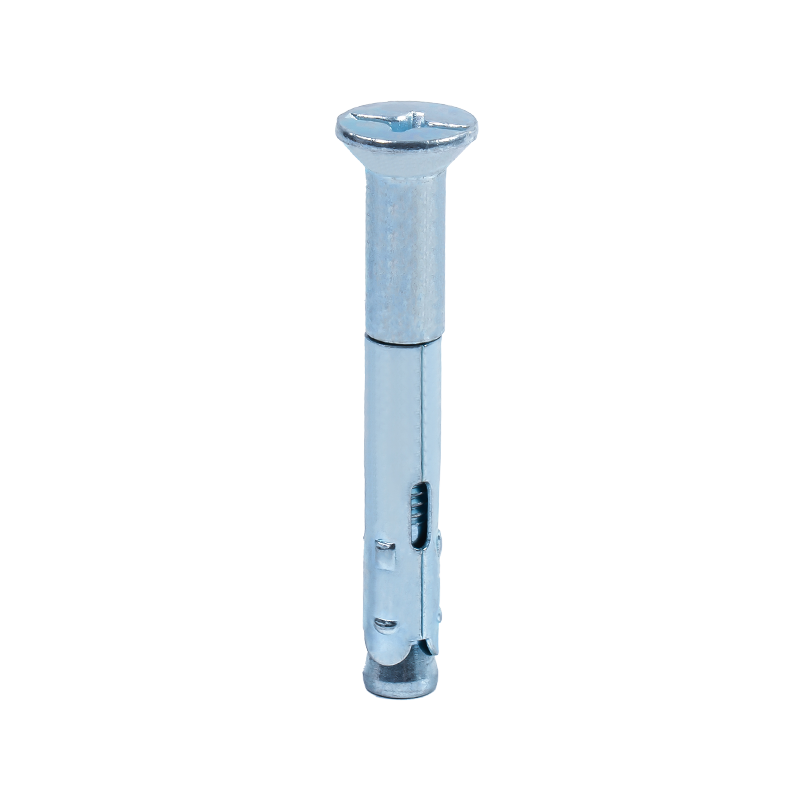
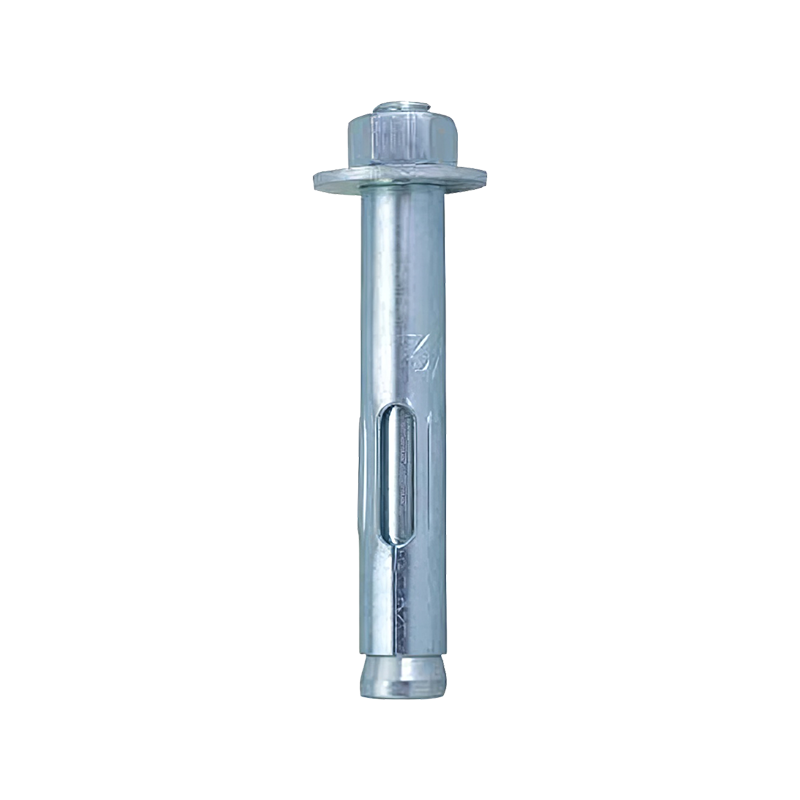 Ultra Sleeve Anchor for Brick, Block, and ConcreteSleeve-type anchor made in stainless or carbon steel, suited to bricks, hollow bricks, marble, and concrete for doors, windows, and fixtures.View Product →
Direct Comparison Table
| Feature | Wedge Anchor | Sleeve Anchor |
|---|---|---|
| Expansion mechanism | Hardened clip expanded by a tapered mandrel | Soft sleeve expanded by an internal cone |
| Best base material | Solid, uncracked concrete | Brick, block, and moderate-strength concrete |
| Hole tolerance | Requires accurate hole diameter and depth | More forgiving of minor diameter variation |
| Typical load range | Heavy to structural tension and shear | Light to moderate tension and shear |
| Vibration resistance | Good when properly torqued in concrete | Moderate, depends on base material |
| Removal | Difficult; usually cut or left in place | Can often be unscrewed and removed |
| Edge and spacing demand | High; requires generous edge distance | Lower; tolerates closer spacing in masonry |
| Corrosion options | Zinc plated, hot-dip galvanized, 304, 316 stainless | Zinc plated, hot-dip galvanized, 304, 316 stainless |
The table is a starting point, not a final specification. A 3/8-inch sleeve anchor in a solid concrete wall may outperform a 1/4-inch wedge anchor in the same wall, and a wedge anchor in a hollow block wall may pull out under a load that a sleeve anchor would carry easily. Diameter, embedment, and base material always work together.
Base Material Compatibility
The base material is the first decision point. A wedge anchor needs a solid, uncracked concrete mass that can resist the outward pressure of the clip. If the concrete cracks during installation or under load, the clip loses contact and the anchor can slip. That is why wedge anchors are commonly used in foundations, slabs-on-grade, and structural concrete that has been properly cured and inspected.
A sleeve anchor works by spreading pressure over a longer sleeve area. In a hollow block wall, the sleeve expands inside the core or against the block webs, depending on where the hole lands. In a solid brick wall, the sleeve presses against the brick body. In soft concrete, the sleeve distributes load over more surface area than a wedge clip, which reduces the risk of local crushing.
There are limits. A sleeve anchor is not a substitute for a wedge anchor in a structural column base, and a wedge anchor is not a reliable choice in a hollow block wall. If the block is hollow and the hole lands in an empty core, neither anchor may develop full capacity unless the anchor is long enough to reach the far side of the block or a different anchor type is used.
For mixed or unknown base materials, the safe approach is to test the anchor on site. Install two or three anchors in the actual wall, apply a proof load, and observe whether the base material cracks or the anchor slips. Field testing is especially important on renovation projects where the original concrete strength and block type are not documented.
Load Capacity and Embedment
Load capacity is not a single number stamped on the anchor. It depends on diameter, embedment depth, base material strength, edge distance, spacing, and whether the load is tension, shear, or a combination. A 1/2-inch wedge anchor embedded 3-1/4 inches in 4,000 psi concrete can develop a significantly higher tension capacity than the same anchor embedded 2 inches in 2,500 psi concrete.
Embedment depth drives the size of the concrete cone that resists pullout. As a rule, deeper embedment increases capacity, but only up to the point where the anchor steel or the concrete cone reaches its limit. The minimum embedment depth for a wedge anchor is usually specified by the manufacturer and should never be reduced to save drilling time. If the hole is too shallow, the clip may not fully engage, and the anchor may pull out at a fraction of its rated load.
The chart below shows the general relationship between embedment depth and relative tension capacity for a typical wedge anchor in solid concrete. The values are illustrative and should not replace manufacturer data or project-specific engineering.
For sleeve anchors, the relationship is different. The sleeve expands over a fixed length, so increasing embedment beyond the sleeve length does not always increase capacity in the same way. What matters more is the strength of the base material and whether the sleeve can expand without cracking the masonry unit.
If you need published load ratings by diameter and embedment, review the wedge anchor weight capacity guide and compare the values with the anchor data sheet for the specific product you plan to order. The minimum hole depth and cleaning requirements are covered in the minimum embedment depth for wedge anchors reference.
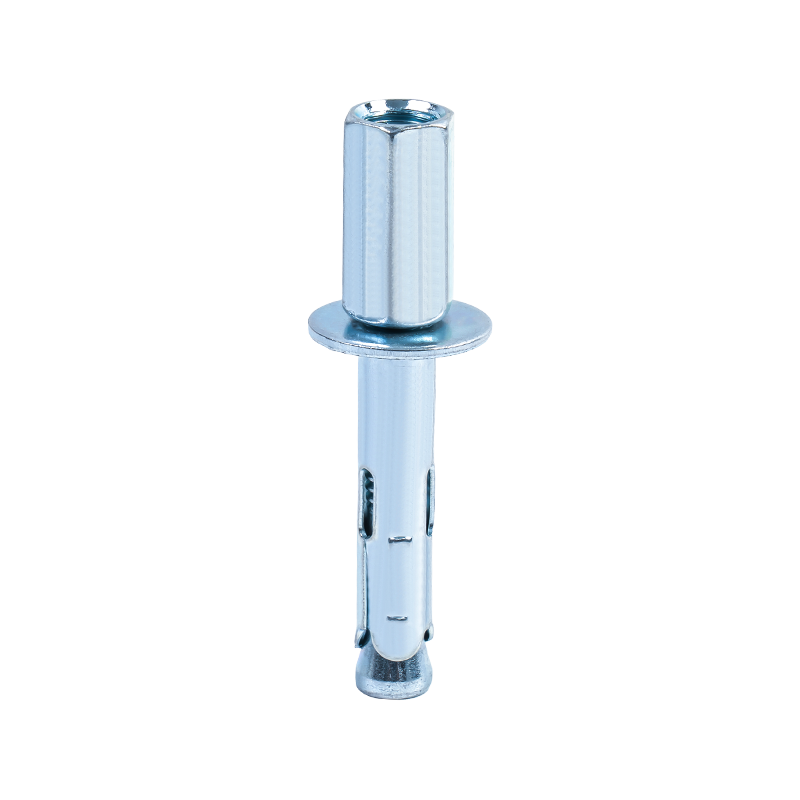
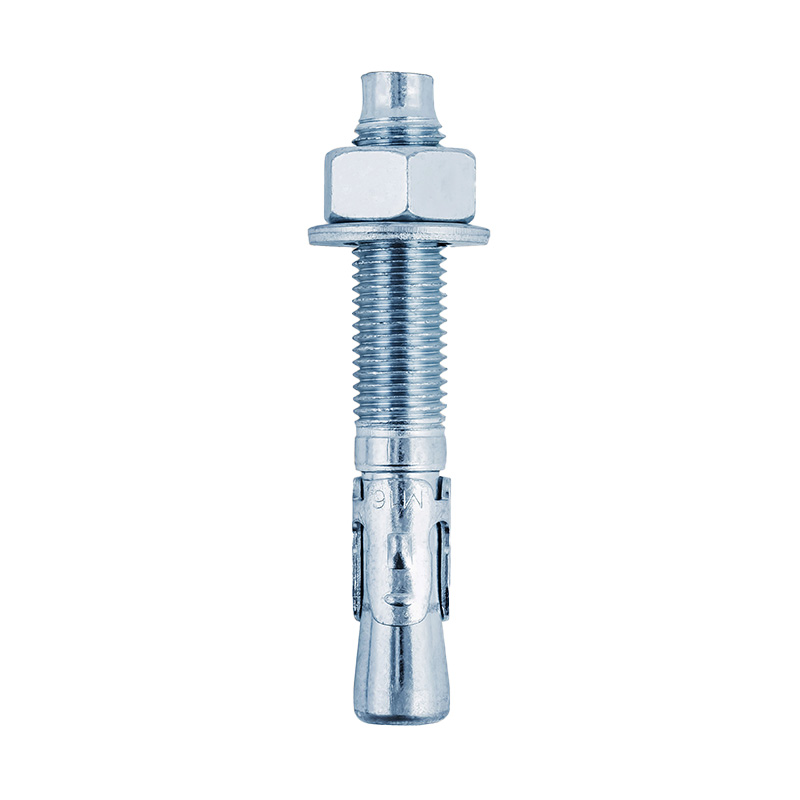 Metric Wedge Anchor for Concrete and Structural FasteningMetric-standard mechanical anchor available M6–M24, supplied unassembled with expansion clip, washer, and hex nut for concrete applications.View Product →
Installation Tolerance and Torque
Wedge anchors are less forgiving than sleeve anchors during installation. The drilled hole must match the anchor diameter within a tight tolerance. A hole that is too large reduces the expansion pressure and the anchor may spin or pull out. A hole that is too small can prevent the anchor from reaching the required depth or damage the clip during driving.
Hole cleaning is critical for both anchor types. Concrete dust and debris at the bottom of the hole prevent the anchor from seating fully. For a wedge anchor, the anchor must reach the bottom of the hole so the clip can expand at the correct depth. For a sleeve anchor, debris can prevent the sleeve from expanding evenly.
- Drill the hole to the specified diameter and depth using the correct carbide bit.
- Blow out the hole with compressed air, then brush it and blow it again.
- Insert the anchor and drive it with a hammer until the washer contacts the fixture.
- Tighten the nut to the specified torque using a calibrated torque wrench.
- Check the torque after the fixture has been loaded and again after any vibration event.
Torque is not a suggestion. Undertorquing a wedge anchor leaves the clip partially expanded and the anchor may slip under load. Overtorquing can strip the threads, break the anchor, or crack the concrete. For sleeve anchors, overtorquing can tear the sleeve or crush the base material, especially in soft block.
Installation speed also differs. A sleeve anchor can often be installed with a single wrench and without a hammer, which makes it convenient for overhead or confined spaces. A wedge anchor usually requires a hammer and a torque wrench, and the installer must verify that the anchor has seated properly before final tightening.
Materials, Coatings, and Corrosion
Both anchor types are available in zinc-plated carbon steel, hot-dip galvanized steel, and stainless steel. The choice depends on the environment. Indoor, dry conditions are usually fine with zinc plating. Outdoor, coastal, or industrial environments need more corrosion resistance.
For wet or marine environments, 316 stainless steel offers better chloride resistance than 304 stainless steel. Hot-dip galvanizing provides a thick zinc layer that sacrifices itself to protect the steel, but it can be damaged during installation and may not be suitable for highly acidic or chloride-rich environments. The coating must match the expected service life of the structure.
Zinc Plated
Economical for indoor and dry outdoor use. Not recommended for continuous moisture or coastal exposure.
Hot-Dip Galvanized
Thicker zinc coating for outdoor structures. Requires care during handling to avoid coating damage.
304 Stainless Steel
Good general corrosion resistance for many outdoor and industrial applications.
316 Stainless Steel
Best choice for coastal, marine, and chemical exposure where chlorides are present.
Dissimilar metal contact is another consideration. A stainless steel anchor in contact with a galvanized steel fixture can create a galvanic couple in the presence of moisture. In critical applications, use compatible materials or an insulating washer to separate the metals.
Vibration, Cracks, and Long-Term Behavior
Vibration can loosen a fastener over time. A properly torqued wedge anchor in solid concrete resists vibration well because the clip maintains constant pressure against the concrete wall. A sleeve anchor can also resist vibration, but its performance depends more on the base material. In a soft block wall, vibration can gradually enlarge the hole and reduce the sleeve's contact pressure.
Cracked concrete is a special case. A standard wedge anchor may not perform well in a crack that opens and closes under load unless it is specifically rated for cracked concrete. Sleeve anchors are generally not used in cracked concrete for structural loads. If the concrete is cracked or expected to crack, the project may require a different anchor type or a qualified engineering evaluation.
Long-term behavior also depends on installation quality. An anchor that is correctly drilled, cleaned, and torqued can hold its load for decades. An anchor that is installed in a dusty hole or under-torqued may lose capacity within months. The difference between a successful installation and a failure is often a few minutes of hole preparation.
Removal, Reuse, and Adjustment
Wedge anchors are considered permanent fasteners. Once the clip has expanded against the concrete, removing the anchor usually requires cutting it flush or drilling it out. The anchor cannot be reused. This is acceptable for permanent structural connections but inconvenient for temporary fixtures or equipment that may need to be relocated.
Sleeve anchors are more removable. The nut can be unscrewed, and the anchor can sometimes be pulled out of the hole if the sleeve has not seized against the base material. In masonry, removal is often easier than in concrete. The hole may be slightly enlarged after removal, so reinstallation in the same hole may require a larger anchor or a different fastening method.
If the project requires future adjustability, a sleeve anchor or a machine screw anchor may be a better choice than a wedge anchor. If the connection is permanent and must carry heavy load, a wedge anchor is usually the more reliable option.
Cost and Ordering Considerations
Unit cost is only part of the total installed cost. A wedge anchor may cost more per piece than a sleeve anchor of the same diameter, but it may also require fewer anchors to carry the same load in solid concrete. A sleeve anchor may be less expensive but may need a larger diameter or more anchors to achieve the same capacity in a weaker base material.
Ordering the wrong anchor can create expensive rework. If a wedge anchor is specified for a hollow block wall, the installer may discover the problem only after drilling dozens of holes. If a sleeve anchor is specified for a structural column base in concrete, the inspector may reject the installation. Matching the anchor to the base material before ordering avoids both problems.
- Confirm the base material and compressive strength before selecting the anchor type.
- Check the required embedment depth and available hole depth.
- Verify edge distance and spacing against the manufacturer's data.
- Select the coating for the environment, not just the lowest price.
- Order test anchors for field verification on critical or unfamiliar substrates.
For large projects, request test reports and dimensional inspection data with the order. A manufacturer that controls its own production and inspection process can provide consistent clip geometry, thread quality, and coating thickness from lot to lot. That consistency matters when thousands of anchors are installed by different crews on the same site.
Applications by Project Type
The fastest way to choose is to start with the base material and the load, then confirm with the project specification. The following examples show how the decision usually goes in practice.
Structural Steel Bases
Use wedge anchors in solid, uncracked concrete. Verify embedment, edge distance, and torque against the engineered drawings.
Handrails and Guardrails
Wedge anchors for concrete; sleeve anchors for brick or block where loads are moderate and the base is masonry.
Electrical and Signage
Sleeve anchors are often sufficient for light fixtures in block or brick, especially where removal may be needed later.
Racking and Shelving
Sleeve anchors in masonry; wedge anchors in concrete slabs where the racking carries heavy point loads.
Machinery and Vibration
Wedge anchors in concrete with proper torque and periodic inspection; avoid sleeve anchors in soft block under dynamic load.
Outdoor and Coastal
Choose 316 stainless steel for both anchor types where chlorides or constant moisture are present.
On infrastructure projects, the anchor selection is usually controlled by the project specification and the engineer of record. The role of the supplier is to provide anchors that meet the specified diameter, length, material, and coating, with dimensional and mechanical test data that can be reviewed before installation.
Common Installation Mistakes
Most anchor failures are not caused by a defective product. They are caused by installation errors that reduce the anchor's capacity below the design load. The following mistakes appear repeatedly on job sites.
- Drilling the hole with the wrong diameter bit. A worn bit can drill oversized, reducing expansion pressure.
- Not drilling deep enough. The anchor cannot reach the required embedment, so the clip or sleeve expands in the wrong zone.
- Skipping hole cleaning. Dust and debris prevent full seating and reduce contact with the base material.
- Under-torquing the anchor. The expansion mechanism is not fully engaged, and the anchor can slip under load.
- Over-torquing the anchor. Threads can strip, the clip can break, or the concrete can crack.
- Placing anchors too close to an edge or to each other. The concrete cone or masonry unit cannot develop full capacity.
- Using a wedge anchor in hollow block or a sleeve anchor in cracked structural concrete. The anchor type does not match the base material.
- Ignoring vibration. Anchors in vibrating equipment should be inspected and re-torqued on a maintenance schedule.
Each of these mistakes can be prevented with a short pre-installation check: confirm the anchor type, drill bit size, hole depth, cleaning method, and torque value before the first anchor goes in. On a large project, that check takes minutes and can prevent thousands of dollars in rework.
FAQ
Can a wedge anchor be used in brick or block?
Generally no. A wedge anchor needs solid, uncracked concrete to develop its rated capacity. In hollow block or soft brick, the clip may crush the material or fail to engage, leading to pullout. Use a sleeve anchor or another masonry-specific anchor instead.
Are sleeve anchors strong enough for heavy loads?
Sleeve anchors are suitable for light to moderate loads in masonry and lower-strength concrete. They are not a substitute for wedge anchors in structural steel connections or other heavy-duty applications in solid concrete.
Which anchor is better for vibration?
A properly torqued wedge anchor in solid concrete generally performs better under vibration because the clip maintains constant pressure against the concrete. Sleeve anchors can work in vibration-prone applications if the base material is strong and the anchor is inspected regularly, but they are more sensitive to base material condition.
Do both anchors require precise drilling?
Yes, but the consequence of imprecision differs. A wedge anchor is more sensitive to hole diameter and depth because the clip needs a tight fit to expand correctly. A sleeve anchor is more tolerant of minor variation because the sleeve can deform to fill small gaps.
Which material should be used outdoors?
For outdoor exposure, hot-dip galvanized steel is common for general use, while 304 or 316 stainless steel is preferred for coastal, marine, or industrial environments. Use 316 stainless steel where chlorides are present.
What causes anchor failures most often?
Installation errors are the most common cause: wrong hole diameter, insufficient depth, poor hole cleaning, incorrect torque, and placing anchors too close to an edge. Selecting the correct anchor type for the base material is the first step in preventing failure.
Can I remove and reuse a wedge anchor?
A wedge anchor is considered a permanent fastener. Once expanded, it usually cannot be removed without cutting or drilling it out, and it cannot be reused. A sleeve anchor is more removable, but the hole may be enlarged after removal, so reuse in the same hole is not guaranteed.


Contact Us