
 English
 中文简体
中文简体 русский
 Español
What Are Hammer Drive Anchors and How Do You Install or Remove Them
2026-07-27Hammer Drive Anchor Manufacturing: Production Standards, Material Engineering and Technical Support
As a fastener manufacturing facility specializing in wall and concrete fixing systems, our production line covers the full process of Hammer Drive Anchor fabrication, from cold heading of the pin to zinc electroplating of the sleeve. Every batch of hammer drive pin anchors produced in our facility goes through dimensional calibration, hardness verification and corrosion resistance testing before packaging. This section covers the manufacturing background, material specifications and technical support details that are not typically visible from the outside of a finished anchor product, but that directly determine how well a Hammer Drive Pin Anchor performs once it is installed on site.
Unlike anchors sourced through general hardware distribution channels, anchors produced directly at a manufacturing facility allow for tighter tolerance control, batch traceability, and the ability to customize dimensions, head styles and coating types according to project specifications. This is particularly relevant for installation teams working across multiple substrate types, where a single anchor specification rarely covers every application.
Cold Heading Production
The drive pin of each hammer drive anchor is formed through a cold heading process using low-carbon steel wire, which preserves internal grain structure and improves shear resistance compared to machined or cast alternatives.
Precision Tooling
Sleeve dimensions are controlled through progressive die stamping, maintaining outer diameter tolerances within ±0.05mm across production runs, which is critical for consistent hole-fit performance during Hammer Drive Anchor Installation.
In-House Plating Line
Zinc electroplating is performed on-site rather than outsourced, allowing coating thickness to be adjusted per order requirement and verified through internal salt spray testing before shipment.
Batch Traceability
Each production batch is assigned a lot number, allowing hardness, tensile and coating test results to be traced back to raw material source and production date if a technical inquiry arises.
Raw Material Selection and Metallurgical Properties
The performance of any Hammer Drive Pin Anchor is determined largely at the raw material stage, before the anchor is even formed. Our production uses cold-drawn low-carbon steel wire for the drive pin, typically within the 1008–1018 carbon steel range, which balances ductility during forming with sufficient hardness after heat treatment to resist bending during hammering. The sleeve component is produced from zinc die-cast alloy or low-carbon steel strip, depending on the load class and substrate application specified by the buyer.
Heat treatment of the drive pin is carried out in a controlled furnace environment to achieve a surface hardness within the HRC 38–45 range. This range is selected because a pin that is too soft will deform under hammer impact without fully seating into the sleeve, while a pin that is too hard becomes brittle and may fracture rather than bend when installed into slightly misaligned drill holes. Hardness testing is performed on sample pins from every production batch using a Rockwell hardness tester, and results are logged before the batch is approved for coating.
Surface Treatment Options and Corrosion Resistance Data
Corrosion resistance is one of the most frequently requested technical specifications when specifying Hammer Drive Concrete Anchors for outdoor or high-humidity installation environments. Our facility offers multiple coating options depending on the expected service environment of the finished installation. The table below outlines the coating types available and their corresponding salt spray test results, measured according to ASTM B117 testing protocol.
| Coating Type | Coating Thickness | Salt Spray Resistance | Recommended Environment |
| Zinc Electroplated (Clear) | 5–8 microns | 48–72 hours | Indoor / dry conditions |
| Zinc Electroplated (Yellow) | 8–12 microns | 96 hours | Semi-outdoor / covered areas |
| Mechanical Zinc Plating | 10–15 microns | 150 hours | Outdoor / exposed installation |
| Zinc Flake Coating | 8–10 microns | 500+ hours | Coastal / high-humidity / industrial |
Selecting the correct coating is directly tied to installation lifespan expectations. A Hammer Drive Anchor installed in an interior partition wall does not require the same corrosion protection as one used to fix an exterior cable tray bracket on a rooftop. We recommend that installation planners specify the environmental exposure category at the time of ordering so that the correct coating grade is applied during production, rather than adjusting for this after installation has already begun.
Head Type and Design Configuration Options
Hammer Drive Pin Anchors are available in several head configurations, each suited to different finishing requirements. The head style affects both the visual finish after installation and how flush the anchor sits against the substrate surface.
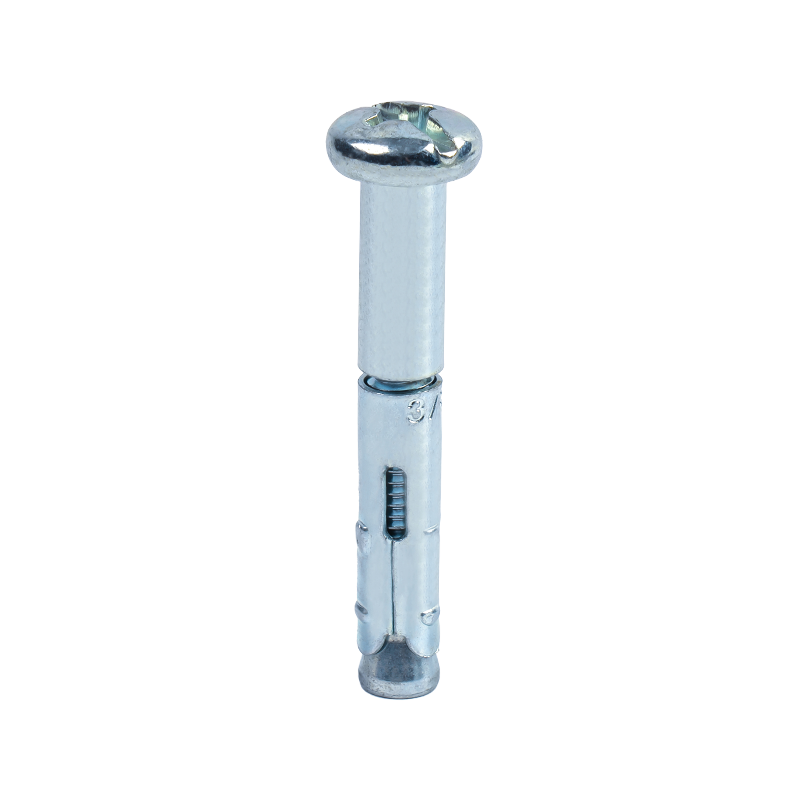
Round Head
Provides a raised, domed finish, commonly used for general fixture mounting where the anchor head remains visible, such as signage backing panels or bracket fixing points.
Flat Head
Sits nearly flush with the surface once fully driven in, preferred for applications where a low-profile finish is required, such as flooring track fixing or trim installation.
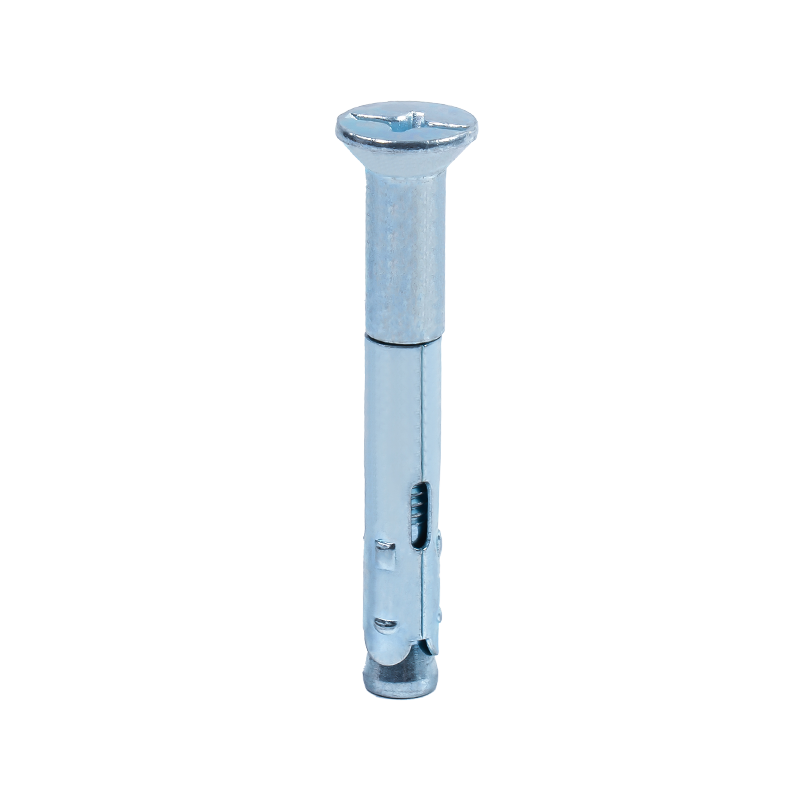
Countersunk Head
Designed to sit fully recessed below the substrate surface, allowing for a smooth finish when the anchor location will later be filled or painted over.
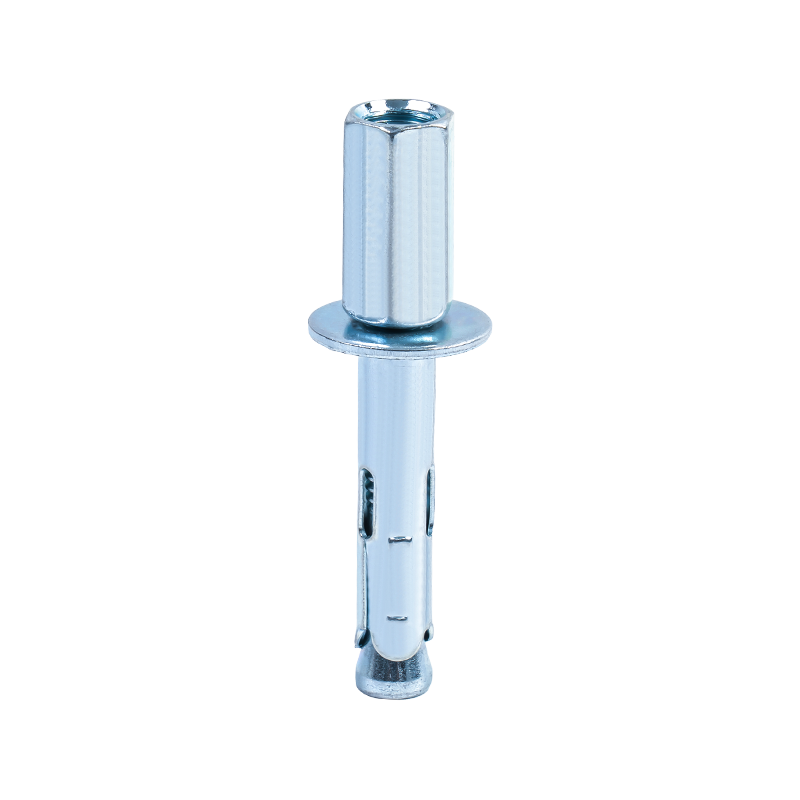
Washer-Integrated Head
Includes a wider integrated washer base for improved load distribution, recommended for thin panel materials or where additional pull-through resistance is required.
Quality Control Procedures Before Shipment
Every production run of hammer drive anchors passes through a multi-stage inspection process before packaging. This is separate from installation-stage quality, and focuses entirely on manufacturing consistency.
Dimensional Inspection
Sample anchors from each batch are measured against calibrated gauges to confirm sleeve outer diameter, pin length and head diameter remain within tolerance.
Pull-Out Load Testing
Anchors are installed into standardized concrete test blocks and pulled under controlled tension to confirm they meet the rated axial load class before batch approval.
Coating Adhesion Test
Tape adhesion and bend testing are performed on plated samples to confirm the coating does not flake or crack during handling or installation impact.
Packaging Integrity Check
Boxed or bagged quantities are weighed and counted against packing lists to confirm accurate unit counts before sealing for shipment.
Installation Technique Guidance for Different Substrate Categories
How to install a hammer drive anchor correctly depends heavily on the substrate being fixed into, and installation technique should be adjusted accordingly rather than treated as a single universal procedure. For solid concrete and masonry, a hammer drill fitted with a carbide-tipped bit matching the sleeve outer diameter should be used to produce a clean, round hole rather than a rotary-only drill, which tends to produce an irregular hole profile that reduces sleeve grip.
For How to install hammer drive hollow wall anchors, drilling speed should be reduced compared to concrete drilling, since excessive speed in hollow board materials can cause the drill bit to punch through unevenly and enlarge the hole beyond the sleeve diameter. Once the hole is drilled, the sleeve should be inserted by hand pressure first, checking that the washer or head sits flush against the surface before any hammer impact is applied to the drive pin.
A common installation error is applying hammer force at an angle rather than straight down the pin axis, which can bend the pin before it fully seats and prevent the sleeve from expanding evenly. Installation teams should also avoid re-hammering an anchor that has already reached full depth, as this can crack surrounding masonry or overstress the sleeve material, particularly in older or lower-grade concrete substrates.
Application Categories Where Hammer Drive Anchors Are Specified
What are hammer drive anchors used for extends across a wide range of fixing applications where fast installation and moderate load capacity are both required. Below are specific installation categories our production is regularly ordered for.
Solar Mounting Rail Fixing
Used to secure aluminum mounting rails to concrete rooftops or ground foundations before solar panel racking is installed above.
Curtain Wall Bracket Support
Applied to fix intermediate support brackets on concrete structural walls behind cladding and curtain wall panel systems.
Cable Tray and Conduit Hangers
Common in electrical installation work for fixing hanger brackets that support horizontal cable tray runs along concrete ceilings.
HVAC Ductwork Support
Used to fix strap hangers and support brackets for ductwork routed through concrete or masonry ceiling structures.
Exhibition and Signage Panels
Selected for temporary and semi-permanent signage panel fixing where installation speed is prioritized over long-term permanence.
Furniture and Cabinetry Assembly
Applied for fixing cabinetry frames, shelving brackets and skirting components to interior partition and masonry walls.
Comparing Anchor Systems by Installation and Performance Factors
What is the strongest type of wall anchor depends on which performance factor is being prioritized, since no single anchor type performs best across every category. The comparison below outlines how Hammer Drive Anchors compare with other common wall fixing systems across practical installation criteria.
| Fixing System | Installation Tool Required | Average Install Time | Removability | Relative Load Class |
| Hammer Drive Anchor | Hammer drill + hand hammer | Under 30 seconds | Moderate | Light to medium |
| Chemical Anchor | Hammer drill + dispensing gun | 5–20 minutes cure time | Low | Heavy |
| Expansion Bolt | Hammer drill + torque wrench | 1–2 minutes | Moderate | Medium to heavy |
| Self-Drilling Anchor | Impact driver | Under 1 minute | High | Light |
This comparison highlights why Hammer Drive Anchors remain widely specified for repetitive fixing tasks across large installation areas, since installation time per unit is significantly lower than chemical or torque-based systems, while still providing sufficient load capacity for bracket, panel and hanger fixing applications.
Removal Considerations and Design Differences
How to remove hammer drive anchors is a consideration that should ideally be addressed at the specification stage rather than after installation. Our production offers two functional categories: standard permanent-set anchors, where the drive pin fully seats and is not intended for repeated removal, and select sleeve designs manufactured with a slightly reduced expansion ratio that allow for controlled extraction using a pin punch and pliers when temporary installation is required.
How to remove hammer drive concrete anchors from permanent-set installations typically requires drilling alongside the pin to relieve sleeve tension before extraction, whereas How to remove hammer drive anchor from hollow wall substrates can usually be completed by loosening the surrounding board material around the sleeve head. Installation planners working on projects where future disassembly is expected should specify the removable sleeve variant at order stage, since retrofitting a permanent-set anchor for removal after installation is significantly more labor-intensive.
Customization, Packaging and Order Support
Dimension Range
Diameters from 4.0mm to 8.0mm and lengths from 20mm to 75mm are available across standard production tooling, with custom lengths possible for larger order quantities.
Coating Color Options
Clear zinc, yellow zinc, black oxide and zinc flake finishes can be selected to match project corrosion requirements or visual finish preference.
Custom Packaging
Bulk carton packaging, small retail boxes, and printed packaging with buyer-specified branding and labeling are all supported based on order volume.
Drawing-Based Production
Technical drawings with specific head geometry, coating thickness or dimensional tolerance requirements can be reviewed by our engineering team prior to tooling setup.
Frequently Asked Technical Questions
What are hammer drive anchors used for in construction?
They are used for fast fixing of brackets, hangers, signage, and mounting rails into concrete, masonry, and hollow wall substrates where moderate load capacity and quick installation are required.
How to install a hammer drive anchor without damaging the substrate?
Drill a hole matching the sleeve diameter, clear dust from the hole, insert the sleeve flush, then hammer the drive pin straight down its axis until fully seated without applying excessive repeated force.
How to remove hammer drive anchors from concrete without cracking the surface?
Drill a small relief hole alongside the pin to release sleeve tension before using pliers to extract the pin and sleeve, avoiding direct prying against the concrete edge.
What is the strongest type of wall anchor for heavy loads?
Chemical anchors generally provide the highest load capacity for heavy structural fixing, while Hammer Drive Anchors are better suited to light and medium load applications requiring fast installation.


Contact Us