
 English
 中文简体
中文简体 русский
 Español
Structural Impact Comparison: Cutting Rebar vs. Relocation When Facing Single Expansion Anchor Obstructions
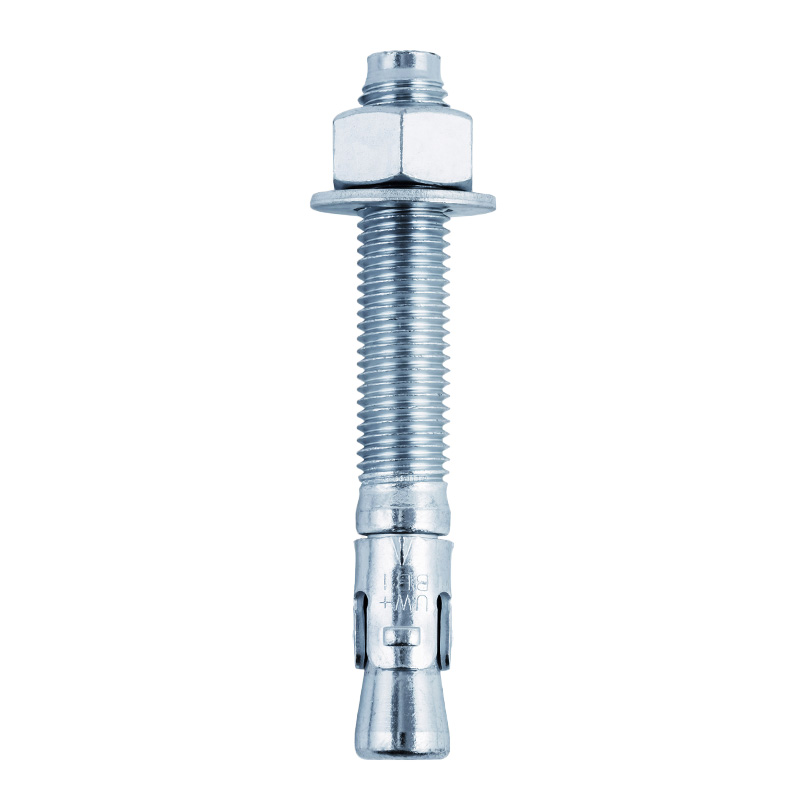
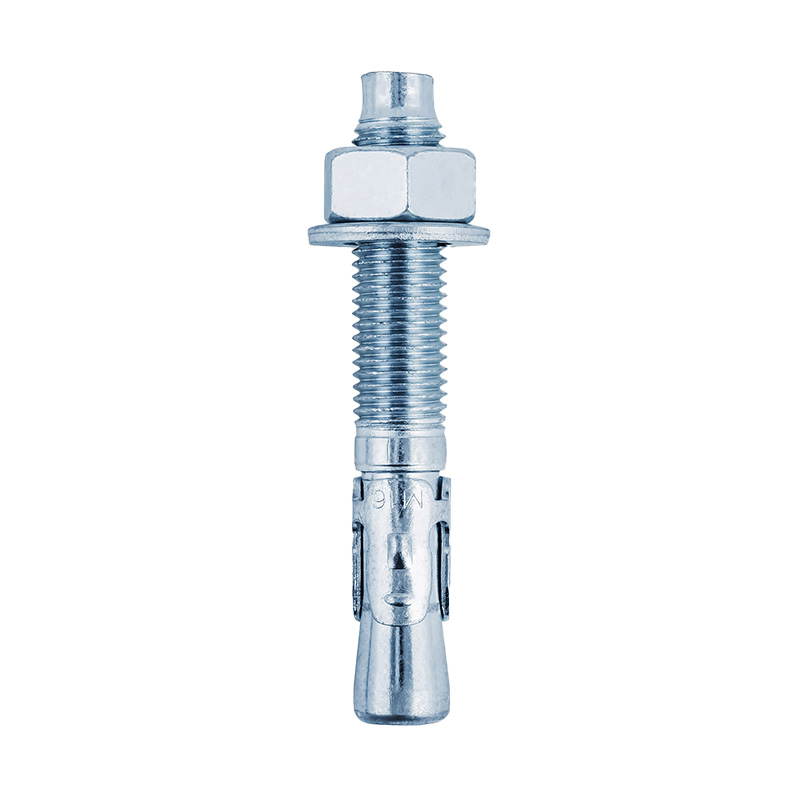
2026-02-02In concrete reinforcement and equipment installation projects, the hole positioning for a Single Expansion Anchor frequently encounters spatial conflicts with the internal Rebar of the substrate. This is not merely an issue of construction efficiency; it directly affects the Structural Integrity of the building. Facing this conflict, choosing between "cutting the rebar" or "relocating the anchor" is a subject of intense professional debate.
Mechanical Costs of Cutting Rebar
In field operations, to maintain precise installation coordinates—especially for aligned brackets or high-precision equipment—some personnel choose to cut through obstructing steel. However, the impact of this action on the structure is often irreversible and profound.
Cross-section Reduction is the primary risk. Rebar primarily bears tensile stress within concrete members. Once a Main Bar is severed, the load-bearing capacity curve of that area undergoes a sudden mutation. For beam bottoms or cantilevered members, cutting rebar can lead to severe flexural capacity deficiencies.
Furthermore, the loss of Bonding Strength cannot be ignored. The joint action of rebar and concrete relies on the bond at their interface. Even cutting a single distribution bar disrupts the stress distribution path. When the Single Expansion Anchor applies expansion stress, it is more likely to induce Concrete Cracking.
Path Dependency and Challenges of Relocation
In contrast, relocation is generally regarded as the "safety-first" protocol. Utilizing a Rebar Detector to bypass steel allows for maximum preservation of the original reinforcement integrity.
However, relocation is not arbitrary. The load performance of a Single Expansion Anchor is highly dependent on Edge Distance and Spacing.
Overlapping Stress Effect: If the relocated position is too close to other installed anchors, Overlapping Stress occurs, potentially leading to Group Anchor Failure.
Eccentric Loading Issues: For prefabricated components or specific supports, changing the anchor position introduces Eccentric Loading, which exerts additional shear force or torque on the connection itself.
Technical Comparison: Which Method Minimizes Structural Weakening?
From a Structural Engineering perspective, the consensus leans heavily toward one side: Relocation causes far less structural weakening than cutting rebar.
Rebar serves as the "skeleton" of the member, and its continuity determines the Ductility of the structure. Cutting rebar alters the failure mode, potentially shifting a designed "ductile failure" into a "brittle failure." Conversely, as a post-installed fastener, the stress redistribution caused by relocating a Single Expansion Anchor can usually be offset by adjusting the Base Plate design, such as using slotted holes.
Professional Guidelines for On-site Decision Making
When a conflict occurs on-site, the following technical workflow is recommended:
Prioritize Non-destructive Detection: Before installing a Single Expansion Anchor, mandatory use of high-frequency electromagnetic induction equipment is required to locate rebar.
Assess Offset Allowance: If the relocation distance is within 3d (where d is the anchor diameter) and does not violate edge distance specifications, relocation is the priority.
Supplementary Calculation: If a significant relocation is necessary, the design department must recalculate the Base Plate strength and the eccentric impact on the original structure.
Compensation Measures: If process requirements mandate cutting rebar, reinforcement measures must be taken, such as installing a Chemical Anchor in the surrounding area to restore a portion of the lost reinforcement ratio.
The Conflict Between Embedment Depth and Rebar Protection
The expansion mechanism of a Single Expansion Anchor requires it to reach a preset Embedment Depth. In structures with thick protective layers, the anchor might only touch the rebar surface without being fully blocked. In such cases, forced driving is strictly prohibited. The Radial Pressure generated during sleeve expansion can cause extreme localized stress concentration if applied directly against rebar, leading to Concrete Spalling.
From a long-term durability standpoint, avoiding rebar also prevents Carbonation and chloride ions from corroding the steel through the anchor channel. Once rebar undergoes corrosion, the internal stress generated by its volume expansion will completely compromise the effective anchoring zone of the Single Expansion Anchor.
Therefore, in most standard operating conditions, protecting the integrity of the rebar should be the primary directive. While relocation increases the complexity of design coordination, it offers unparalleled advantages in ensuring long-term structural safety.


Contact Us