
 English
 中文简体
中文简体 русский
 Español
Why Do Standard Wedge Anchors Fail and How Does the Ultra Wedge Anchor Fix It
2026-02-16Disadvantages of Wedge Anchors and the Role of Ultra Wedge Anchor
Wedge anchors are torque-controlled mechanical expansion anchors. One of their primary disadvantages is the irreversible nature of the physical damage caused to the substrate. However, in specific industrial applications, using an Ultra Wedge Anchor can significantly mitigate certain inherent flaws of traditional anchors, such as load fluctuations or instability in cracked concrete.
Analysis of the Expansion Mechanism
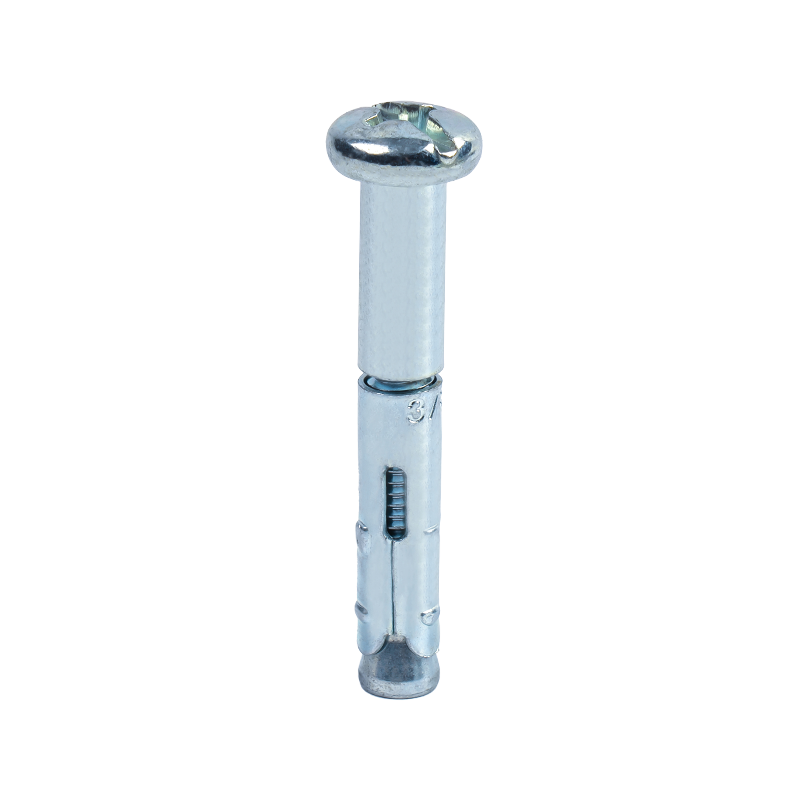
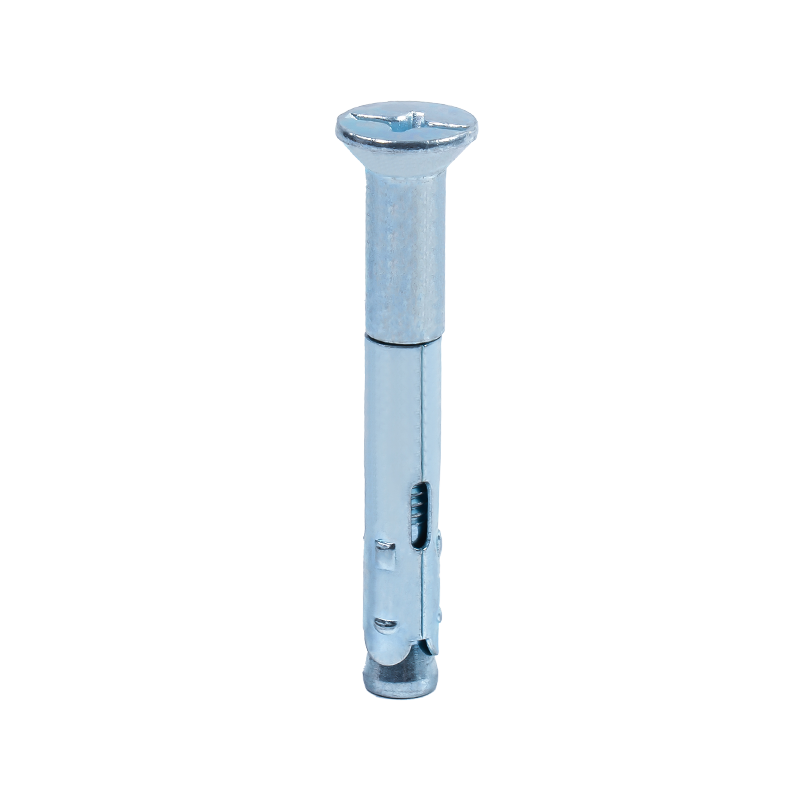
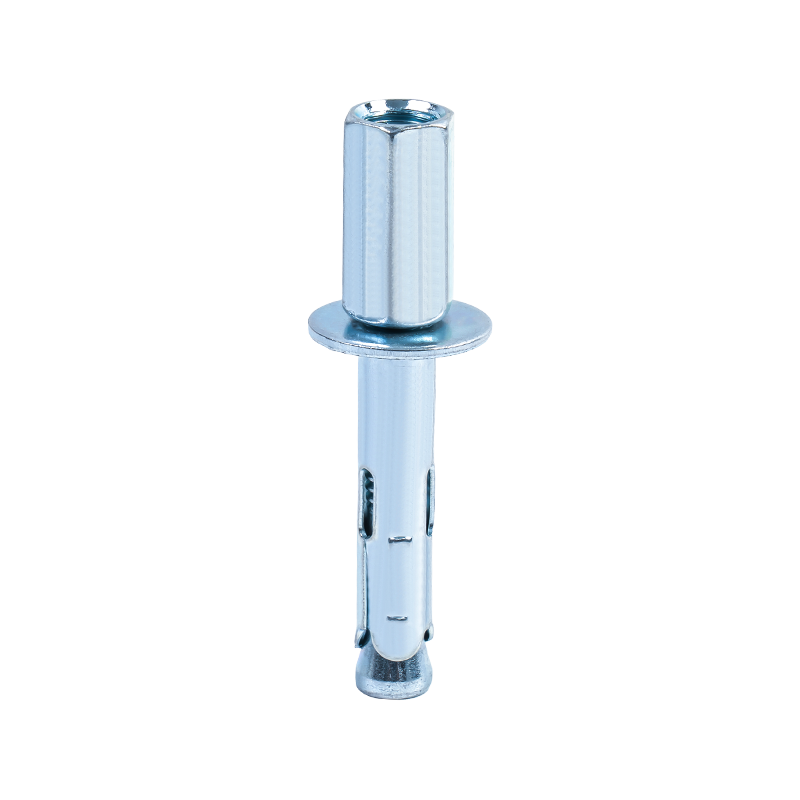
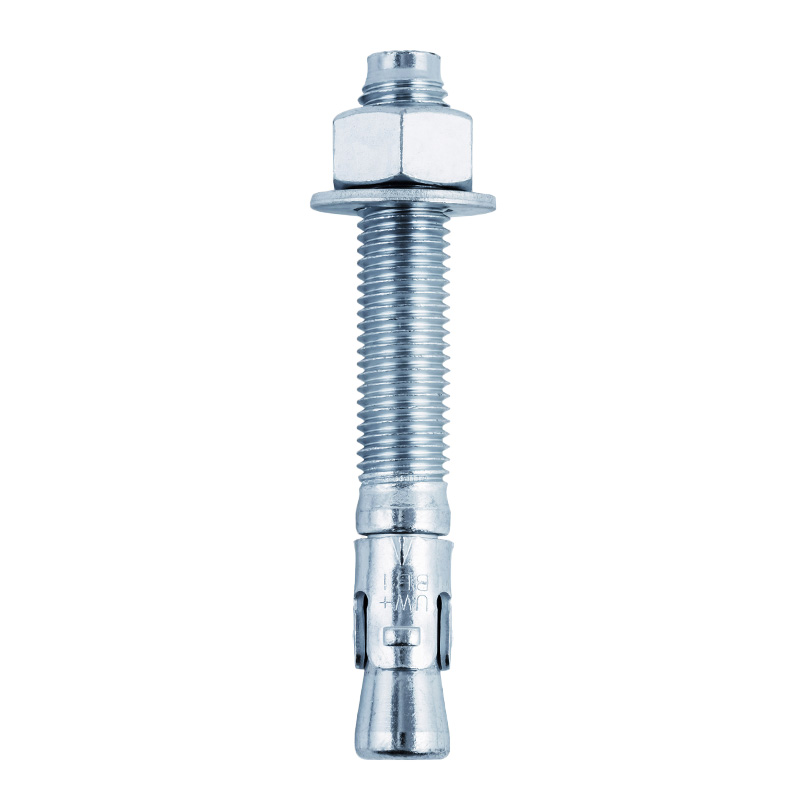
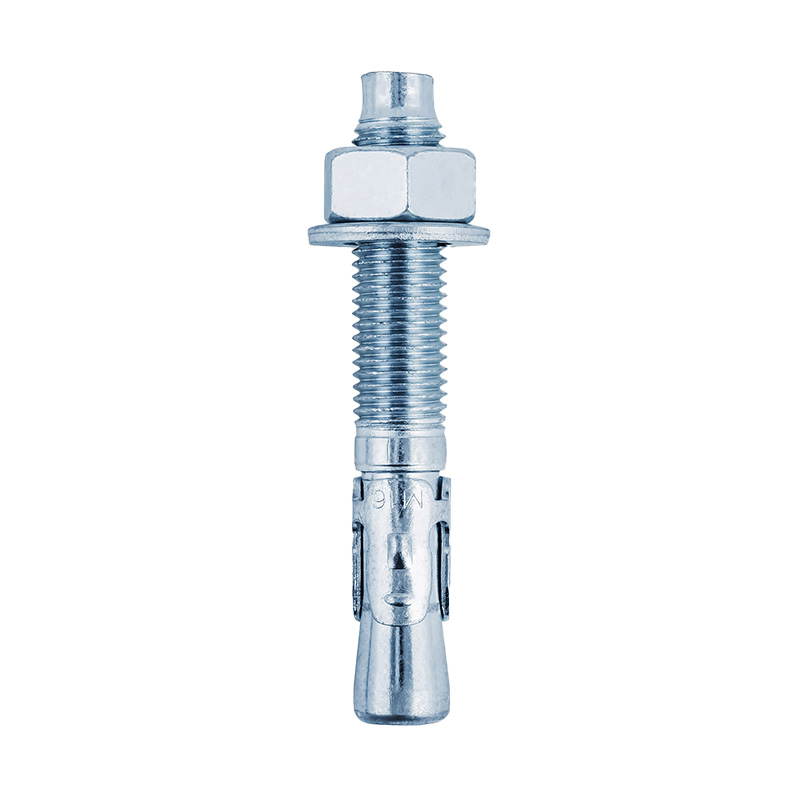
The working logic of a wedge anchor is based on friction. As you rotate the nut, the mandrel of the anchor moves upward, forcing the cone at the bottom into the expansion clip.
- Risk of Physical Damage: This expansion action generates immense radial pressure. If the substrate strength is insufficient, micro-cracks will develop inside the concrete.
- Improvements of Ultra Wedge Anchor: Compared to standard models, the Ultra Wedge Anchor features a full 360-degree contact expansion clip design. This design distributes pressure more evenly, preventing premature concrete spalling caused by concentrated pressure points and allowing for a higher load capacity.
Parameter Comparison: Standard Wedge Anchor vs. Ultra Wedge Anchor
To better understand why the Ultra Wedge Anchor is considered an upgraded solution, the following table compares the technical parameters of standard commercial-grade anchors with high-performance Ultra series (based on common 1/2 inch specifications):
| Performance Feature | Standard Wedge Anchor (Commercial) | Ultra Wedge Anchor (High Performance) |
| Certification Level | None or basic only | ICC-ES / ETA Certified (for cracked concrete) |
| Substrate Suitability | Uncracked, solid concrete only | Cracked and uncracked concrete |
| Expansion Clip Design | 2-point or 3-point contact | Full 360-degree wrap-around clip |
| Seismic Performance | Weak; not recommended for seismic zones | Passed C1/C2 seismic rating tests |
| Torque Response | Less distinct; easy to over-tighten | Precise torque control with length ID codes |
| Load Performance | High fluctuation; high safety factor needed | High characteristic loads; more stable |
Sensitivity to Installation Depth
Traditional wedge anchors have a low tolerance for drill hole depth errors. If the hole is too shallow, the anchor cannot be fully embedded; if it is too deep, the anchor may fall into the hole. The Ultra Wedge Anchor includes special stamped Length ID Codes on the head of the bolt. This allows inspectors to accurately verify the embedment depth even after installation is complete, ensuring safety performance meets design parameters. This design compensates for the "hard to detect once installed" disadvantage of standard wedge anchors.
Environmental Constraints: Corrosion and Material Endurance
Environmental adaptability is a major concern when discussing the disadvantages of wedge anchors. Traditional wedge anchors are prone to failure in humid, chemically corrosive, or extreme outdoor environments, primarily due to structural strength degradation caused by metal oxidation. The Ultra Wedge Anchor provides targeted solutions through advanced material science.
Oxidation and Rust: The Fatal Flaw of Standard Anchors
Standard wedge anchors are usually only surface zinc-plated, which performs well in dry indoor environments but shows significant weaknesses in the following scenarios:
- Coastal Environments: Salt spray quickly penetrates standard zinc plating, causing threads to rust shut and losing the ability for secondary adjustment.
- Industrial Atmosphere: Acidic gases (such as sulfur dioxide) accelerate metal fatigue.
- Ultra Wedge Anchor Response: The Ultra Wedge Anchor offers multi-level protection options, particularly high-thickness Hot-Dip Galvanized (HDG) or 316 Stainless Steel, ensuring structural integrity for decades in harsh environments.
Corrosion Resistance Comparison in Different Environments
The following table shows the performance of different materials and coatings in the standard Salt Spray Test:
| Coating/Material Type | Standard Wedge Anchor (Zinc Plated) | Ultra Wedge Anchor (HDG) | Ultra Wedge Anchor (316 Stainless) |
| Standard Coating Thickness | 5-8 microns | ≥ 50 microns | Solid Stainless Steel |
| Salt Spray Resistance | Approx. 24 - 48 hours (red rust) | 1000+ hours | Extreme (Chloride resistant) |
| Application Environment | Indoor dry, low humidity | Outdoor, humid, industrial | Coastal, chemical plants |
| Expected Lifespan | Short-term (3-5 years) | Long-term (25-50 years) | Ultra-long-term (50+ years) |
Risk of Galvanic Corrosion
When a wedge anchor comes into contact with a dissimilar metal (e.g., a stainless steel anchor fixing an aluminum bracket), galvanic corrosion occurs, accelerating metal loss. The systematic material grading of the Ultra Wedge Anchor allows engineers to precisely match the anchor to the material being fastened (such as special mechanical galvanizing or specific stainless grades), preventing contact corrosion at the chemical level.
High Temperature and Fire Restrictions
In fire scenarios, the metal of standard expansion anchors softens, causing the clips to lose grip. High-performance Ultra Wedge Anchors are typically fire-rated, providing parameter reports for continuous load-bearing at specific temperatures (e.g., above 120 degrees Celsius), filling the gap in traditional wedge anchor fire safety design.
Substrate Requirements: Solid Concrete Only
One of the greatest technical limitations of wedge anchors is their extreme "pickiness" regarding the substrate. They rely entirely on the compressive resistance of the material to generate friction, making them useless in non-solid materials. The Ultra Wedge Anchor is designed to maximize application range within complex concrete environments.
Material Exclusivity: Prohibited Zones
Standard wedge anchors are strictly prohibited for use in the following substrates to avoid pull-out failure:
- Hollow Brick and Lightweight Blocks: Internal voids prevent the expansion clip from finding a support point.
- Mortar or Plaster: The material is too soft to withstand the local high pressure of expansion.
- Natural Stone: Uneven textures may cause the stone to burst along veins.
The Challenge of Cracked Concrete
In real construction structures, concrete is often in a tensile, cracked state due to load, shrinkage, or temperature changes. When a crack passes through the installation point, the hole diameter increases slightly, causing standard clips to lose friction. The Ultra Wedge Anchor is developed with an expansion clip geometry that possesses "secondary expansion" capabilities. Even if the crack opens slightly, the clip follows the hole wall displacement to maintain anchoring force.
Substrate Performance Comparison
Comparison of standard wedge anchors vs. Ultra Wedge Anchor in different concrete conditions:
| Substrate Condition | Standard Wedge Anchor | Ultra Wedge Anchor |
| Uncracked Concrete | Stable; meets rated load | Excellent; higher safety margin |
| Cracked Concrete | Not recommended / High drop in load | Approved / Minimal performance loss |
| Lightweight Concrete | Extremely low/unpredictable load | Tested for reference load values |
| Min. Substrate Thickness | High (usually 1.5x embedment) | Optimized for thinner substrates |
| Edge Distance Requirement | Large; prone to edge blowout | Smaller edge distances allowed |
Strict Requirements for Spacing and Edge Distance
Wedge anchors generate powerful radial expansion forces. If installed too close to an edge or another anchor, this internal stress causes explosive concrete splitting failure. The Ultra Wedge Anchor mitigates this by optimizing the stress distribution of the expansion clip.
Expansion Stress and "Edge Blowout" Risk
If the anchor is too close to the edge, the lateral thrust can push out the concrete cover, leading to total failure. Similarly, when two anchors are too close, their stress fields overlap, creating cumulative tensile stress that reduces overall efficiency.
Installation Parameter Comparison
Comparison based on anchor diameter d and effective embedment hef:
| Installation Parameter | Standard Wedge Anchor | Ultra Wedge Anchor |
| Min. Edge Distance | Typically 12d or more | Can be reduced to 8d - 10d |
| Min. Spacing | Typically 15d or more | Can be reduced to 10d - 12d |
| Stress Concentration | High (localized cracking) | Medium-Low (Even distribution) |
| Concrete Grade Dependency | Extreme (fragile in low grades) | Medium (Better for lower grades) |
Importance of Critical Dimensions
In structural design, Critical Spacing and Critical Edge Distance are vital. When actual distances are less than these values, the load capacity of standard anchors must be reduced by a factor (usually 0.6 to 0.8). The Ultra Wedge Anchor retains a higher percentage of its characteristic load capacity under the same reduction conditions due to its high-performance expansion mechanism.
Installation Precision and Physical Spacing
Wedge anchors also depend on verticality. If drilling is slightly tilted, expansion stress biases to one side. The Ultra Wedge Anchor features a lengthened expansion sleeve design that helps correct for minor deviations, reducing the risk of substrate damage caused by installation error.
Irreversibility and Precision Requirements in Installation
A significant disadvantage of wedge anchors is their irreversibility. Once hammered into the hole and expanded, they become nearly permanent. If an error occurs, the cost of correction is high. The Ultra Wedge Anchor reduces this risk through improved identification systems and torque feedback.
The Dilemma of "One-Shot" Installation
Standard clips embed deeply into the hole wall. If misplaced, they cannot be easily removed; usually, they must be cut off and ground flat. While still irreversible, the Ultra Wedge Anchor features precise depth markings on the bolt head, allowing the installer to monitor depth in real-time to prevent over-embedding.
Torque Control Risks
Wedge anchors are extremely torque-sensitive. Too little torque results in insufficient anchoring; too much can snap the bolt or cause "shear failure" in the concrete.
| Installation Metric | Standard Wedge Anchor | Ultra Wedge Anchor |
| Torque Window | Narrow; sensitive to hole bias | Wide; higher tolerance |
| Over-tightening Protection | None; threads may snap | High-strength alloy steel |
| Installation Confirmation | Feel/Torque wrench only | Visual ID + Torque feedback |
Micro-level Dependency on Hole Diameter
Wedge anchors require the hole diameter to match the nominal anchor diameter exactly. If the hole is even 0.5mm too large, the clip cannot grip the wall, leading to pull-out. If the hole is too small, the anchor cannot be hammered in, and forced impact will damage the threads of the Ultra Wedge Anchor.
Seismic and Dynamic Load Considerations
The greatest disadvantage of wedge anchors under vibration or seismic force is the "loosening effect." Traditional anchors can wear down the concrete through microscopic displacements, leading to a loss of anchoring force.
Vibration-Induced Fatigue and Loosening
Standard anchors under motors or fans may slowly loosen due to high-frequency vibration. The Ultra Wedge Anchor utilizes high-strength alloy steel and anti-loosening clip designs that maintain a tight bite even under reciprocating stress.
Seismic Performance Comparison
| Performance Metric | Standard Wedge Anchor | Ultra Wedge Anchor |
| Seismic Certification | None or non-cracked only | C1 and C2 Rated |
| Fatigue Life (Cycles) | Low; not for heavy dynamic | Extremely High (Millions) |
| Residual Capacity | Uncertain; prone to failure | Retains over 80% Load |
| Torque Retention | Decays quickly over time | Excellent retention |
Dynamic Adaptability
In environments like elevator rail fixing or bridge attachments, the Ultra Wedge Anchor is designed to maintain anchoring even when the hole diameter changes dynamically (cracks opening/closing up to 0.5mm). This self-adjusting expansion mechanism is the key to solving the vibration loosening flaw of mechanical anchors.
FAQ:
Q: Why can't wedge anchors be used in brick or hollow blocks?
A: The load depends entirely on the squeezing force of the expansion clip against the hole wall. Hollow materials do not provide enough reaction force. Using an Ultra Wedge Anchor in such materials would still result in substrate cracking or the anchor being pulled out.
Q: Is the Ultra Wedge Anchor easier to install than standard ones?
A: The steps are similar, but the Ultra Wedge Anchor provides higher tolerance and traceability. The head markings allow for post-installation depth verification, and the smoother clip design reduces the resistance encountered when hammering.
Q: Does drilling deeper than required affect the Ultra Wedge Anchor?
A: No. Wedge anchors are not sensitive to extra depth (unless you drill through the substrate). It is actually recommended to drill about 1/2 inch deeper than required to accommodate dust that cannot be perfectly cleaned, ensuring the anchor seats fully.
Q: How do I know if the Ultra Wedge Anchor is correctly tightened?
A: A torque wrench must be used. Wedge anchors are torque-controlled, and "feel" is not enough to confirm the clip is fully deployed. Always refer to the rated torque value in the technical specification sheet.
Q: Which model should be chosen for high-salt environments?
A: You must choose the 316 Stainless Steel version of the Ultra Wedge Anchor. Standard zinc plating will fail rapidly, while the Ultra SS provides maximum resistance to chloride and acid/alkali corrosion.


Contact Us